
Skip to content
Introduction
I recently released a new YouTube video, called “How to Flash the MSI MAG B550M Mortar BIOS with the Flash BIOS Button“. This video walks though and demonstrates all of the steps required to use the BIOS Flash button on this motherboard.

The BIOS Flash button is a special feature that lets you flash the BIOS without having a CPU, RAM, or video card installed. This feature also works on a complete system.
The most common reason you would want/need to do this is if you had a new CPU that was not supported by the existing BIOS version on the motherboard. This feature can also be useful if a more traditional BIOS update (using the M-Flash BIOS utility or the MSI Dragon Center Windows utility) failed.
This situation is happening to a number of people with new Ryzen 5000 Series processors that require a newer BIOS version than was available when the motherboard was manufactured. As newer stock shows up for sale, this will less of a problem.
How to Flash the MSI MAG B550M Mortar BIOS with the Flash BIOS Button
Here are the high-level steps that I show in the video.

Here is the video.
Final Words
I think this is a useful video right now because the documentation on the product web site and in the motherboard manual is a little sparse. MSI also has a short video about how to do this. I think my video goes into much more detail!
I also have blog post about doing this same type of operation for several other MSI motherboards.
- Flashing Your BIOS with No CPU Installed
If you have any thoughts or questions about this post, please ask me here in the comments or on Twitter. You can also follow me on Twitter, where I am @GlennAlanBerry. Thank you for reading!
The MSI Flash BIOS Button is a revolutionary feature that allows users to update their motherboard’s BIOS without the need for a compatible CPU. This means that even if you have installed a CPU that is not compatible with the current BIOS version, you can still update it with ease. This is a game-changer for PC enthusiasts and professionals who often find themselves in situations where they need to update the BIOS but don’t have a compatible CPU on hand.
The Flash BIOS Button with CPU Installed is not only convenient but also solves a common problem faced by PC users. In the past, users would have to install a compatible CPU just to update the BIOS, which could be a time-consuming and frustrating process. With the Flash BIOS Button, all you need is a USB stick with the latest BIOS update, and you’re good to go. This feature has significantly simplified the BIOS updating process and saved users valuable time and effort.
The MSI Flash BIOS button allows users to update their BIOS without the need for a CPU installed. This feature is especially useful when troubleshooting or upgrading a system. With the Flash BIOS button, users can easily and quickly update their BIOS firmware, ensuring compatibility with new hardware and improving system stability. This convenient feature sets MSI motherboards apart, simplifying the process of updating the BIOS for professionals and enthusiasts alike.

The Importance of the MSI Flash BIOS Button with CPU Installed
The MSI Flash BIOS Button with CPU Installed is a critical feature in modern motherboards that allows users to update their BIOS firmware without the need for a compatible CPU. This feature is especially useful for users who want to upgrade their processors to the latest models, as it eliminates the need to install an older CPU just to update the BIOS. In this article, we will explore the unique aspects and benefits of the MSI Flash BIOS Button with CPU Installed.
1. Easy BIOS Updates
The MSI Flash BIOS Button with CPU Installed simplifies the process of updating the BIOS firmware by eliminating the need for a compatible CPU. Traditionally, updating the BIOS required a CPU that was recognized by the motherboard’s existing firmware. This meant that if a user wanted to upgrade to a new CPU that was not compatible with the current BIOS version, they would have to first install a compatible CPU to update the BIOS, then replace it with the desired CPU.
With the MSI Flash BIOS Button, users can simply connect a USB flash drive containing the latest BIOS firmware, press the dedicated button, and the motherboard will start the update process. This eliminates the need for any CPU compatibility checks and makes the BIOS update process much more convenient and user-friendly.
Additionally, the MSI Flash BIOS Button allows users to update the BIOS even without a graphics card or other system components. This is especially useful for troubleshooting situations where certain components may be causing compatibility issues or preventing the system from booting. With the Flash BIOS Button, users can focus solely on updating the BIOS firmware without worrying about other system components.
2. Enhanced System Stability and Performance
The MSI Flash BIOS Button with CPU Installed not only improves the convenience of updating the BIOS but also ensures enhanced system stability and performance. Updating the BIOS allows manufacturers to release firmware updates that address various issues, such as compatibility with new hardware, bug fixes, and performance optimizations. By keeping the BIOS up to date, users can experience improved system stability and performance.
The Flash BIOS Button also provides a safety net for users who may encounter issues after updating the BIOS. In case of a failed update or unstable system performance, users can easily revert to the previous BIOS version by simply pressing the Flash BIOS Button again with the original BIOS firmware on the USB flash drive. This feature minimizes the risk of bricking the motherboard and gives users the assurance that they can easily roll back any changes if necessary.
Furthermore, the MSI Flash BIOS Button allows users to take advantage of the latest security features and updates provided by the motherboard manufacturer. As security vulnerabilities are discovered, motherboard manufacturers release BIOS updates that patch these vulnerabilities and ensure that the system remains protected against potential threats. By regularly updating the BIOS using the Flash BIOS Button, users can maintain a secure system and protect their data from potential exploits.
3. Compatibility with Multiple CPU Generations
The MSI Flash BIOS Button with CPU Installed offers compatibility with multiple CPU generations, allowing users to easily upgrade their processors without worrying about BIOS compatibility issues. This is particularly beneficial for users who frequently upgrade their CPUs to take advantage of the latest technologies and performance improvements.
When a new CPU generation is released, it often comes with different features and requirements that may require an updated BIOS version. With the Flash BIOS Button, users can update the BIOS to support the latest CPU generations without having to install an older, compatible CPU. This saves time and effort, as users can proceed with their CPU upgrade without any unnecessary steps or delays.
Compatibility Table for MSI Flash BIOS Button
| CPU Generation | BIOS Version |
| 8th Gen Intel Core | 7B39v2xx |
| 9th Gen Intel Core | 7B39vAxx |
| 10th Gen Intel Core | 7B39vHxx |
| AMD Ryzen 2000 Series | 7B89v1xx |
| AMD Ryzen 3000 Series | 7B89v2xx |
| AMD Ryzen 5000 Series | 7B89v3xx |
Note: This table provides a general overview of the BIOS versions required for different CPU generations. Always refer to the official MSI website for the most up-to-date information on compatibility.
4. Future-Proofing and Longevity
An often overlooked benefit of the MSI Flash BIOS Button with CPU Installed is its impact on future-proofing and ensuring the longevity of a system. As new technologies and hardware advancements emerge, motherboard manufacturers release BIOS updates to support these changes and improve compatibility.
By regularly updating the BIOS using the Flash BIOS Button, users can ensure that their systems remain compatible with future hardware releases and technological advancements. This allows users to extend the lifespan of their systems without the need for major hardware upgrades.
Furthermore, the MSI Flash BIOS Button allows users to take advantage of new features and functionalities introduced by the motherboard manufacturer via BIOS updates. These updates can unlock additional performance optimizations, add new overclocking options, and improve system stability.
Unlocking the Full Potential of Your System
The MSI Flash BIOS Button with CPU Installed is a powerful tool that enhances the user experience by simplifying BIOS updates, improving system stability and performance, ensuring compatibility with multiple CPU generations, and future-proofing the system. By utilizing this feature, users can unlock the full potential of their systems and stay up to date with the latest technologies and advancements in the PC industry.
MSI Flash BIOS Button with CPU Installed
When it comes to updating the BIOS on an MSI motherboard, the process can sometimes be complicated, especially if you need to install a new CPU. However, MSI has implemented a convenient feature called the Flash BIOS Button that allows users to update the BIOS even with the CPU installed. This feature is particularly useful when you have a new CPU that is not compatible with the current BIOS version.
To use the Flash BIOS Button, follow these steps:
- Download the latest BIOS update from MSI’s website and save it onto a USB flash drive.
- Insert the USB flash drive into the designated USB port on the motherboard.
- Press and hold the Flash BIOS Button located on the rear I/O panel of the motherboard for about 3 seconds.
- The motherboard will start flashing the new BIOS version automatically.
Once the flashing process is complete, the motherboard will restart with the updated BIOS version.
Key Takeaways: Msi Flash Bios Button With CPU Installed
- The MSI Flash BIOS Button allows users to update the BIOS without a CPU.
- It is a convenient feature for users who want to upgrade their motherboard but don’t have a compatible CPU.
- The Flash BIOS Button is located on the back of the motherboard and can be easily accessed.
- To use the Flash BIOS Button, you need to have a USB flash drive with the latest BIOS file.
- Simply insert the USB flash drive into the designated port and press the Flash BIOS Button.
Frequently Asked Questions
In this section, we have answered some common questions regarding the Msi Flash Bios Button with CPU installed. If you have any concerns or doubts related to this topic, please read on.
1. How does the Msi Flash Bios Button work with CPU installed?
The Msi Flash Bios Button allows you to update your motherboard’s BIOS even without a CPU installed. It provides a convenient way to update the BIOS using a USB flash drive without the need for any other components. Here’s how it works:
First, make sure your motherboard has the Flash Bios Button feature. Next, download the latest BIOS update file from the manufacturer’s website and save it to a USB flash drive. Insert the USB drive into the designated port on the rear panel of your motherboard. Now, press and hold the Flash Bios Button for a few seconds. The button will start flashing, indicating that the update process has started. Wait for the flashing to stop, and then power on your system. Your BIOS is now updated!
2. Can I use the Msi Flash Bios Button to downgrade my BIOS version?
No, the Msi Flash Bios Button is primarily designed for upgrading the BIOS to a newer version. It is not intended to be used for downgrading the BIOS. Attempting to downgrade your BIOS using the Flash Bios Button can result in system instability or even cause permanent damage to your motherboard. Therefore, it is recommended to always consult the manufacturer’s guidelines and recommendations before attempting any BIOS modifications.
3. Is it safe to use the Msi Flash Bios Button with CPU installed?
Yes, it is safe to use the Msi Flash Bios Button with CPU installed as long as you follow the correct procedures. The Flash Bios Button feature is designed to be used without any CPU or graphics card installed, and it ensures a safe and reliable BIOS update process. However, it is always a good practice to double-check the manufacturer’s guidelines and precautions before proceeding with any BIOS modifications.
4. Can I use any USB flash drive with the Msi Flash Bios Button?
Yes, you can use any USB flash drive with the Msi Flash Bios Button as long as it meets the minimum requirements. The USB drive should be formatted in FAT32 file system and have enough free space to accommodate the BIOS update file. Additionally, it is recommended to use a USB drive with a capacity of 16GB or higher to ensure compatibility with larger BIOS update files.
5. What should I do if the Msi Flash Bios Button does not work?
If the Msi Flash Bios Button does not work, there are a few troubleshooting steps you can try:
1. Ensure that your motherboard has the Flash Bios Button feature and that it is properly connected to the motherboard.
2. Check if the USB flash drive has been correctly formatted in the FAT32 file system and if it contains the correct BIOS update file.
3. Try using a different USB flash drive to rule out any compatibility issues.
4. Reset your motherboard’s BIOS settings to default and try again.
5. If none of the above steps work, it is recommended to contact the manufacturer’s technical support for further assistance.
In conclusion, the MSI Flash BIOS button is a convenient feature that allows you to update the BIOS without requiring a CPU. This is particularly useful when you’re building a new system or troubleshooting compatibility issues. By simply pressing the Flash BIOS button, you can update the BIOS firmware to the latest version and ensure optimal performance and compatibility.
However, it’s important to note that not all MSI motherboards have the Flash BIOS button. Before purchasing a motherboard, make sure to check the specifications to see if this feature is available. Additionally, it’s crucial to follow the manufacturers’ instructions and guidelines when using the Flash BIOS button to avoid any potential risks or errors. Overall, the MSI Flash BIOS button provides a user-friendly solution for updating the BIOS, enhancing the functionality and reliability of your system.
Привет друзья
Короткий ответ:
Flash BIOS Button — кнопка, позволяющая обновить BIOS материнской платы без включения ПК, даже если в материнке не будет установлен процессор, оперативная память или видеокарта.
То есть обновление не зависит от установки процессора или других устройств. Особенно это полезно если текущая версия биоса не поддерживает ваш процессор.
Разбираемся
Flash BIOS Button это специальная фирменная кнопка на некоторых материнских платах MSI, которая позволяет удобно обновить BIOS. При этом нет необходимости чтобы был установлен процессор или оперативная память.
Качаете файл прошивки с официального сайта (именно для вашей модели материнки), далее форматируете флешку, лучше это делать через утилиту Руфус (она нужна только для форматирования):

Использовать флешку лучше от 1 гигабайта до 32. Проверяем, что материнская плата запитана от блока питания — подключен кабель 24 pin и кабель процессора (обычно 4 pin или 8 pin):

Файл прошивки BIOS на флешке нужно переименовать в MSI.ROM (разумеется после распаковки из архива). Этот файл нужно скопировать на флешку (если в архиве будет еще текстовый файл txt — его тоже копируем на флешку). После форматирования Руфусом на флешке будут два файла, их не трогаем (имею ввиду не те которые скопировали). Потом вставляем флешку в специальный USB-порт (обычно он отличается от остальных), компьютер включать не нужно. Теперь нажимаем и не отпускаем кнопку Flash BIOS Button, пока не загорится светодиод, а как загорелся — так сразу отпускаем. Светодиод будет мигать, пока биос не обновится. Если обновился — потухнет. Разумеется ПК из розетки выключать не стоит, сам процесс обновления может занять пару минут. Как только светодиод перестал мигать — можно извлекать флешку (спустя пару секунд).
Внимание! Если USB-порты все одинаковые, тогда вставляем флешку в тот порт, рядом с которым и находится наша кнопка Flash BIOS Button:

Также может быть полезным комментарий пользователя АндреY:

Удачи и добра, берегите себя
На главную!
31.01.2022
Most MSI motherboards support three ways to update the BIOS:
- M-Flash – Update directly from the BIOS interface.
- BIOS Flashback – Recover or update the BIOS on a system that can’t boot.
- LiveUpdate – Update from Windows via the MSI Centre.
I’ll use our MAG B550M MORTAR and PRO B760M-E boards to demonstrate all three methods in this article.
MSI BIOS Update – Dos and Don’ts
MSI releases new BIOS versions for most of their lineup every few months. But that doesn’t mean you need to update just as often. You should have a specific reason to update, such as:
- Better hardware compatibility in the new BIOS version
- Critical security patches or bug fixes
- Improved system performance and stability
- Support for new features (e.g., Re-size BAR)
If you do need to update, keep the following things in mind before you begin:
- Make sure the BIOS update isn’t interrupted (use a power backup, don’t remove the USB mid-update, etc.).
- This is especially important on budget boards that don’t support BIOS Flashback or DualBIOS. Without these, it can be a major hassle to recover from a failed update.
- I recommend you use M-Flash or BIOS Flashback as LiveUpdate is not as reliable (explained later).
Download the BIOS Update File
Start by identifying your motherboard model and the current BIOS version. You can boot to the BIOS to do this, or you can open the System Info applet in Windows.
Then, follow the steps shown below to obtain the correct BIOS file:
- Visit your motherboard’s support page. Ensure the board version is an exact match before proceeding (e.g., B550M Mortar vs WiFi vs Max WiFi vs Vector).
- Expand the Drivers & Downloads > BIOS section.

- First, check your current BIOS version for reference. Note the BIOS release date as well. This will be helpful as MSI’s naming scheme can be a bit confusing.
- Compare the version and date to identify your current BIOS from the list (
7C94v18in my case). - Check all the newer BIOS versions. Read the changelogs to ensure that you don’t miss any important info (e.g. if incremental updates are required).
- Once you’ve decided on the BIOS version, download it. Go for the latest stable version if you’re unsure.
- Extract this archive and format a USB drive to FAT32.
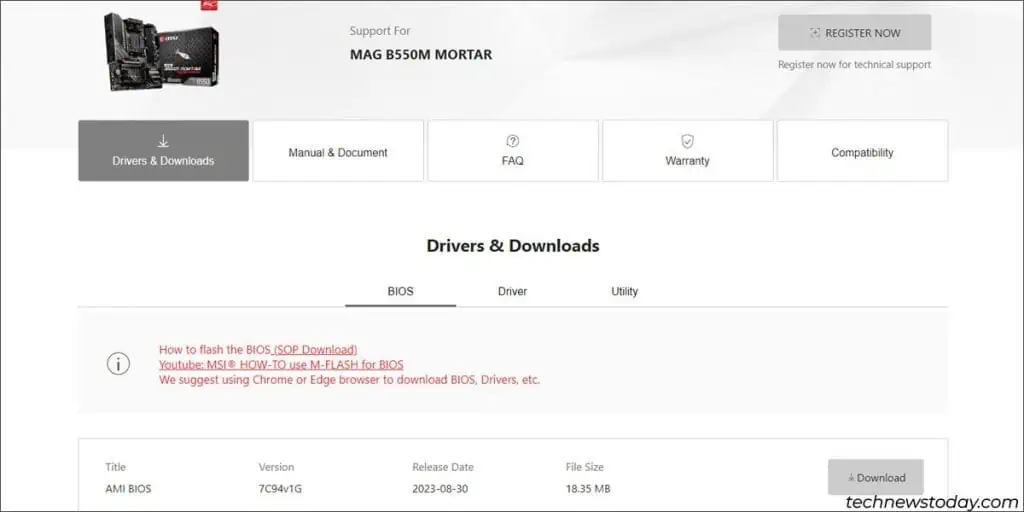
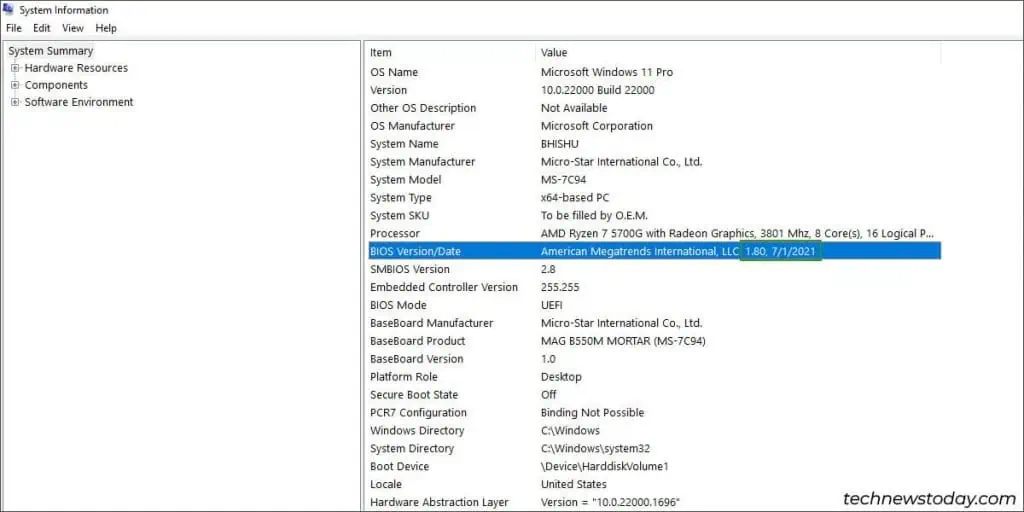
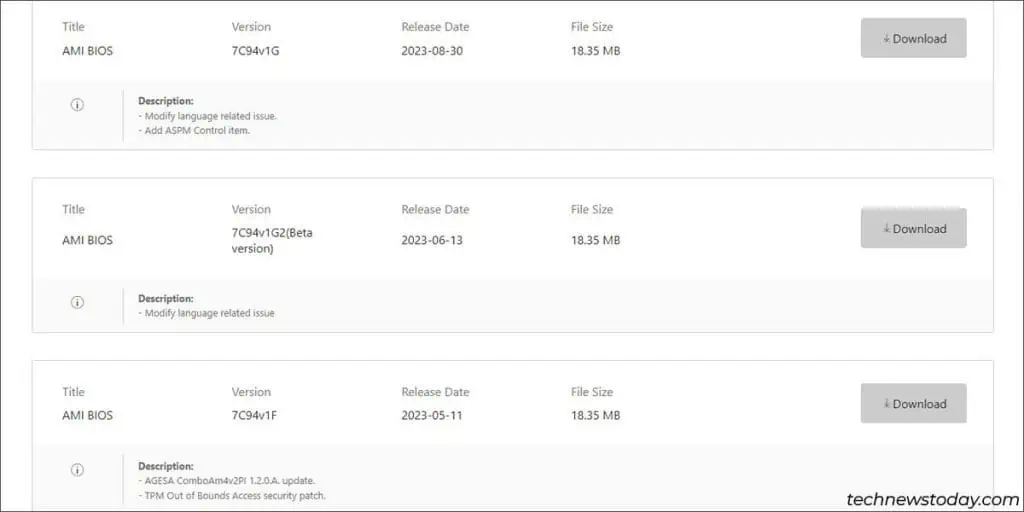
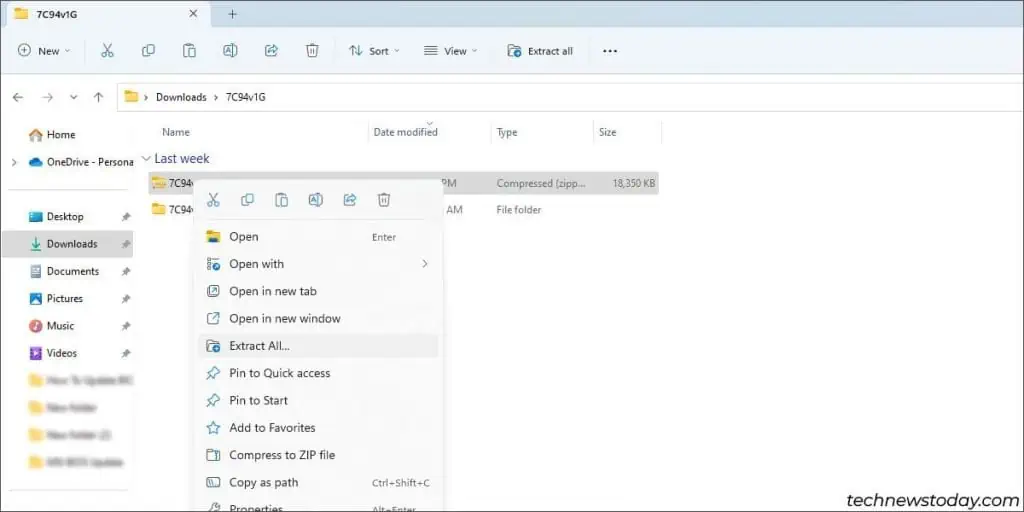
The steps vary after this. So, continue from the appropriate section.
Updating with M-Flash
M-Flash is the standard BIOS update utility on MSI systems. It’s reliable and easy to use. Follow the steps shown below to update the BIOS with this method:
- Move the extracted BIOS file to the USB drive.
- Connect the USB drive to the system where you want to update the BIOS.
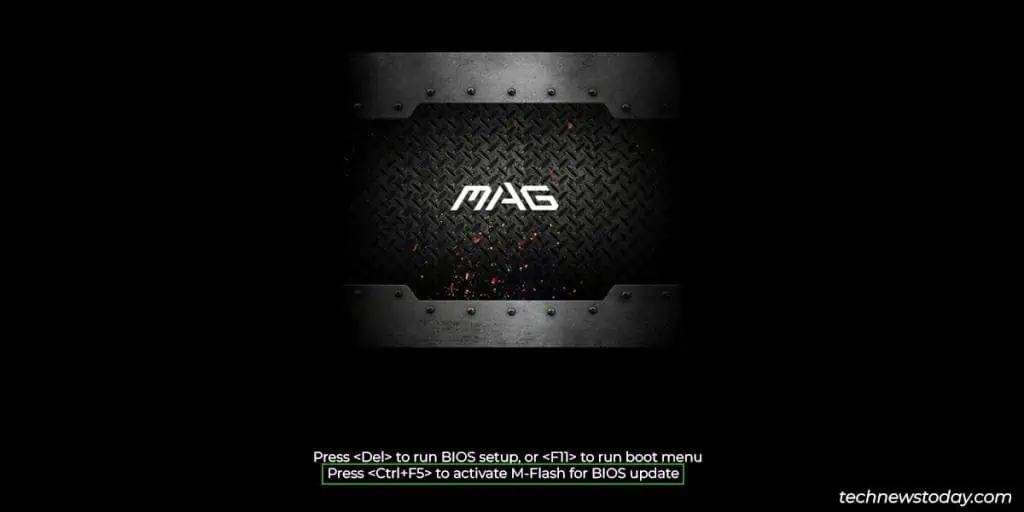
- Restart your PC and repeatedly press Ctrl + F5 to launch the M-Flash utility. You can also boot to the BIOS (press Del at startup) and launch it from there.
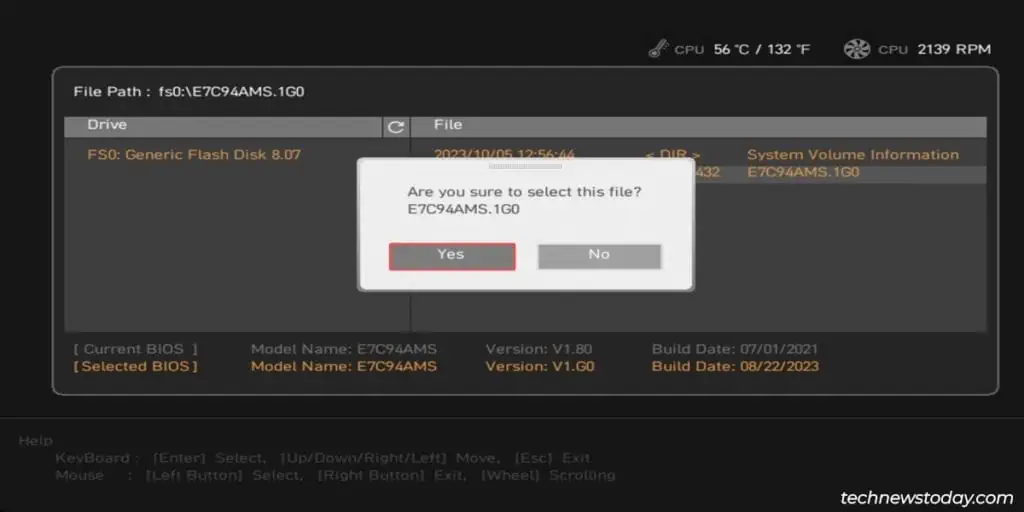
- Highlight the BIOS file and select Yes to start flashing the BIOS.
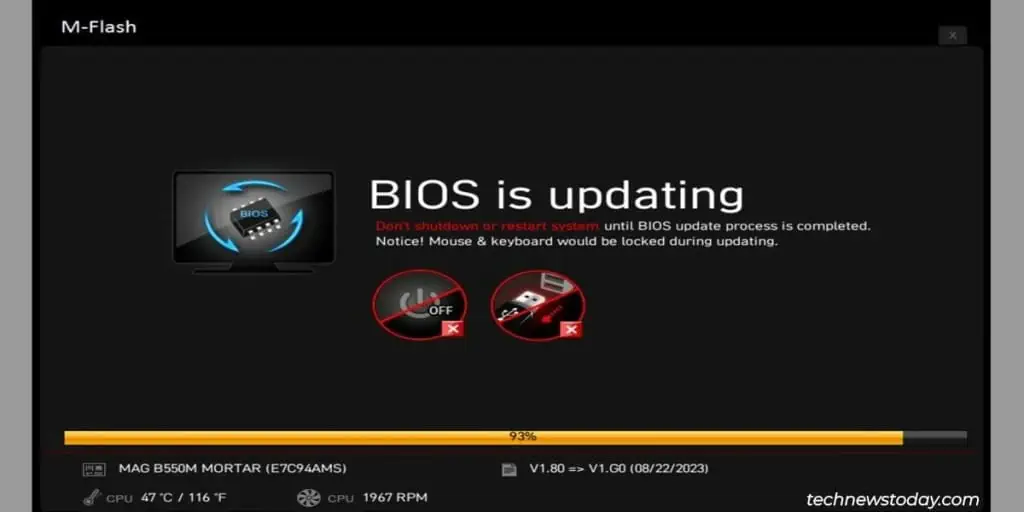
- The update should finish in 5 minutes or so. Your PC will restart afterward.
Performing a BIOS Flashback
BIOS Flashback is used to update systems without a CPU or to recover boards bricked by a failed BIOS update. But you can also use it for normal BIOS updates.
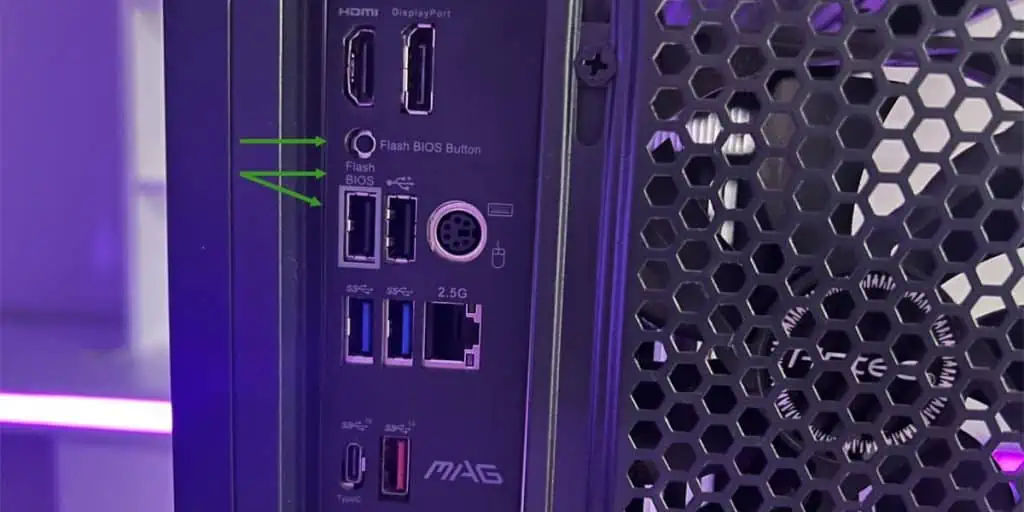
Most MSI boards support it as a fail-safe feature. To verify this on your board, look for the Flash BIOS port and button on the rear I/O panel. Alternatively, check the user manual.
If your board supports it, use the following steps to update your MSI BIOS with BIOS Flashback:
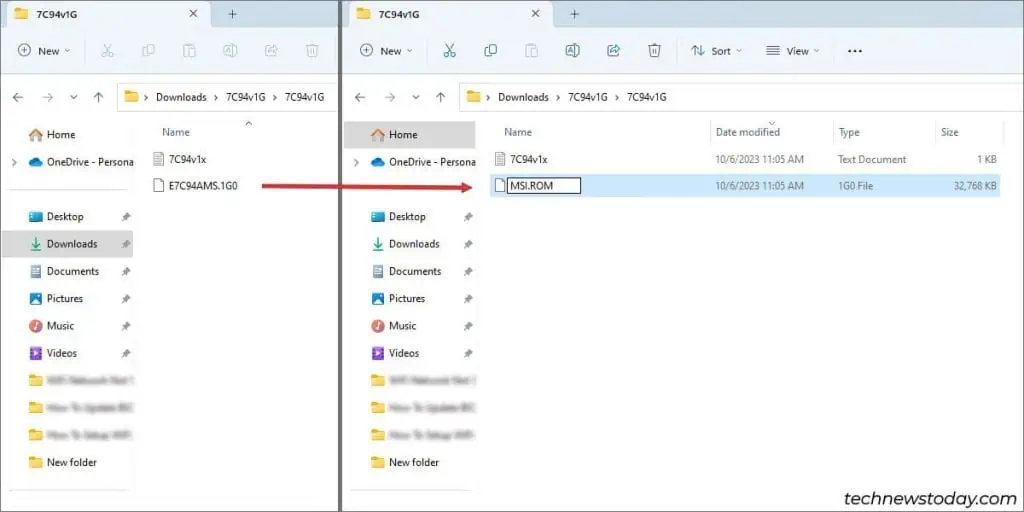
- Locate the BIOS file extracted earlier. Rename this file and it’s extension to
MSI.ROM.
- Move this renamed file to the FAT32 USB.
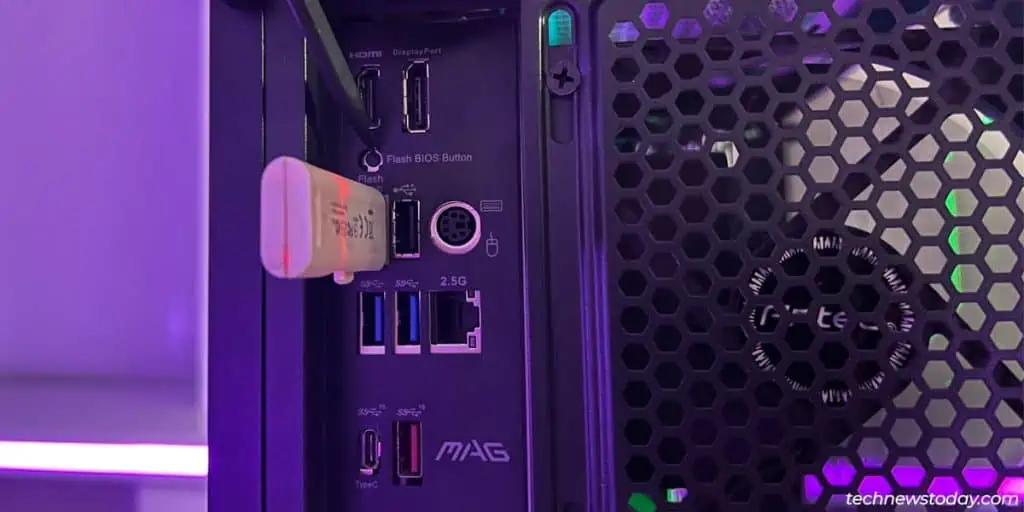
- Connect this USB to the Flash BIOS port on the motherboard.
- Besides this, you only need to connect the 24-pin ATX connector and 8-pin CPU connector to the motherboard. All other components (CPU, RAM, etc.) are optional and make no difference for BIOS Flashback.
- Turn off the system but keep the power cables connected.
- Without turning it on, press the Flash BIOS button for around 5 seconds.
- The Flash BIOS LED should start blinking. Your USB’s LED will start blinking too if it has one.
- After 5-10 minutes, the LEDs will stop blinking. This indicates that the BIOS update is complete.
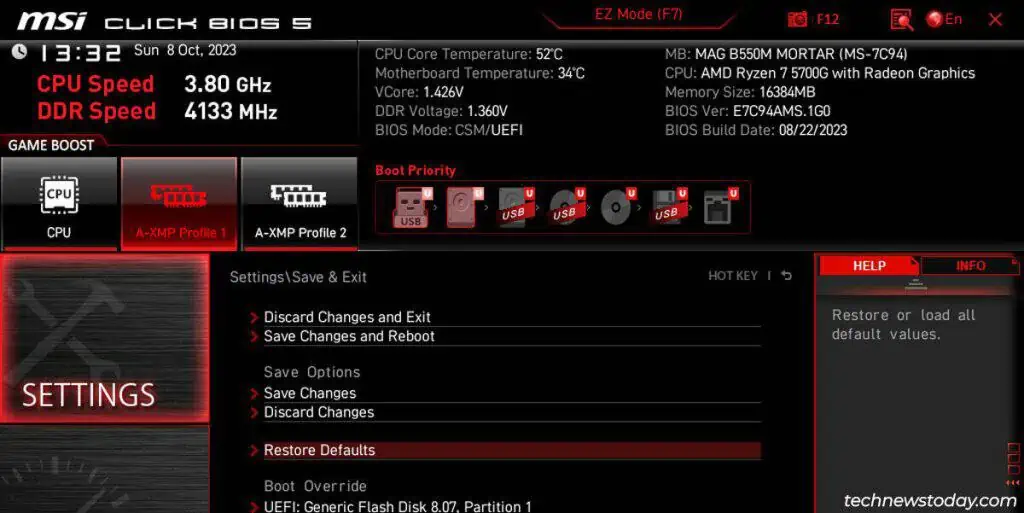
- Power on your PC afterward. If prompted, boot to the BIOS and Restore Defaults. Then, press F10 to save the changes and reboot.

Using MSI LiveUpdate
MSI LiveUpdate automates the BIOS update process via utilities like MSI Center and MSI Dragon Center. While this is slightly more convenient, I do not recommend using this.
It involves the Windows environment for the first half of the update process (more variables involved, meaning a higher chance of problems).
This is proven through user feedback too. A lot of users have reported problems during and after the update with this method.
But if you prefer LiveUpdate despite its added risk, here’s how you can use it:
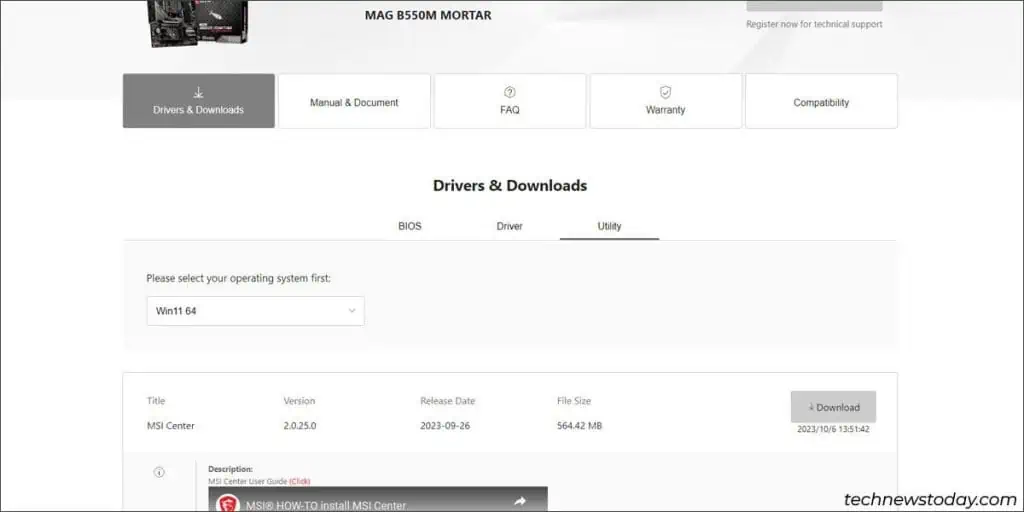
- On your motherboard support page, expand the Drivers & Downloads > Utility section.
- Download MSI Center or MSI Dragon Center from here.
- Install and launch the downloaded app.
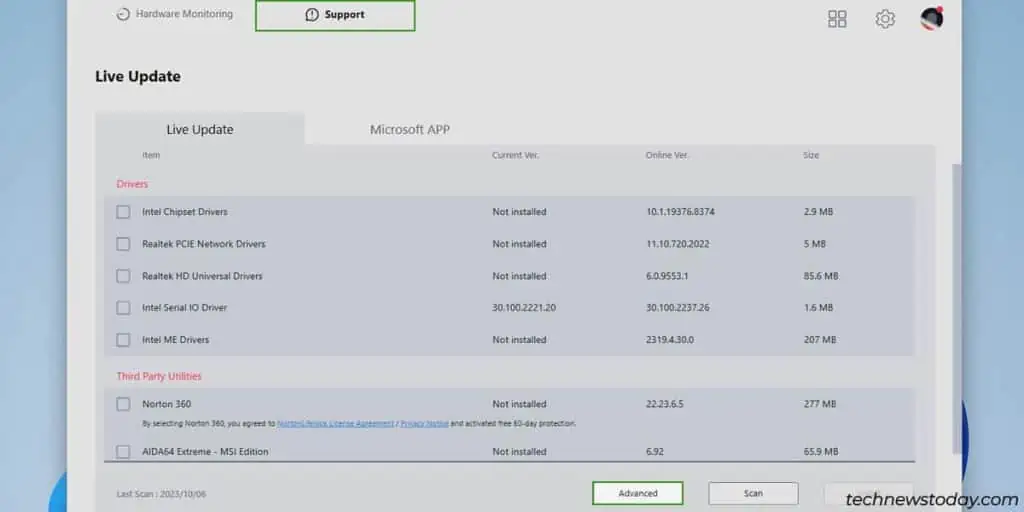
- Click on Support > Live Update > Advanced.
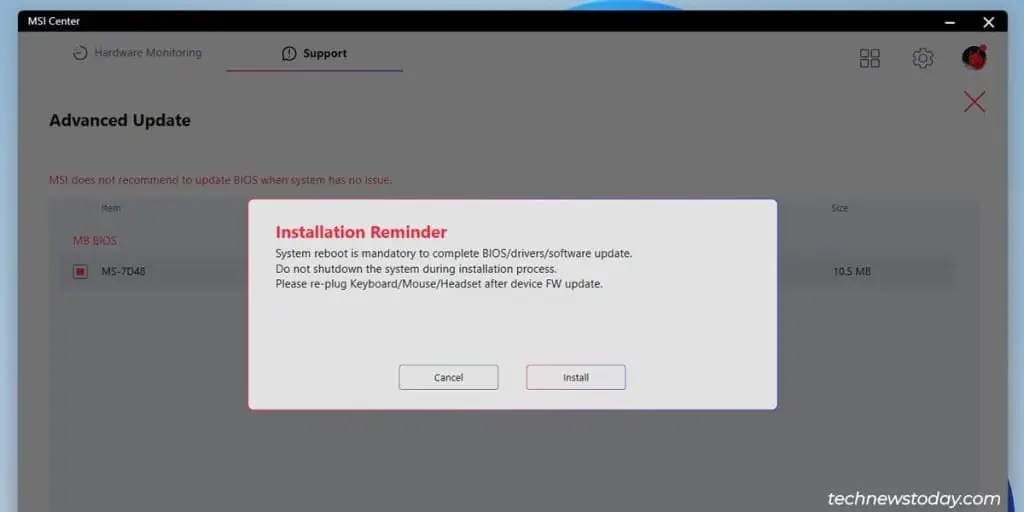
- Select the listed BIOS version and click on Install. Press Install again to confirm and proceed.
- The system will reboot and start updating the BIOS. The process will complete in 5 minutes or so, and your PC will reboot afterward.
What If the BIOS Update Fails
If you use the recommended methods (M-Flash or BIOS Flashback) and follow the steps properly, the BIOS update should complete without a hitch.
If the BIOS update does fail somehow, you have a few ways to recover your board. First, use BIOS Flashback and try the following things:
- Clear the CMOS.
- Flash another BIOS version.
- Use another USB stick.
- USB 2.0 sticks have the best compatibility but the key detail is to use a drive of a different USB version than before.
- Convert the drive to MBR. Then, repeat the steps to flash the BIOS.
Some MSI boards also support DualBIOS (meaning your board has 2 BIOS chips). In this case, you can switch to the backup BIOS to get your board working again. The main BIOS chip should automatically recover thanks to the backup image.
If none of these steps helped, refer to our in-depth MSI BIOS Recovery guide. It covers other technical methods like using a BIOS Reprogrammer and replacing the BIOS ROM.

53
Обновление BIOS при помощи MSI Center
Перед обновлением:
∙
Убедитесь, что драйвер локальной сети установлен и есть подключение к сети
Интернет.
∙
Перед обновлением BIOS закройте все остальные приложения.
Обновление BIOS:
1.
Установите и запустите MSI Center, и затем перейдите на страницу
Support
.
2.
Выберите
Live Update
и нажмите кнопку
Advance
.
3.
Выберите файл BIOS и нажмите кнопку
Install
.
4.
Когда на экране появится напоминание об установке, нажмите кнопку
Install
.
5.
Система автоматически перезагрузится для обновления BIOS.
6.
По завершению процесса обновления, система перезагрузится автоматически.
Обновление BIOS при помощи кнопки Flash BIOS
1.
Пожалуйста, скачайте последнюю версию файла BIOS с сайта MSI®, который
соответствует вашей модели материнской платы.
2.
Переименуйте файл BIOS в MSI.ROM, затем сохраните его в корневую папку
устройства USB
3.
Подключите блок питания к
CPU_PWR1
и
ATX_PWR1
. (Никакие другие
компоненты кроме блока питания не используются.)
4.
Подключите устройство USB, содержащий файл MSI.ROM в
порт Flash BIOS
на
задней панели портов ввода/ вывода.
5.
Нажмите кнопку
Flash BIOS
для обновления BIOS и светодиод начинает мигать.
6.
По завершению процесса обновления BIOS светодиод гаснет.