
| Автор | Сообщение |
|---|---|
|
Добавлено: 27 мар 2013, 18:08 Заголовок сообщения: Инструкция к Samsung ECX-1 Panorama |
|
|
|
Всем привет недавно откопал Samsung ECX-1 Panorama но я новичок и не все понял что там есть и для чего если кто может дайте пожалуйста инструкцию к нему. В интернете нигде не нашел. |
| Вернуться к началу |
|
|
rp1n |
Добавлено: 27 мар 2013, 18:15 Заголовок сообщения: |
|
|
Да эта только хотелось бы на русском |
| Вернуться к началу |
|
|
yurrix |
Добавлено: 27 мар 2013, 20:11 Заголовок сообщения: |
|
|
Если камера официально в СНГ не поставлялась, то инструкции на русском и не существует. Хотя, даже если и поставлялась — в те годы далеко не все производители озадачивались локализацией инструкций. |
| Вернуться к началу |
|
|
rp1n |
Добавлено: 27 мар 2013, 20:20 Заголовок сообщения: |
|
|
Мда. Очень жаль |
| Вернуться к началу |
|
|
yurrix |
Добавлено: 27 мар 2013, 22:33 Заголовок сообщения: |
|
|
инструкция, в принципе, не сложная. если какой-то момент не понятен, обращайтесь, помогу перевести |
| Вернуться к началу |
|
|
rp1n |
Добавлено: 29 мар 2013, 09:34 Заголовок сообщения: |
|
|
Мне хотелось бы побольше узнать про настройки фокуса |
| Вернуться к началу |
|
|
paolo_cocoa |
Добавлено: 29 мар 2013, 11:56 Заголовок сообщения: |
|
|
M.AF — multi beam autofocus — при сюжетах, когда в кадре несколько важных объектов, к примеру, два человека, которые стоят не вместе. Камера тогда вычисляет наилучшую дистанцию фокусировки |
| Вернуться к началу |
|

retroplaceru@gmail.com

retroplaceru@gmail.com
Компактные пленочные фотоаппараты
Зеркальные камеры
Пленка 35мм
Ремешки и чехлы
Наборы и капсулы
Распродажа
Все товары
Error get alias
Инструкции для пленочных фотоаппаратов
Выберите интересующую Вас модель
Olympus Superzoom 70G
Kodak KB-30
Cosina CT-20/CT-10
Minolta Hi-Matic 7S
Olympus OM-1n
Mamiya RB67
Mamiya 645
Olympus mju II
Olympus Pen EE S
Yashica Electro 35GS
Lomo LC-A
Olympus mju ii zoom 170
Olympus Mju Zoom Wide 80
Canon Sure Shot K
Samsung ECX 1
Canon EOS Rebel X
Canon TX
Konica Autoreflex TC
Konica POP
Kodak KE115 EasyLoad
Pentacon Six TL
Praktica MTL 5B
Pentax Espio 738
Euroshop PC-606
Nikon Em
Nikon F55
Наши тесты
Будем рады вам в нашем инстаграм аккаунте
По всем вопросам, обращайтесь к нам в Директ или отправляйте письмо на электронную почту
Instagram: @retroplaceru
Email: retroplaceru@gmail.com
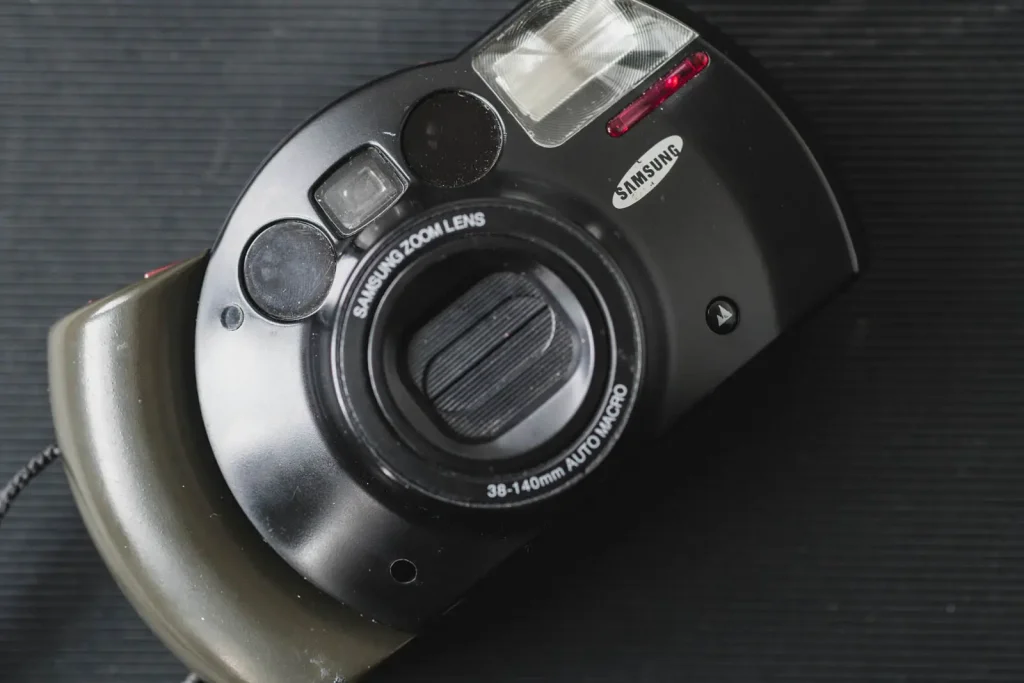
The Samsung ECX1 is a camera I’d been watching come and go on eBay for quite I while. The temptation had peaked just after I had bought and enjoyed the the results from a Konica AiBORG. The problem with the Konica is that whilst the results were good, shooting it was akin to playing with a poorly designed child’s toy. The experience was bad, but it made me wonder if there might be a similar camera out there, with a similarly good lens, but that didn’t seem to have been designed by a 14 year old boy.
The Samsung was already on my radar, but the Konica moved it up a few notches on the priority list. At least for a little while I was watching them closely on eBay, though I never won one. My interest wained, and with time I came to the conclusion I do with many of this type of camera – I’ll buy one if I find one in a charity or pawn shop. Unlike most cameras I come to that conclusion about, I did actually find one in a pawn shop in town – in good condition too!
I wrote a little preamble to this post for Alan over on Canny Cameras. Alan asked me if I’d like to contribute to his site, and since it’s about very cheap cameras, I thought that’s what I’d write about. This camera only cost me £2.99. But as I talk about in my post, the thing that I find amazing about these particular sorts of cheap cameras is that they were far from cheap in their day. This Samsung would have cost a few 100 quid back in 1994 when Samsung released it. But now, thanks to its somewhat over the top functions list, large size, and zoom lens, it just doesn’t appeal to the modern film photographer. For me, it’s that lack of appeal makes it appealing to me. Don’t get me wrong, I’m not some sort of contrarian (much), I just like a bargain, and cameras like these with their lack of common appeal are very cheap. But, because they were very expensive in their day, pound for pound, you get a lot of camera… Even if the camera you get wasn’t quite originally designed with you in mind…
“Dad” cam
There is a good reason this sort of camera isn’t widely popular these days. Quite simply, it was designed to appeal to a marketplace that just doesn’t exist in film photography today. Unlike the Konica AiBORG which was, as mentioned, clearly designed for a child the Samsung ECX1 was seemingly designed for what we used to call when I worked in camera retail, the “Dad”.
The photographer buys a camera that fits whatever x,y or z purpose. The “Dad” on the other hand, wants to buy a camera that does what appears to him to be everything. He wants a “zoom” lens so he can take photos of his kids playing football, but he also wants a wide angle for the landscapes on holiday. He doesn’t want to skimp on quality, but doesn’t have the knowhow to use an SLR, or even the desire to learn – something he will freely admit. So what does he do? Well, he buys ‘What Camera’ of course – because that will make him an expert!
Eventually, he reads an article in a particularly dog eared (largely from swotting flies) edition that’s been knocking around the house for a few months. The lead story is (something like) “Power Zooms – the all-in-one answer to your photography needs”. It (probably) talks about zoom lenses and long lists of specifications that must surely be comparable to those found on high end SLRs – after all, why else would they include them??
Front and centre is (likely) the new ECX1 from Samsung, it’s won awards, What Camera (probably) say it’s great. It’s perfect, his heart is set, he goes into a camera shop and talks in a voice that’s slightly too loud about how he’s done his research and he knows what he wants. “Put it on the MasterCard!” He says also in a slightly too loud voice. A purchase is made.
The photography industry has for a long time now generated gear for this sector of the market – when I was in retail, the cameras were the same as this one, they just had bigger zoom lenses and tiny digital sensors, but broadly speaking they were the same deal. These days phone cameras have made things a little different (“I’ve got all the camera I need right here in on my iPhone 6s Plus!!”), but the market still exists. If you want to spot a “Dad cam” just look out for “Dad mode” (or “Intelligent auto” as it’s usually called) on the control dial.
Today’s “Dads” are just as sucked in by all the bells and whistles as they were 20 odd years ago. But of course they wouldn’t dream of buying a 20 year old camera. To appeal to the “Dad”, it needs to be the latest and greatest digital.
Combine this with the fact that the modern (probably trendy) film photographer wouldn’t touch something like this Samsung, and the fact that it’s not even cool to the lomo crowd, and eventually you end up with a Samsung ECX1 sat on a shelf in a pawn shop with a £2.99 price tag, waiting for some niche interest weirdo like me to come along…
The Samsung ECX1 review
This camera is pretty much auto everything. There is very little in the way of manual control, though there is pretty much every other mode you can think of. These include a variety of flash settings, two auto focus modes, a (basically useless) manual focus mode, a snap focus mode, fuzzy zoom mode, portrait mode, something called “step” mode, continuous mode, multiple exposure mode, an interval timer, bulb mode, a bunch of self timers, a landscape mode, a defrost mode, a spin cycle and a special attachment for vacuuming cobwebs out of the corners of your ceiling… …
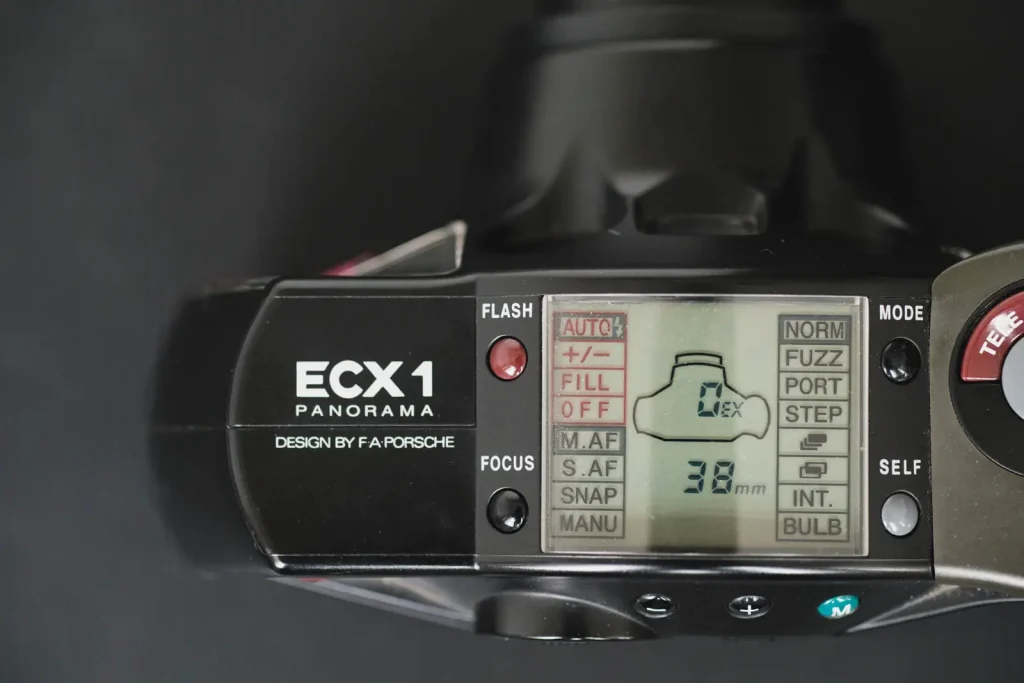
Many of these modes will appeal to the unsuspecting “Dad”, but fuzzy zoom is possibly the most “Dad” mode of them all. If you’re at the telephoto end of the lens, and if combination of film speed and the slow aperture makes for a slow shutter speed, it’s
fuzzy zoom to the rescue. By activating this mode, at the point of half press the lens will zoom out to the point that the lenses aperture is able to open wide enough to use a shutter speed that won’t result in a photo blurred by camera shake. The mind boggles – I can’t even begin to put into words how I feel about this sort of technology – I don’t need to though, it’s just not designed for me.
This might sound like an awful lot of negativity and cynicism to be blasting in the direction of this poor 22 year old Samsung camera? Well, on face value, I’m not the sort you might expect to be in the market for a camera like this. I might be a Dad, but I’m not a “Dad”; my other camera is a Leica don’t-ya-know?! Well, this might be the case, but it doesn’t mean I’m incapable of seeing what something like this can bring to me as a Dad, or indeed me as a photographer.
The lens
For a start, the lens is pretty good – and it’s zoom range is novel when your used to the small selection of focal lengths I usually carry around with me (one). It’s a little soft at the long end, as is almost always the case with cameras like these.


But back off the zoom just a touch and results are perfectly fine.


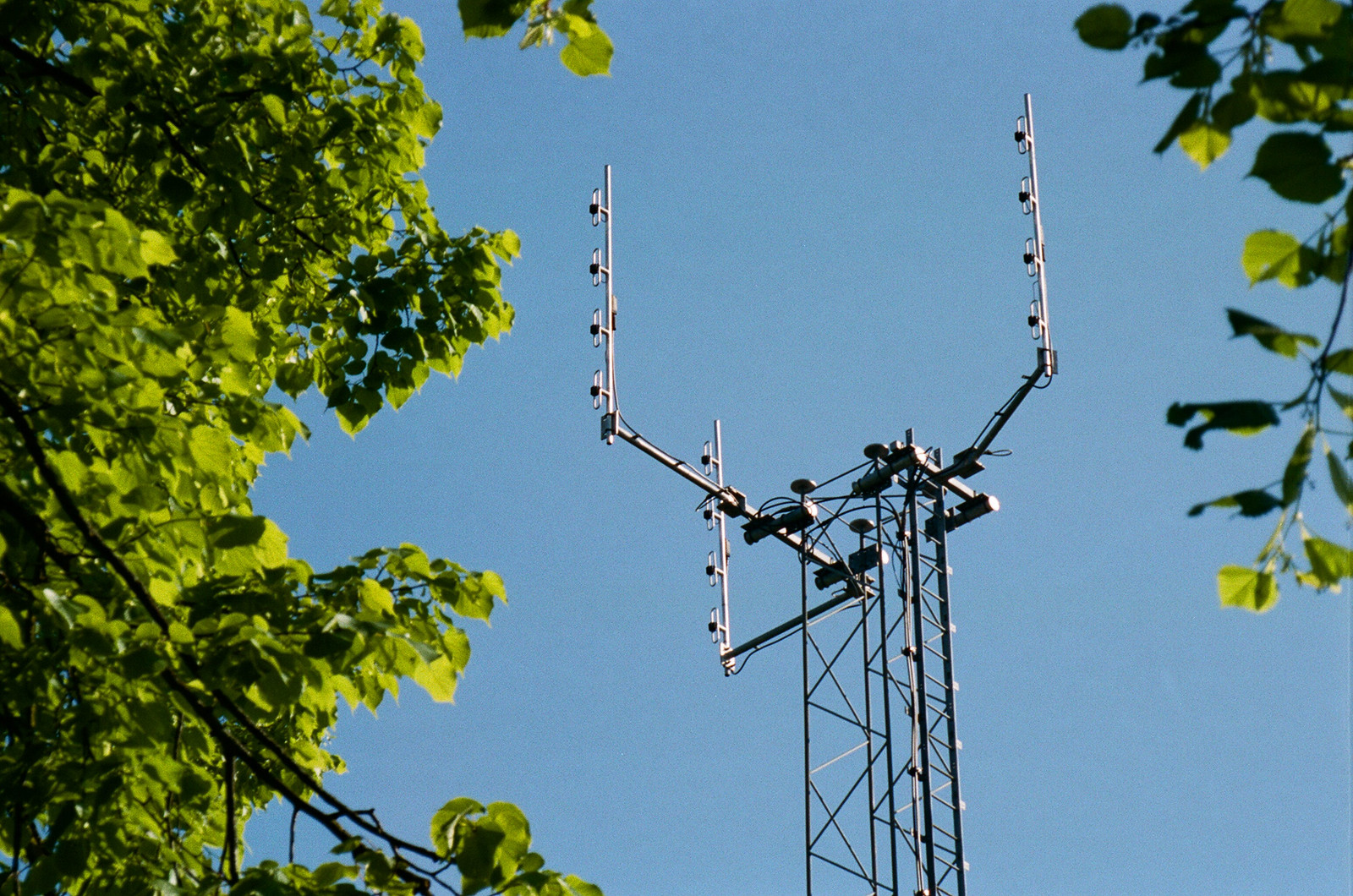


At the wide end its a 38mm f/3.8. This is well within very useful territory for most types of day to day shooting. And actually, short of the results looking a little flat compared to what I’m used to, the lens quality is actually quite admirable!

For the size of the camera, it would have been nice if the lens was a little faster than f/10.5 at the long end mind.
That said, as a usually steadfast single focal length photographer, sometimes it’s easy to forget that this sort of lens allows a bit more freedom to take shots you might not usually take.

“Come as fast as you can toward me, Connie”
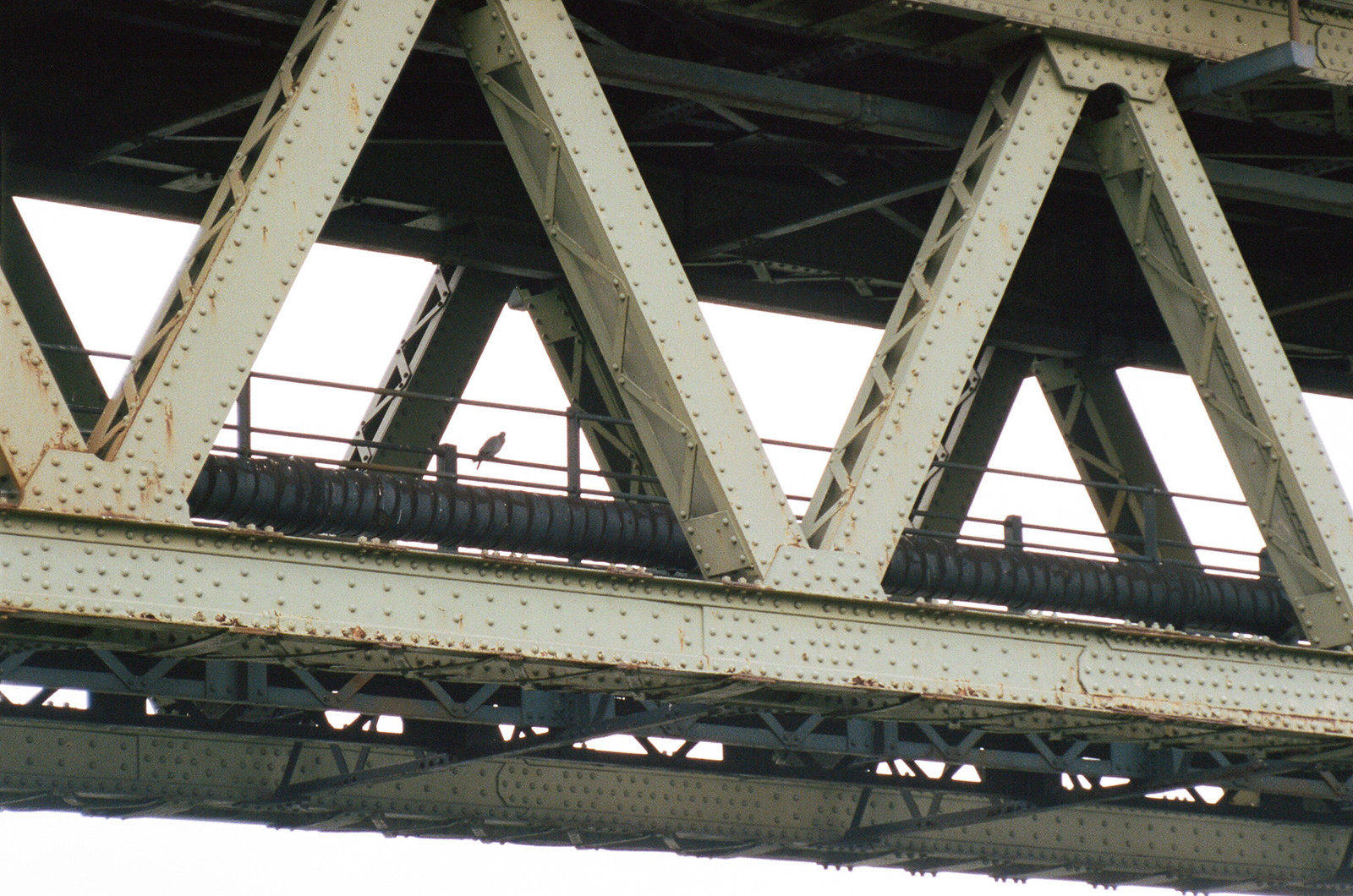
“Ooo look at that bird… Oh wait… I can’t zoom in that much…”
Joking aside, having not used such a zoom lens in a little while, I did find myself zooming in on things just for the fun of it. For the first time in as long as I can remember I just relied on the viewfinder to frame. I’d spot something of interest, and rather than imagining the frame in my head first as I do with my rangefinders, I’d just zoom right in on the potential area for a frame, and see if I could find a photo worth taking.
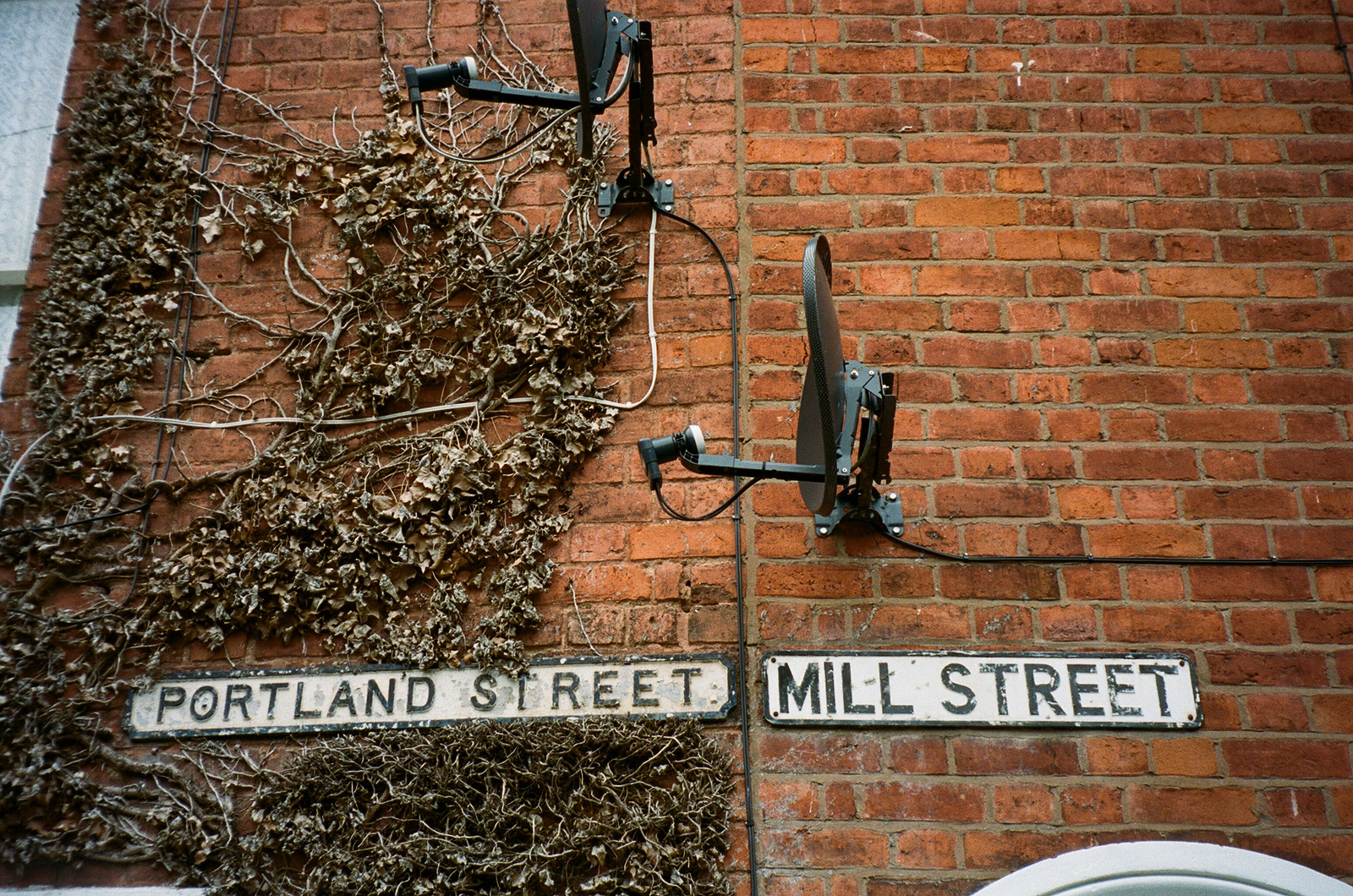
Of course, “worth taking” is subjective, and perhaps in hindsight some of the above perhaps weren’t as worth taking as they seemed at the time – but I enjoyed the slightly simplistic approach to the photographic process.
Features “Dad” didn’t use
Like every other “Dad” who ever bought one of these cameras, I didn’t use any single one of the fancy features. This is of course the ultimate irony of these cameras. The type of people who would have bought more of them than anyone else, would have had their mind partly made up by extensive feature sets that they would ultimately never use. Very few “Dads” would have had even the remotest idea what to do with a double exposure mode, but it was there because it added another line to the long spec sheet.
Features you might use
But of course, their lack of use doesn’t detract from the creative possibilities they bring to the table for us today. Interval timers and double exposure modes do make for occasional creative fun. Then of course there is the snap mode which is great for quick point & poke hyper focal snaps. These sorts of modes wouldn’t ever triggered a spark of imagination in the “Dad”, but they might in the creative snapper… At least if said creative snapper can bear to be seen with the thing.
Handling & usability
Let’s face it, it’s not the most attractive of cameras, but, additionally to the lens quality and all these features, its handling is actually really quite good. The AiBORG was a haptic nightmare. By comparison, this camera handles really well. The viewfinder is a little on the small side, and is quite hard to find the eye, but all the buttons actually feel like they are in the right place – especially the shutter button. Yes the camera as a whole is a little on the large side, but it doesn’t feel any bigger than any of the rangefinder cameras I usually carry… Though it is of course a little bit bigger than the average P&S!
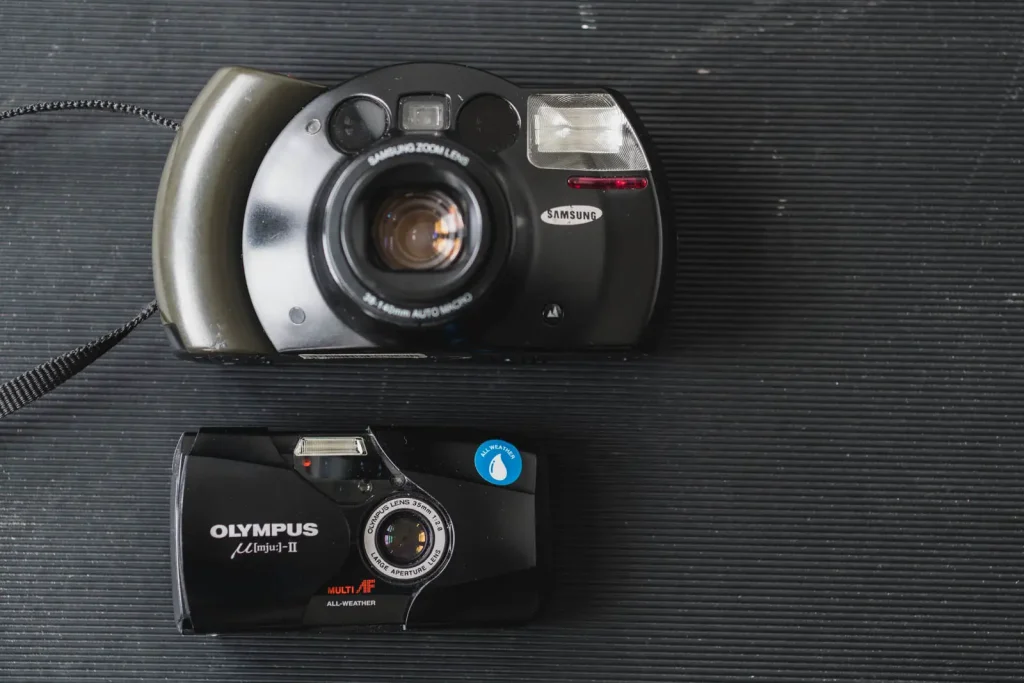
To conclude – a bargain
Ultimately I know bargain when I see one. And these cameras, are without any doubt an absolute bargain these days. Just to reiterate, I paid £2.99 for mine! £2.99! That, as far as I can gather is 1/100th of its original retail price! This isn’t £2.99 for something that used to be cheap, this is £2.99 for something that used to be a relatively premium product. Something that was bought by men with strong right wrists (from all the fly swotting!), and shiny gold credit cards! These men might have been buying themselves a lot of superfluous features they would never use, but their loss is – in my opinion – our gain today.
Of course, in reality I’m not going to sell my Leica M-A and Zeiss ZM Sonnar now I’ve found this bargain of the century. Far from it. In fact, I’ll probably sell this camera before I use it again. But if your on a tight budget, or you just want something fun to shoot, some gimmicky features to play with, but you ultimately want to end up with quality decent photos – you can’t go wrong with the £2.99 you’ll likely spend on the Samsung ECX1! (It’s certainly a nicer camera than the Konica AiBORG!)
Share this post:
https://i0.wp.com/casualphotophile.com/wp-content/uploads/2020/08/samsung-ecx1-review-3-of-11.jpg?fit=1800%2C1012&ssl=1
1800
1012
Connor Brustofski
Connor Brustofski
https://i0.wp.com/casualphotophile.com/wp-content/uploads/2020/01/71063292_2403362693084619_1173485434357940224_o.jpg?fit=96%2C96&ssl=1
On paper, the Samsung ECX-1 is similar to almost all 35mm point and shoot film cameras. It has a versatile, if slow, zoom lens covering most common focal lengths, a built-in flash, some “creative modes” to spice up the marketing material, and a compact design. Oh, wait, scratch that last one.
Samsung must have missed the memo, eschewing the compact design of classic contemporaries like the Contax T2, Yashica T4, and original Olympus Mju. You may think I’m being unfair, putting the ECX-1 and its 38-140mm lens against prime-wielding flagship point and shoots, but search the CP archives and you’ll find a catalog of zoom-equipped alternatives that aren’t half the size of a personal pizza. No, seriously, check out that archive.
Before I get to mocking the ECX-1’s design too severely, I should mention that it was designed by F.A. Porsche and won a few design awards when it debuted in 1994. There’s clearly a motif of concentric circles going on, and some effort is taken to ensure the simplicity and continuity of the lines. Which is cool, and would definitely impress the other dads when taking photos of your daughter’s soccer games in the mid-’90s.
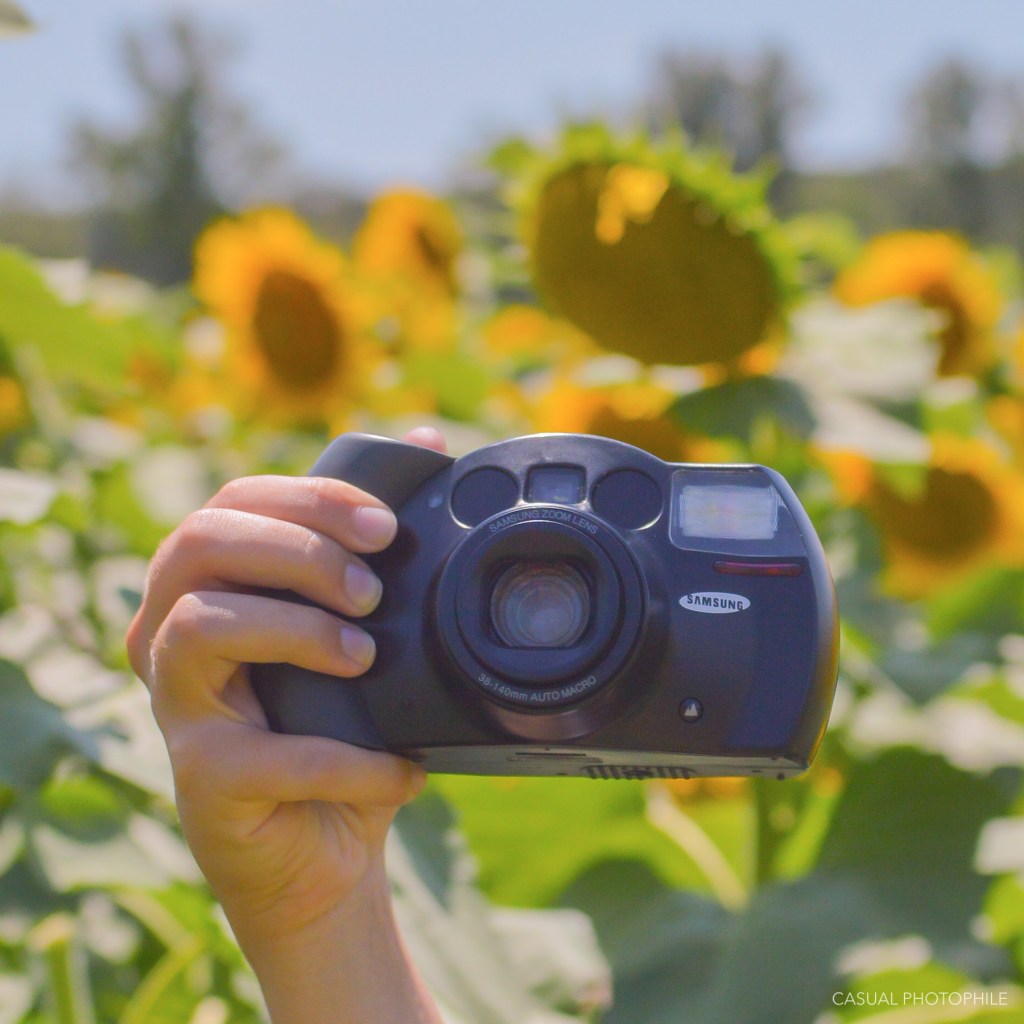
Less care was taken, however, when considering how the camera fits in human hands. I don’t have particularly large hands, but I constantly found myself having to “claw” the camera’s bottom with my pinky finger to stabilize it because the grip just isn’t big enough to offer substantive control. It’s the ultimate irony, building a needlessly-large camera and then making the grip too small to use.
Directly in the center of the camera sits the massive lens. And you may be thinking that since the lens is so large compared to other point and shoots that perhaps it has an advantage in aperture speed. A good thought. I applaud you for it. You’re wrong though. While the lens starts at a passable f/3.5 at 38mm, by the time we reach 140mm the lens’ maximum aperture is a crippling f/10.5. F/10.5!! That’s almost into the realm where we sharpness drops due to diffraction.
For reference, the Olympus Mju Zoom 140 has a similar 38-140mm lens with apertures ranging from f/4 at 38mm to f/11 at 140mm. The kicker is that the Stylus Epic weighs nearly half what the ECX-1 does and it’s significantly smaller. The viewfinders are even about the same size. Call me uncultured, but I just don’t understand this camera from a practical standpoint.
All of this could be excused, though, if the camera handled perfectly and the photos were wonderful, right? We can excuse the size if it’s better to have the Samsung ECX-1 than two Pentax IQ Zooms or six more rolls of film, right? Alright, maybe that’s unfair, but I think it’s totally fair to expect more to justify the size and weight of the Samsung ECX-1. So does it deliver?
In short, no. In long, it’s ambitious and quirky, and overall just okay. Once you find a satisfying way to hold the camera, it’s pretty much a normal point and shoot experience. Normal flash modes, some creative controls, and not-bad-but-not-good autofocus. It’s a bit loud, but overall responsive and fine.
One thing the ECX-1 does have is a collection of unique automatic modes. This is not the first similarity the camera has to the Konica AiBORG, with its 19 creative, if stupid, scene modes packed into an even more egregiously-large and bulbous chassis. The Samsung’s zoom-based scene modes, among other things, make it like an AiBORG Lite. These modes, including interval shooting, double exposures, portrait zoom, and, my personal favorites, “fuzzy zoom,” allow the photographer some control over how the automatic camera adjusts settings and framing.
Yes, I said framing. Some of the modes, including fuzzy zoom, will actually change the framing of the shot if the camera doesn’t have enough light or thinks your photo is bad. Seriously, the portrait zoom mode will attempt to zoom to cover your subject’s shoulders and head. It’s very Big Brother, framing a shot at the wide end and having the camera say “no, you silly rube, that’s not how you do a portrait! I’m going to zoom in.” Like it’s my mom who simply won’t have me ruining the family vacation photos again!


Alright, alright, I’m done. Let’s just talk about the photos. I spoiled the Samsung ECX-1 with Kodak Portra 160 in hopes that the overbearing AI inside of it would reward me with good photos. And I got good photos. The harsh light excused the ECX-1’s slow apertures and the results were pleasant.
I suppose the best compliment I could give the Samsung ECX-1 is that I didn’t think about it too much as I was snapping photos of my friends. I even found myself using the macro mode quite a bit after consulting the manual to find the minimum focus distance. It handled the low-ISO film admirably, although the results were a bit soft, especially at the far ends of the zoom. That’s to be expected of any zoom-equipped point and shoot, though.

That just about sums up the ECX-1. It’s not egregious, no matter how dramatic I was earlier. It’s a big, ugly thing, but the worst part is that it doesn’t gain anything for it. It doesn’t have a better lens, more modes, faster functioning, or better handling than smaller point and shoots. It’s decidedly average at best, and uncomfortable at worst.
I waited until after I had played with and shot the Samsung before I looked up its worth, convincing myself it was either very expensive or completely worthless. Turns out it’s the latter; it costs almost nothing, which I can understand. There are so many other cameras that can do the same things as the Samsung ECX-1, and also give you room to fit a few Nutri-Grain bars in your bag for a snack. Porsche-designed or not, I’m pretty sure I’d rather have snacks.
Want your own Samsung ECX-1?
Get it on eBay
Get it from our shop F Stop Cameras

Follow Casual Photophile on Facebook and Instagram
[Some of the links in this article will direct users to our affiliates at B&H Photo, Amazon, and eBay. By purchasing anything using these links, Casual Photophile may receive a small commission at no additional charge to you. This helps Casual Photophile produce the content we produce. Many thanks for your support.]