
Report abuse
Libble takes abuse of its services very seriously. We’re committed to dealing with such abuse according to the laws in your country of residence. When you submit a report, we’ll investigate it and take the appropriate action. We’ll get back to you only if we require additional details or have more information to share.
Product:
Get your user manual by e-mail
Enter your email address to receive the manual of Rel quake in the language / languages: English as an attachment in your email.
The manual is 0,3 mb in size.
You will receive the manual in your email within minutes. If you have not received an email, then probably have entered the wrong email address or your mailbox is too full. In addition, it may be that your ISP may have a maximum size for emails to receive.
The manual is sent by email. Check your email
If you have not received an email with the manual within fifteen minutes, it may be that you have a entered a wrong email address or that your ISP has set a maximum size to receive email that is smaller than the size of the manual.
REL Acoustics Quake
Operating Instructions
for the
Q
Range
of
SUB-BASS SYSTEMS
REL Acoustics Limited
North Road, Bridgend industrial Estate
Bridgend, CF31 3TP
United Kingdom
Telephone: +44 (0)1 656 768 777Fax: +44 (0) 1 656 766 093Web: www.REL.net
View the manual for the REL Acoustics Quake here, for free. This manual comes under the category speakers and has been rated by 7 people with an average of a 9.1.
This manual is available in the following languages: English. Do you have a question about the REL Acoustics Quake or do you need help?
Ask your question here
Product Images (1)

REL Acoustics Quake specifications
Below you will find the product specifications and the manual specifications of the REL Acoustics Quake.
The Rel Quake is a speaker that is designed to enhance the audio experience by producing deep and powerful bass. It is specifically engineered and custom-fit for various vehicles, ensuring an optimal fit and mounting location. This speaker is constructed using high-quality materials, which contributes to its reliability and durability over time.
The Rel Quake is known for its exceptional bass performance, effectively enhancing the low-frequency range of audio playback. It is designed to provide a rich and immersive audio experience, particularly in car audio systems. The speaker is crafted with precision and attention to detail, resulting in a high-quality build that is built to last.
The Rel Quake delivers impressive sound quality and is capable of producing deep and resonant bass tones. It has been praised by audio enthusiasts for its ability to reproduce low frequencies accurately and with clarity.
This speaker is a popular choice for those seeking to enhance the audio performance in their vehicles. With its custom-fit design and high-quality construction, the Rel Quake offers a reliable and durable solution for upgrading the bass capabilities of car audio systems. Overall, it is a well-regarded speaker that delivers powerful and immersive bass performance.
General
Frequently Asked Questions
Can’t find the answer to your question in the manual? You may find the answer to your question in the FAQs about the REL Acoustics Quake below.
How do I connect my Rel Quake speaker to my audio source?
To connect your Rel Quake speaker to your audio source, use a standard RCA cable. Connect one end to the subwoofer output of your amplifier or receiver, and the other end to the LFE (Low-Frequency Effects) input of your Rel Quake speaker.
How do I adjust the volume of my Rel Quake speaker?
To adjust the volume of your Rel Quake speaker, locate the volume control knob on the back panel. Turn the knob clockwise to increase the volume and counterclockwise to decrease it. Start with a lower volume and gradually increase it to your desired level.
What should be the ideal crossover frequency for my Rel Quake speaker?
The ideal crossover frequency for your Rel Quake speaker depends on your main speakers’ capabilities and the acoustics of your listening room. Generally, a crossover frequency between 50Hz and 80Hz is a good starting point. Experiment with different settings to find the best balance between your main speakers and the subwoofer.
How can I optimize the placement of my Rel Quake speaker in the room?
To optimize the placement of your Rel Quake speaker, consider placing it in a corner or against a wall to take advantage of room boundary reinforcement. Experiment with different locations to find the spot that provides the best bass response and integration with your main speakers.
Is it possible to adjust the phase of my Rel Quake speaker?
Yes, it is possible to adjust the phase of your Rel Quake speaker. On the back panel, locate the phase control switch and select either 0 degrees or 180 degrees. Start with the default setting (0 degrees) and adjust it if you notice phase cancellation or reinforcement issues in certain listening positions.
Can bluetooth devices of different brands be connected to each other?
Yes, bluetooth is a universal method that allows different devices equipped with bluetooth to connect to each other.
What is bluetooth?
Bluetooth is a way of exchanging data wirelessly between electronic devices via radio waves. The distance between the two devices that exchange data can in most cases be no more than ten metres.
When is my volume too loud?
A volume above 80 decibels can be harmful to hearing. When the volume exceeds 120 decibels, direct damage can even occur. The chance of hearing damage depends on the listening frequency and duration.
Wat is Dolby Atmos?
Dolby Atmos is a technology that ensures that the sound is reflected from the ceiling to where you are listening. This makes it possible to create a 5.1 effect with only 1 speaker.
Is the manual of the REL Acoustics Quake available in English?
Yes, the manual of the REL Acoustics Quake is available in English .
Is your question not listed? Ask your question here

Operating Instructions
for the
Q
Range
of
SUB-BASS SYSTEMS
REL Acoustics Limited
North Road, Bridgend industrial Estate
Bridgend, CF31 3TP
United Kingdom
Telephone: +44 (0)1 656 768 777
Fax: +44 (0) 1 656 766 093
Web: www.REL.net

First Printed March 12th 2003
REL Acoustics ‘Q’ range User manual
2

REL Acoustics ‘Q’ range User manual
Contents
CONTENTS……………………………………………………………………………………………………………………………………………..3
IMPORTANT SAFEGUARDS………………………………………………………………………………………………………………..4
WARNING……………………………………………………………………………………………………………………………………………….4
WELCOME……………………………………………………………………………………………………………………………………………..5
WORLD WIDE WARRANTY…………………………………………………………………………………………………………………5
SERVICE AFTER WARRANTY …………………………………………………………………………………………………………… 5
DESIGN SAFETY……………………………………………………………………………………………………………………………………6
IMPORTANT……………………………………………………………………………………………………………………………………….. 6
INTRODUCTION TO ‘Q’ RANGE SUB BASS SYSTEMS…………………………………………………………………….7
CONTROLS AND CONNECTIONS — QUAKE…………………………………………………………………………………..8
CONTROLS AND CONNECTIONS — Q108 US MARKET ONLY……………………………………………………..9
CONTROLS AND CONNECTIONS — Q150E……………………………………………………………………………………10
CONTROLS AND CONNECTIONS- Q200E, Q201E, Q400E ……………………………………………………………..11
CONNECTING UP………………………………………………………………………………………………………………………………..12
TO CONNECT TO THE POWER AMPLIFIER USING THE UNBALANCED NEUTRIK HIGH LEVEL INPUT……………..13
TO CONNECT TO THE AMPLIFIER/PROCESSOR USING THE PHONO TO PHONO LOW LEVEL INTERCONNECT……….14
MODE SELECTOR……………………………………………………………………………………………………………………………….15
Q108 CONTROLS………………………………………………………………………………………………………………………………….15
REL SET-UP MADE SIMPLE………………………………………………………………………………………………………………16
REL SET-UP MADE SIMPLER……………………………………………………………………………………………………………19
RUNNING IN…………………………………………………………………………………………………………………………………………20
CARE AND POLISHING………………………………………………………………………………………………………………………20
TECHNICAL………………………………………………………………………………………………………………………………………….21
OVERLOAD PROTECTION…………………………………………………………………………………………………………………21
POWER SAVING EFFICIENCY…………………………………………………………………………………………………………..22
SPECIFICATIONS………………………………………………………………………………………………………………………………..23
SPECIFICATIONS (CONT.)…………………………………………………………………………………………………………………24
3

REL Acoustics ‘Q’ range User manual
IMPORTANT SAFEGUARDS
1. Read all of these instructions.
2. Save these instructions for future use.
3. Unplug from the wall socket before cleaning. Do not use liquid cleaners or aerosol cleaners.
Use a damp cloth for cleaning.
4. Do not use near water.
5. Do not place on a stand or table, it may fall causing injury to a child or adult, and damage to the
unit.
6. The unit should only be operated from the power source indicated on the panel of the amplifier.
7. Only use the power cord supplied.
8. Do not allow anything to rest on the power cord. Position the power cord such that it can not be
walked on.
9. For added protection during a lightening storm, or when not in use for long periods of time,
unplug it from the wall socket.
10. Never spill any kind of liquid on the unit.
11. Do not attempt to service the unit yourself, as removing the amplifier may expose you to
dangerous voltages. Refer all servicing to your dealer.
12. Unplug the unit from the wall socket and refer servicing to your dealer under the following
conditions:
a. When the power cord or plug is damaged.
b. If liquid has been spilled onto the unit.
c. If the unit does not operate properly by following the operating instructions.
d. If the unit has been dropped and damaged.
e. When the unit exhibits a drastic change in performance.
WARNING
This item is heavy. To avoid risk of injury, take care when handling.
4

REL Acoustics ‘Q’ range User manual
WELCOME
Thank you for buying a REL “Q” range Sub-Bass system. Our “Q” range is carefully hand built using
the finest materials available and is designed for maximum performance. This manual contains
important safety information as well as helpful advice and should be carefully studied before
connecting up.
WORLD WIDE WARRANTY
In addition to any local Warranty, REL offer a 3-year conditional Worldwide Warranty to the end user.
It is done in collaboration with our Distributors.
The conditions of this Warranty are:
1. That REL receive the necessary registration details from the end user.
2. That these details are received within six weeks of purchase.
3. That the product is not exported from the country of purchase for at least eight weeks after
purchase.
4. That any claim is accompanied by the necessary proof of purchase.
5. That it shall be for a term of 3 years from the date of purchase.
6. That the product has not been abused or modified in any way.
7. That it was purchased originally from a REL authorised dealer.
This Warranty is offered in good faith and is in addition to any statuary rights or existing Warranty that
may be available to the end user.
Should your REL Sub Bass Unit give you a problem, please contact your dealer who will be able to
make whatever arrangements are necessary to correct it.
SERVICE AFTER WARRANTY
Please contact your dealer in the first instance before returning any product directly to us. Should the
unit need to be returned for any reason, all carriage costs will be payable by the customer. Losses or
damage caused during transit are the customer’s risk.
5

REL Acoustics ‘Q’ range User manual
DESIGN SAFETY
This apparatus is designed to Class II specification and is double insulated,
therefore it does not require to be earthed.
This apparatus is supplied with a fitted mains plug. For UK operation a 5 Amp fuse is fitted in the
plug. Should the fuse need to be replaced use a similar rated fuse approved to ASTA or BSI 362.
Do not use without the fuse cover in place. Replacement fuse covers are available from your dealer.
If for any reason the plug is cut off it must NOT be re used. Please dispose of any such plug safely.
There is a danger of electric shock if the cut off plug is inserted into a mains socket.
IMPORTANT
The wires in the mains lead are coloured in accordance with the following code:
Green and Yellow — Earth
Blue — Neutral
Brown — Live
As the colours of the wires in the mains lead may not correspond with the markings identifying the
terminals in the replacement mains plug, proceed as follows:
— The wire coloured Green and Yellow must be connected to the terminal marked with the
letter «E» or with the earth symbol
— The wire coloured Blue must be connected to the terminal marked with the letter «N»
— The wire coloured Brown must be connected to the terminal marked with the letter “L»
This product is CE marked and has been tested to ensure it satisfies all relevant standards.
It satisfies all relevant standards for Conducted Emissions, Radiated Emissions, Susceptibility and
Immunity.
It also complies with the requirements relating to class II construction detailed in clauses 9 & 10 of BS
EN 60065 1994
It also satisfies all relevant safety tests for consumer use provided it is used within the guidelines of
this manual.
6

REL Acoustics ‘Q’ range User manual
Main Features of REL Quake, Q108 (US ONLY), Q150E, Q200E, Q201E and
Q400E
1. High level input and low level input. Also PC input on Quake and Q108
2. Separate volume controls for high level and low level inputs
3. Variable filter roll off control
4. Mode switch to control phase and low level filter bypass (Not on Q108)
5. All components of matching superior quality to achieve both long life and long term consistency
of sound quality
6. Superior wood veneered finishes available for Quake and Q201E
7. Set-Safe® circuitry ensuring ultimate protection if overloaded.
INTRODUCTION TO ‘Q’ RANGE SUB BASS SYSTEMS
Many or most loudspeakers designed to reproduce low bass are specifically designed to emphasize
the mid bass. This is the range from 30 to 70 Hertz. We at REL believe this is wrong. All of our
designs are true sub bass systems, meaning they are designed to reproduce those very low
frequencies that are felt rather than heard. This is because we believe that music is full range, as are
sound effects on movies, and we intend our products to reproduce all of these sounds, not a narrow
band.
The “Q” range models are equipped to allow you to take full advantage of AC3, Dolby Digital, DTS,
MPEG 2 and any other digital sound format that includes a dedicated Low Frequency Effects (LFE)
channel.
The dedicated LFE input meets the tough specification laid down for digital 3/2.1 channels, usually
known as 5.1. The output is nominally flat from 25Hz — 120hz. It has a dedicated input level control
which enables users to set the LFE level independently of the processor. This is important because
not all processors offer control over this significant parameter. The LFE channel is typically recorded
at 10db higher levels than the other channels.
The “Q” range also has standard speaker level inputs with their own input level control. Uniquely,
both the speaker level and the LFE input can be used simultaneously. This means you can set it up
for an audiophile sound with your CD’s or other stereo signals and instantly revert to using the SubBass System as the dedicated LFE component when watching movies. This is a feature of real
benefit if you wish to play music in stereo mode in the purist audiophile way and in full 5.1 digital
mode. True flexibility!
On two models there is a ‘Slam’ and ‘Depth’ selector, (Q150E and QUAKE). ‘Slam’ mode allows you
to choose a higher output level at 40Hz — 150Hz at the expense of maximum bass extension. This is
an excellent ‘party’ mode where subtlety and ultimate fidelity is secondary.
Alternatively the standard ‘Depth’ mode 20Hz — 100Hz provides maximum bass extension and is
strongly recommended where the highest possible fidelity is demanded. This is ideal for people in
pursuit of the absolutely highest fidelity.
See the specification table on pages 18 and 19 for features of the various models.
7

REL Acoustics ‘Q’ range User manual
LTD NORTH ROAD BRIDGEND CF31 3TP UNITED KINGDOM
CONTROLS AND CONNECTIONS — QUAKE
1 2 3 4 5
6
7
8
MODE
180
180
9
1 Slam/Depth switch. Changes the characteristics of the filter/roll off. Depth mode 20 – 100 Hz
Slam mode bass emphasised 50 – 150 Hz. ONLY FITTED TO QUAKE AND Q150E
2 Roll off control. Adjust to set the upper roll off frequency of the Sub Bass System.
3 MODE SWITCH. Used to set phase* and to bypass crossover for Low Level input**.
Position 1 / Line: 0 degrees phase, crossover engaged low level input
Position 2 / LFE: 0 degrees phase, crossover bypassed for low level input
Position 3 / Line: 180 degrees phase, crossover engaged for low level input
Position 4 / LFE: 180 degrees phase, crossover bypassed for low level input
*PHASE SELECTION AFFECTS BOTH HI AND LO LEVEL INPUTS
**Crossover is always engaged for Hi level input regardless of mode switch position.
4 LO LEVEL input volume control. Adjust for output level when using LO LEVEL phono input
or balanced line level input XLR socket.
5 HI LEVEL input volume control. Adjust for output level when using HI INPUT Neutrik socket or
BAL HI INPUT Neutrik socket.
6 PC input 3.5mm jack socket. Used to connect the Sub Bass System to a computer.
7. LFE input phono socket. Used to connect the Sub Bass System to the LFE/Sub output of a
5.1 channel amplifier or processor.
8. HI LEVEL input Neutrik Speakon socket. Used to connect the Sub Bass System to the main
front speaker terminals on the amplifier.
9 IEC Mains input socket.
8
Loading…
Друзья, всех приветствую!
Вот и свершилось. Обзавелся сабвуфером REL Quake для стерео.
Всегда был противником сабвуферов в стерео ровно до того момента, пока не услышал как они могут играть в КДП у Serg_E. С тех пор начал задумываться о приобретении такой машинки в свою систему (Dali Rubicon 2, Cambridge CXA60, Onkyo NS-6130). Но то денег было жалко, то еще что-то.
И вот попадается на Авито мне REL Quake. Еду, смотрю, слушаю и договариваемся о цене в 28 тыс. В комплекте не было провода для высокоуровневого подключения. Взял как есть, думаю, потом докуплю. Привожу этого RELовского красавца домой, подрубаю по низкому уровню и тут… совсем не то, чего ожидал. Какой-то бубнеж, бас смазан, звук саба «забивает» звук от АС. Думаю, просто надо настроить и найти место сабу. Принялся искать место, вроде, нашел, давай играть настройками: фаза, кроссовер, уровень громкости, но все не то. Не было радости от покупки.
Решил, что надо попробовать собрать кабель для высокоуровневого подключения и послушать саб еще раз. Сергей подсказал распиновку на спиконе и кабель был собран.
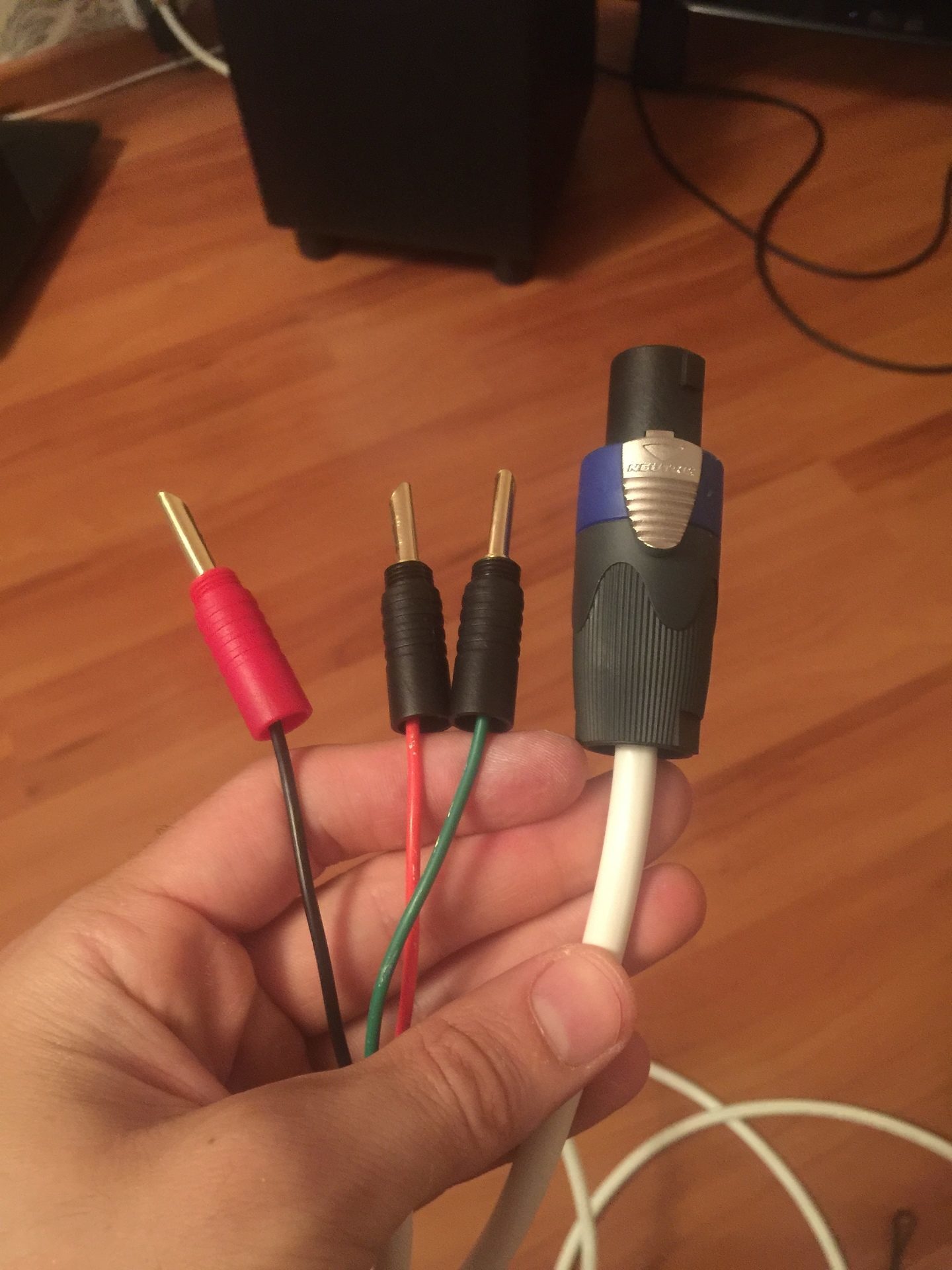
Попытка №2. И ооооооодаааааааааа!!!!!!! Именно то, чего ожидал. Такое чувство, что сабвуфер мне подменили. Бас собрался, появился четкий контроль, сабвуфер играет, не отставая от АС. Море положительных эмоций. Теперь и настройка проще: по низкому уровню крутишь громкость — саб не слышно, поворот ручки громкости на одно деление выше и уже бубнеж, который забивает АС. По высокому уровню саб адекватно реагирует на каждую настройку. Сейчас пока место найдено тут. Может, подскажете куда его лучше поставить?
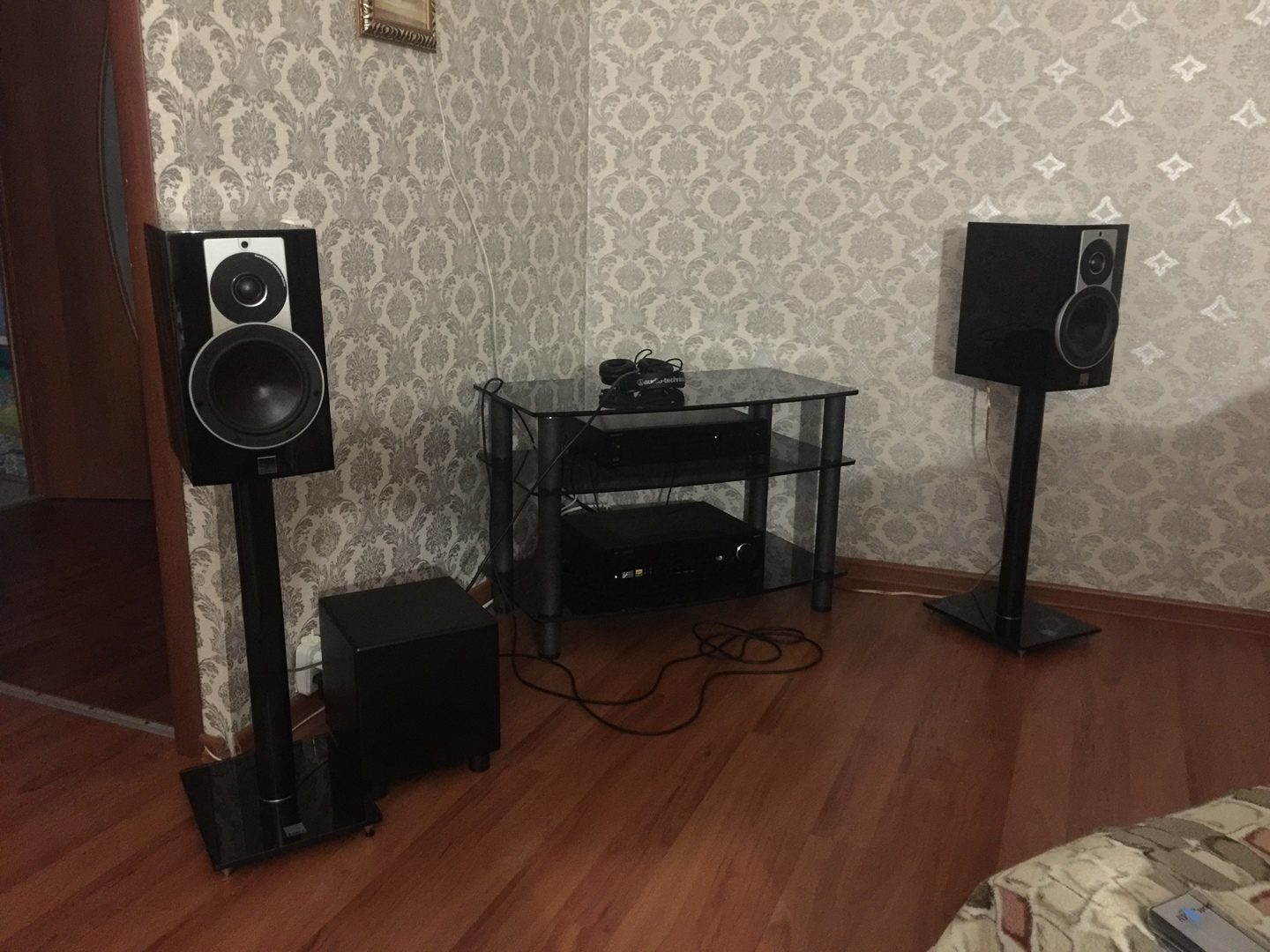
Настройки пока что вот такие

А вот для окончательной настройки жду в гости Сергея)))
P. S.: Не совсем понял как регулируется фаза при высокоуровневом подключении. Подскажите?
Архив Форума Hi-Fi.ru
По 23-5-2020
Портал Hi-Fi.ru более не предоставляет возможностей и сервисов по общению пользователей
|
Вася Плюшкин Пользователь Сообщений: 10 |
Учитавшись местной переписки по этому поводу, купил себе REL Quake. Теперь нахожусь в некотором недоумении. Он у меня подключен к ресиверу Yamaha RX-V440 только по НЧ-входу (не суть важно почему, но для меня это существенно!). Фронтальные колонки — полочники Monitor Audio B2. По паспорту они играют до 42 Гц. Вопрос такой — следует ли мне задействовать кроссовер ресивера, «собрать» весь бас от 80 Гц и ниже и скинуть на саб? Или же мне стоит использовать режим Both (саб-сигнал идет на фронты и на саб) и настраивать кроссовер саба, чтобы он подхватывал нижние частоты, с которыми не справляются колонки? Прослушивание музыки не существенно, на этой системе я только смотрю кино. |
|
skretch #2 24-01-2005 01:08:27 Подключите так, как вам больше нравится… |
|
|
Вася Плюшкин Пользователь Сообщений: 10 |
pluvas #3 24-01-2005 01:11:48 Если бы вопрос был в «нравится», я бы его не задавал. Меня интересует, как корректнее. Потому что в одном месте я читаю, что Quake не надо нагружать «высокими» НЧ (выше 50-60 Гц). В другом — что не надо насиловать колонки звуком, которые они не могут сыграть. В третьем — что в каком-то диапазоне сабу и колонкам стоит играть вместе… Я окончательно запутался. |
|
skretch #4 24-01-2005 02:03:01 В другом — что не надо насиловать колонки звуком, которые они не могут сыграть. Поставьте саб с 46Гц, подключите на колоночные клеммы уся, и поставьте на сабе противофазу. Расширите диапазон, а там и смотрите что менять дальше… |
|
|
Вася Плюшкин Пользователь Сообщений: 10 |
pluvas #5 24-01-2005 02:09:25 Повторяю, советы из серии «подключите иначе» не канают. Меня интересует настройка системы, которая уже собрана. Что касается «расширьте диапазон». Диапазон чего? |
|
Сергей Воробьев Пользователь Сообщений: 540 www.nota.ru |
notaplus #6 24-01-2005 11:36:10 Василий, Вы используете только один способ подключения, а именно LFE. При таком подключении кроссовер сабвуфера не используется, так что про него можете забыть. Все что Вы подаете на саб с выхода LFE ресивера, он воспроизводит полностью не обрезая. Если Вы хотите убрать часть НЧ диапазона с основных колонок и передать на саб, попробуйте поэкспериментировать, как Вам больше понравится так и оставьте. |
|
Вася Плюшкин Пользователь Сообщений: 10 |
pluvas #7 24-01-2005 13:26:06 А разве в инструкции не сказано, что если переключатель Mode стоит в положении 1 или 3, то кроссовер используется для сигнала с низкоуровневого входа? |
|
Андрей Иванов Пользователь Сообщений: 394 |
andrey555 #8 24-01-2005 17:20:04 |
|
bad Angel Пользователь Сообщений: 6779 |
abodunoff #9 24-01-2005 17:24:41
вам следует провести настройку комплекта: ресивер, колонки и сабвуфер при помощи тестового настроечного диска и SPL-метра…. все остальное (как заметил Саблезубый и С.Воробьев) несущественно. |
||
|
Alexey Goosev Пользователь Сообщений: 553 |
alexey_4 #10 24-01-2005 17:39:38
Чушь. Кроссовер квака работает и с LFE. Это абсолютно точно. 2 Вася Плюшкин Система сабвуфер/колонки настраивается исключительно на слух. Если нравится, как играет — не надо ничего трогать. Настраивать, кстати, надо именно на музыке. зы: У меня на ямахе выставлено без среза на 80 гц. Люблю я немного понасиловать колонки )) |
||
Архив Форума Hi-Fi.ru
По 23-5-2020
Портал Hi-Fi.ru более не предоставляет возможностей и сервисов по общению пользователей