
Взрослые
Побочные действия, наблюдаемые при проведении клинических исследований на 600 пациентах, имели транзиторный характер, наблюдались со следующей частотой.
Со стороны ЖКТ: часто (более 1/100, менее 1/10) — вздутие живота и/или боль, тошнота, диарея; редко (более 1/1000, менее 1/100) — рвота, неотложный позыв на дефекацию и недержание кала.
Дополнительная информация, полученная из постмаркетинговых наблюдений. Очень редко (менее 1/10000) — случаи гиперчувствительности: кожный зуд, крапивница, преходящая (транзиторная) сыпь, отек лица, отек Квинке и в отдельных случаях — анафилактический шок; частота неизвестна — возникновение диареи, приводящей к расстройству электролитного баланса (гипонатриемия, гипокалиемия) и/или обезвоживанию, особенно у взрослых пациентов.
Дети
Побочные действия, касающиеся ЖКТ, были минимальны и носили преходящий характер в клинических исследованиях при участии 147 детей в возрасте от 6 мес до 15 лет, выявлялись со следующей частотой.
Со стороны ЖКТ: часто (более 1/100, менее 1/10) — диарея и абдоминальные боли; редко (более 1/1000, менее 1/100) — метеоризм, тошнота и рвота; частота неизвестна — реакции гиперчувствительности.
Диарея может быть причиной болезненных ощущений в перианальной области.
Сообщалось о тошноте и рвоте в начале приема препарата, которые прекращались при продолжении приема.
Возможно вздутие живота.
Отмечались очень редкие случаи кожных аллергических реакций в виде сыпи и отека. Также сообщалось о единичных случаях анафилактического шока.
В редких случаях возможны тошнота и рвота, чувство тяжести и дискомфорт при приеме первых доз препарата.

About Laxido Orange
Macrogol 3350, sodium chloride, sodium hydrogen carbonate, potassium chloride
Contact Us
Available in an easy-to-use powder solution, Laxido Orange provides relief from chronic constipation and faecal impaction in adults, adolescents (aged 12 years and above) and the elderly.2
Laxido® Orange softens the stools by increasing the water content and thereby making them easier to pass.2
Always read the leaflet.
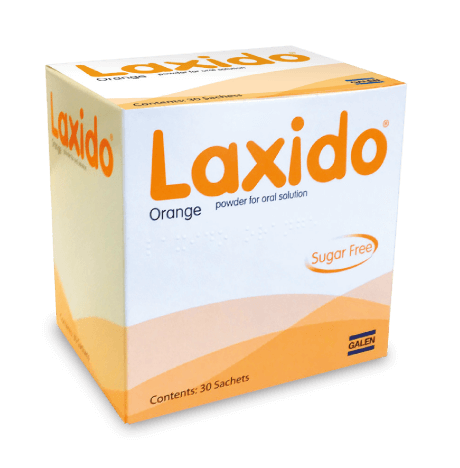
- Makes stools easier to pass
- Orange Flavoured
- Treats build-up in the bowel
- Formulated with electrolytes
- Easy to mix powder sachet
- Helps to maintain normal levels of sodium and potassium
How does it work?2
Providing patients with reassuring relief from chronic constipation.
Laxido® Orange contains the active ingredient macrogol 3350, which helps to soften stools making them easier to pass, giving you relief from chronic constipation.
Macrogol 3350 is a laxative used for the treatment of constipation, especially if you have been constipated for a long time. It is also used to treat a build-up of hard faeces in your bowel, which may be a result of long-term constipation (this is known as faecal impaction).
Laxido Orange contains electrolytes, which help to maintain your body’s normal levels of sodium, potassium, and water while you are being treated for constipation.
How to take
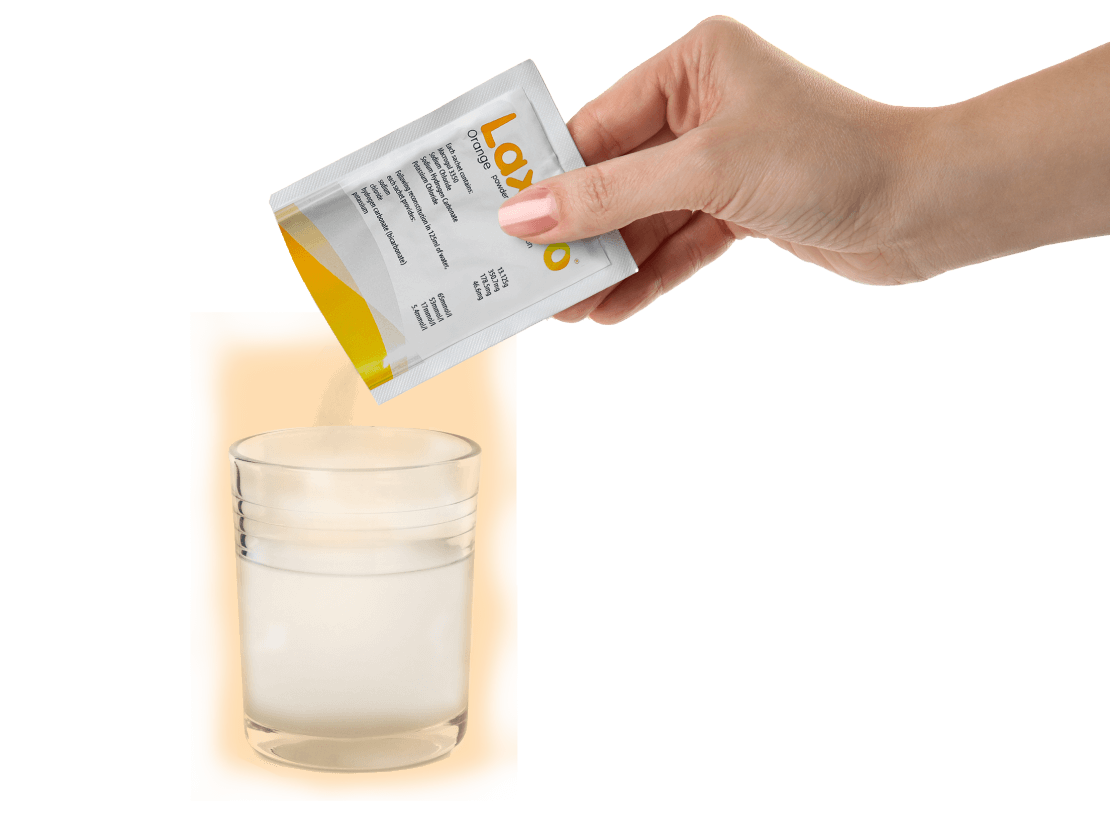
- Pour the contents of one sachet of Laxido® Orange into a glass
- Add 125 ml of water
- Stir the mixture until the powder has dissolved
- Drink the solution
If you are being treated for faecal impaction, you can dissolve the contents of all eight sachets together in a large container (in one litre of water).
Dosage & Treatment Duration
Laxido® Orange dosage and treatment duration for adults, adolescents (aged 12 and over) and the elderly,2.
| Condition | Dose | Duration |
|---|---|---|
| Chronic constipation | The usual dose for constipation is one sachet taken one to three times daily. | Does not normally last longer than 2 weeks, but treatment can be repeated if needed |
| Faecal impaction | The usual dose for faecal impaction is eight sachets daily. All eight sachets must be taken within a six hour period. If you have a heart condition, do not take more than two sachets (in 250 ml of water) in any one hour. |
Does not normally last longer than 3 days |
Back to top
About Medicine
Pharmacy
My Account Area
Laxido Orange, powder for oral solution.
2. Qualitative and quantitative composition
Each sachet contains the following quantitative composition of active ingredients:
|
Macrogol 3350 |
13.125g |
|
Sodium Chloride |
350.7mg |
|
Sodium Hydrogen Carbonate |
178.5mg |
|
Potassium Chloride |
46.6mg |
The content of electrolyte ions per sachet following reconstitution in 125ml of water is equivalent to:
|
Sodium |
65mmol/l |
|
Chloride |
53mmol/l |
|
Hydrogen Carbonate (Bicarbonate) |
17mmol/l |
|
Potassium |
5.4mmol/l |
For the full list of excipients, see section 6.1.
3. Pharmaceutical form
Powder for oral solution. Single-dose sachet containing a free flowing white powder.
4. Clinical particulars 4.1 Therapeutic indications
For the treatment of chronic constipation. Laxido Orange is also effective in resolving faecal impaction, defined as refractory constipation with faecal loading of the rectum and/or colon.
Laxido Orange is indicated in adults, adolescents and the elderly.
4.2 Posology and method of administration
Laxido Orange is for oral use.
Posology
Chronic Constipation:
A course of treatment for chronic constipation with Laxido Orange does not normally exceed 2 weeks, although this can be repeated if required. As for all laxatives, prolonged use is not usually recommended. Extended use may be necessary in the care of patients with severe chronic or resistant constipation, secondary to multiple sclerosis or Parkinson’s Disease, or induced by regular constipating medication in particular opioids and antimuscarinics.
Adults, adolescents and the elderly: 1-3 sachets daily in divided doses, according to individual response. For extended use, the dose can be adjusted down to 1 or 2 sachets daily.
Children below 12 years old: Not recommended.
Faecal Impaction:
A course of treatment for faecal impaction with Laxido Orange does not normally exceed 3 days.
Adults, adolescents and the elderly: 8 sachets daily, all of which should be consumed within a 6 hour period.
Children below 12 years old: Not recommended.
Patients with impaired cardiovascular function: For the treatment of faecal impaction the dose should be divided so that no more than 2 sachets are taken in any one hour.
Patients with renal insufficiency: No dosage change is necessary for the treatment of constipation or faecal impaction.
Method of administration
Each sachet should be dissolved in 125 ml water. For use in faecal impaction, 8 sachets may be dissolved in 1 litre of water.
4.3 Contraindications
Laxido Orange is contraindicated in intestinal obstruction or perforation caused by functional or structural disorder of the gut wall, ileus and in patients with severe inflammatory conditions of the intestinal tract (e.g. ulcerative colitis, Crohn’s disease and toxic megacolon).
Hypersensitivity to the active substances or to any of the excipients listed in section 6.1.
4.4 Special warnings and precautions for use
The fluid content of Laxido Orange when re-constituted with water does not replace regular fluid intake and adequate fluid intake must be maintained.
The faecal impaction diagnosis should be confirmed by appropriate physical or radiological examination of the rectum and abdomen.
Mild adverse drug reactions are possible as indicated in section 4.8. If patients develop any symptoms indicating shifts of fluids/electrolytes (e.g. oedema, shortness of breath, increasing fatigue, dehydration, cardiac failure) Laxido Orange should be stopped immediately and electrolytes measured and any abnormality should be treated appropriately.
The absorption of other medicinal products could transiently be reduced due to an increase in gastro-intestinal transit rate induced by Laxido Orange (see section 4.5).
This medicinal product contains 187mg of sodium per sachet, equivalent to approximately 9% of the WHO recommended maximum daily intake of 2g sodium for an adult.
When used to treat chronic constipation the maximum daily dose of this product is equivalent to approximately 28% of the WHO recommended maximum daily intake for sodium.
Laxido Orange is considered high in sodium. This should be particularly taken into account for those on a low salt diet.
In patients with swallowing problems, who need the addition of a thickener to solutions to enhance an appropriate intake, interactions should be considered, see section 4.5.
4.5 Interaction with other medicinal products and other forms of interaction
Macrogol 3350 raises the solubility of medicinal products that are soluble in alcohol and mainly insoluble in water. It is a theoretical possibility that absorption of other medicinal products could be reduced transiently during use with Laxido Orange (see section 4.4). There have been isolated reports of decreased efficacy with some concomitantly administered medicinal products, e.g. anti-epileptics. Therefore, other medicines should not be taken orally for one hour before and for one hour after taking Laxido Orange.
Laxido Orange may result in a potential interactive effect if used with starch-based food thickeners. The macrogol ingredient counteracts the thickening effect of starch, effectively liquefying preparations that need to remain thick for people with swallowing problems.
4.6 Fertility, pregnancy and lactation
Pregnancy
There are limited amount of data from the use of Laxido Orange in pregnant women. Studies in animals have shown indirect reproductive toxicity (see section 5.3). Clinically, no effects during pregnancy are anticipated, since systemic exposure to macrogol 3350 is negligible.
Laxido Orange can be used during pregnancy.
Breast-feeding
No effects on the breastfed newborn/infant are anticipated since the systemic exposure of the breast-feeding woman to macrogol 3350 is negligible.
Laxido Orange can be used during breast-feeding.
Fertility
There are no data on the effects of Laxido Orange on fertility in humans. There were no effects on fertility in studies in male and female rats (see section 5.3).
4.7 Effects on ability to drive and use machines
Laxido Orange has no influence on the ability to drive and use machines.
4.8 Undesirable effects
Reactions related to the gastrointestinal tract occur most commonly.
These reactions may occur as a consequence of expansion of the contents of the gastrointestinal tract, and an increase in motility due to the pharmacologic effects of Laxido Orange. Mild diarrhoea usually responds to dose reduction.
The frequency of the adverse effects is not known as it cannot be estimated from the available data.
|
System Organ Class |
Adverse Event |
|
Immune system disorders |
Allergic reactions, including anaphylaxis, angioedema, dyspnoea, rash, urticaria, and pruritus. |
|
Skin and subcutaneous tissue disorders |
Erythema |
|
Metabolism and nutrition disorders |
Electrolyte disturbances, particularly hyperkalaemia and hypokalaemia. |
|
Nervous system disorders |
Headache |
|
Gastrointestinal disorders |
Abdominal pain, diarrhoea, vomiting, nausea, dyspepsia, abdominal distension, borborygmi, flatulence, anorectal discomfort. |
|
General disorders and administration site conditions |
Peripheral oedema |
Reporting of suspected adverse reactions
Reporting suspected adverse reactions after authorisation of the medicinal product is important. It allows continued monitoring of the benefit/risk balance of the medicinal product. Healthcare professionals are asked to report any suspected adverse reactions via the Yellow Card Scheme:
Website: www.mhra.gov.uk/yellowcard or search for MHRA Yellow Card in the Google Play or Apple App Store.
4.9 Overdose
Severe distension or pain can be treated using nasogastric aspiration. Vomiting or diarrhoea may induce extensive fluid loss, possibly leading to electrolyte disturbances that should be treated appropriately.
5. Pharmacological properties 5.1 Pharmacodynamic properties
Pharmacotherapeutic group: Osmotically acting laxatives.
ATC code: A06A D65
Macrogol 3350 induces a laxative effect through its osmotic action in the gut. This product also contains electrolytes to ensure that there is no overall gain or loss of water, potassium or sodium.
Clinical studies using the listed active substances for the treatment of chronic constipation have shown that the dose required to produce normally formed stools tends to decrease over time. For most patients, the maintenance dose will be one to two sachets per day (adjusted according to individual response).
Comparative studies in faecal impaction using active controls (e.g. enemas) have not been performed. However, results from a non-comparative study have shown that, from a population of 27 adult patients, the listed combination of active substances cleared faecal impaction in 12/27 (44%) patients after one day’s treatment, increasing to 23/27 (85%) following two days’ treatment and 24/27 (89%) recovered at the end of three days.
5.2 Pharmacokinetic properties
Macrogol 3350 is virtually unabsorbed from the gastro-intestinal tract and is excreted, unaltered, in faeces. Any macrogol 3350 that enters the systemic circulation is excreted in urine.
5.3 Preclinical safety data
Preclinical studies provide evidence that macrogol 3350 has no significant systemic toxicity potential, based on conventional studies of pharmacology, repeated dose toxicity and genotoxicity.
There were no direct embryotoxic or teratogenic effects in rats even at maternally toxic levels that are a multiple of 66 x the maximum recommended dose in humans for chronic constipation and 25 x for faecal impaction. Indirect embryofetal effects, including reduction in fetal and placental weights, reduced fetal viability, increased limb and paw hyperflexion and abortions, were noted in the rabbit at a maternally toxic dose that was 3.3 x the maximum recommended dose in humans for treatment of chronic constipation and 1.3 x for faecal impaction. Rabbits are a sensitive animal test species to the effects of GI-acting substances and the studies were conducted under exaggerated conditions with high dose volumes administered, which are not clinically relevant. The findings may have been a consequence of an indirect effect of macrogol 3350 related to poor maternal condition as the result of an exaggerated pharmacodynamic response in the rabbit. There was no indication of a teratogenic effect.
There are long-term animal toxicity and carcinogenicity studies involving macrogol 3350. Results from these and other toxicity studies using high levels of orally administered high molecular weight macrogols provide evidence of safety at the recommended therapeutic dose.
6. Pharmaceutical particulars 6.1 List of excipients
Acesulfame Potassium (E950)
Orange Flavour
(Orange flavour contains the following constituents: natural flavouring substances and preparations, maltodextrin and propylene glycol [E1520])
6.2 Incompatibilities
Not applicable.
6.3 Shelf life
Sachet: Two years.
Reconstituted solution: Six hours.
6.4 Special precautions for storage
Sachet: Store below 25° C.
Reconstituted solution: Store covered in a refrigerator (2° C to 8° C).
6.5 Nature and contents of container
The sachet is composed of paper, low density polyethylene and aluminium.
Sachets are packed in cartons of 2, 8, 10, 20, 30, 50 and 100.
Not all pack sizes may be marketed.
6.6 Special precautions for disposal and other handling 7. Marketing authorisation holder
Galen Limited
Seagoe Industrial Estate
Craigavon
BT63 5UA
UK
8. Marketing authorisation number(s)
PL 27827/0026
9. Date of first authorisation/renewal of the authorisation
01/05/2008 / 30/04/2013
10. Date of revision of the text
29/11/2021
Always take Laxido Orange exactly as your doctor or pharmacist has told you. You should check with your doctor or pharmacist if you are not sure. Laxido Orange should be taken orally.
Adults, children (aged 12 years and above) and the elderly:
The usual dose for constipation is one sachet taken one to three times daily. This course of treatment for constipation does not normally last longer than 2 weeks.
The usual dose for faecal impaction is eight sachets daily. All eight sachets must be taken within a six hour period. This course of treatment for faecal impaction does not normally last longer than 3 days. If you have a heart condition, do not take more than two sachets (in 250ml of water) in any one hour.
Laxido Orange should be made up by dissolving the contents of one sachet in a glass of water (125ml or a quarter pint). If you are being treated for faecal impaction, you can dissolve the contents of all eight sachets together in a large container (in one litre of water).
Your treatment may last for longer than two weeks if you have ongoing constipation, or a disease that causes constipation (such as Parkinson’s disease or multiple sclerosis), or if you are taking other regular medicines that can cause constipation. In these cases, your doctor may reduce your dose to one sachet taken one or two times daily.
If you take more Laxido Orange than you should
You may experience severe pains and swelling in your abdomen, or vomiting or diarrhoea. If this happens, contact your doctor or pharmacist.
If you forget to take Laxido Orange
If you forget to take a dose, take it as soon as you remember and then continue on as before. Do not take a double dose to make up for a forgotten dose.
If you stop taking Laxido Orange
To get the most benefit from Laxido Orange, always finish the course of treatment recommended by your doctor or pharmacist. This will make sure that your constipation is cleared, otherwise the symptoms you are suffering from may persist.
You must contact a doctor if your symptoms worsen or do not improve after 14 days for chronic constipation, or after 3 days for faecal impaction.
Patient Information Leaflet
What Laxido Orange is and what it is used for
Laxido Orange is a medication that combines macrogol 3350 with electrolytes such as sodium chloride, sodium hydrogen carbonate, and potassium chloride. The primary active ingredient, macrogol 3350, serves as a laxative and is specifically designed to address constipation-related issues. This laxative is particularly effective for individuals who have been constipated for an extended period.
Laxido Orange is also used in the treatment of faecal impaction, a condition characterized by the accumulation of hard faeces in the bowel resulting from prolonged constipation. By incorporating macrogol 3350, this medication works by softening the faeces, facilitating easier passage, and providing relief from the discomfort associated with constipation.
In addition to macrogol 3350, Laxido Orange contains electrolytes—sodium chloride, sodium hydrogen carbonate, and potassium chloride. These electrolytes play a crucial role in maintaining the body’s normal levels of sodium, potassium, and water during the treatment of constipation. The balanced presence of these electrolytes helps ensure that the body’s essential functions are not compromised while addressing constipation-related issues. This comprehensive approach in Laxido Orange, combining a laxative with electrolytes, underscores its efficacy in providing relief from both short-term constipation and the complications arising from prolonged bowel irregularities.
Laxido Orange offers a dual-action solution, leveraging the softening effects of macrogol 3350 to alleviate constipation symptoms while simultaneously maintaining the body’s electrolyte balance through the inclusion of sodium chloride, sodium hydrogen carbonate, and potassium chloride. This combination makes it a versatile medication for individuals experiencing various degrees of constipation and related complications.
What you need to know before you take Laxido Orange
Before taking Laxido Orange, it is essential to be aware of specific precautions and contraindications. Do not proceed with Laxido Orange if any of the following conditions apply:
• Allergic (hypersensitive) reactions to macrogol 3350, sodium chloride, sodium hydrogen carbonate, potassium chloride, or any other ingredients in this medicine.
• Presence of a perforation in the wall of your intestine.
• Existence of a blockage in your intestine.
• Experience paralysis of the intestine, such as when your intestines cease to function due to intestinal surgery or severe infection.
• Diagnosis of ulcerative colitis, Crohn’s disease, or toxic megacolon.
If any of these conditions are relevant to your medical history, it is strongly advised to consult with your doctor, pharmacist, or nurse before proceeding further. Seeking their guidance will provide you with tailored advice and may involve exploring alternative options to ensure your safety and well-being.
How to Take Laxido Orange
Ensure that you take Laxido Orange precisely as instructed in this leaflet or as advised by your doctor, pharmacist, or nurse. It is an orally administered laxative designed for the treatment of constipation and faecal impaction in adults, children (aged 12 years and above), and the elderly.
Dosage Guidelines:
• For Constipation: The typical dose for constipation is one sachet taken one to three times daily.
• For Faecal Impaction: The usual dose is eight sachets daily, all taken within a six-hour period. If you have a heart condition, refrain from taking more than two sachets (in 250ml of water) in any one hour.
Mixing Instructions: Laxido Orange should be prepared by dissolving the contents of one sachet in a glass of water (125ml or a quarter pint). Stir thoroughly until all the powder dissolves. If treating faecal impaction, the contents of all eight sachets can be dissolved together in a large container (in one litre of water).
Duration of Treatment:
• For Constipation: Typically, the course of treatment does not extend beyond 2 weeks. If ongoing constipation persists or is related to a specific disease or medication, your doctor may adjust your dose accordingly.
• For Faecal Impaction: The course usually lasts no longer than 3 days.
If You Take More or Forget to Take Laxido Orange:
• Excessive intake may lead to severe abdominal pain, swelling, vomiting, or diarrhea, potentially causing dehydration. In such cases, cease Laxido Orange and increase fluid intake. Consult your doctor or pharmacist if concerned.
• If a dose is forgotten, take it as soon as remembered; do not double the dose.
Discontinuation and Follow-up: To maximize the benefits, complete the recommended course of treatment. Contact your doctor if symptoms worsen or fail to improve after 14 days for chronic constipation or after 3 days for faecal impaction.
Pregnancy and Breast-feeding: Laxido Orange is deemed safe for use during pregnancy and while breast-feeding. However, if you are pregnant, breast-feeding, suspect you may be pregnant, or are planning to conceive, it is prudent to seek advice from your doctor or pharmacist before initiating this medication.
Driving and Machine Operation: Laxido Orange does not impact the ability to drive or operate machinery. Users can engage in these activities without concern about impairment.
Potassium and Sodium Content: Each sachet of Laxido Orange contains 0.68mmol (26mg) of potassium. If you consume more than one sachet daily and have compromised kidney function or follow a controlled potassium diet, this should be taken into consideration. Additionally, the medicine contains 187mg of sodium per sachet, equivalent to approximately 9% of the recommended maximum daily dietary intake for an adult. If you require three or more sachets daily for an extended period, especially if you are advised to follow a low-salt (sodium) diet, consult your doctor or pharmacist.
How long does Laxido take to work?
The onset of action for Laxido (or Laxido Orange) can vary from person to person. It typically starts working within 1 to 2 days, but some individuals may experience relief sooner, while others may take a bit longer. The time it takes for Laxido to produce its laxative effects depends on various factors, including the severity of constipation, individual response to the medication, and overall health. It’s essential to follow the recommended dosage and instructions provided by your healthcare provider.
Should I take Laxido in the morning or at night?
The optimal time to take Laxido (or Laxido Orange) depends on individual preferences and lifestyle factors. Some individuals may prefer a morning dose to promote regular daytime bowel movements, while others may choose the evening or night to experience the laxative effects during sleep. Consistency in timing is key, and it’s advisable to establish a routine that aligns with your daily schedule. If you have specific health concerns or conditions, consulting with your healthcare provider is recommended for personalized guidance on the most suitable timing for your Laxido intake.
Possible Side Effects
As with any medication, taking Laxido Orange may lead to side effects, though not everyone experiences them. Should you encounter any of the following side effects, cease taking Laxido Orange and promptly consult your doctor:
• Serious Allergic Reactions: Immediate medical attention is warranted if you observe signs of a severe allergic reaction, such as difficulty breathing, or swelling of the face, lips, tongue, or throat.
• Allergic Symptoms: If you notice manifestations of an allergy, such as a rash, skin reddening, hives, itching, or shortness of breath, discontinue use and seek medical advice.
• Fluid or Electrolyte Level Changes: Report any signs of alterations in your body’s fluid or electrolyte levels, including swelling (especially in the ankles), fatigue, dehydration, or increased thirst accompanied by headaches. These symptoms could indicate abnormal potassium levels in your blood.
Additionally, the following side effects are also possible:
• Abdominal pain
• Feeling bloated
• Wind (flatulence)
• Indigestion
• Soreness of the anus (bottom)
• Mild diarrhea
• Nausea
• Vomiting
• Abdominal swelling
• Stomach rumbling
Should you experience any side effects, it is crucial to communicate with your doctor, pharmacist, or nurse.
What should I do if I experience abdominal pain while taking Laxido Orange?
Abdominal pain is a possible side effect. If it persists or becomes severe, consult your doctor.
How long should I take Laxido Orange for constipation or faecal impaction?
The course of treatment for constipation typically does not exceed 2 weeks. For faecal impaction, the course usually lasts no longer than 3 days. Follow your doctor’s recommendations.
Can I take Laxido Orange if I have kidney issues or follow a low-salt diet?
If you have reduced kidney function or are on a controlled potassium diet, consult your doctor. Laxido Orange contains potassium and sodium, and considerations should be made if taking more than one sachet daily.
Medications to avoid while taking Laxido Orange
Laxido Orange, which contains macrogol 3350 and electrolytes, is generally considered safe. However, it’s crucial to be aware of potential interactions with other medications. Always consult with your doctor or pharmacist before starting any new medication or making changes to your existing medication regimen. Here are some medications to avoid while taking Laxido :
- Oral Medications: Laxido Orange may interfere with the absorption of certain orally administered medications. It’s advisable to take other medications at least 2 hours before or after taking Laxido Orange.
- Lithium: Laxatives, including those containing macrogol, can affect the absorption and elimination of lithium, a medication often used to treat bipolar disorder. If you are taking lithium, your doctor will monitor your lithium levels closely when using Laxido.
- Oral Antibiotics: If you are taking oral antibiotics, it’s recommended to separate the timing of Laxido Orange and the antibiotic dose to avoid potential interactions.
- Medications with Narrow Therapeutic Index: Some medications with a narrow therapeutic index, where small changes in dose or blood concentration may lead to severe effects, might be affected by concurrent use of laxatives. Consult your doctor if you are on such medications.
- Medications for Heart Conditions: Individuals with heart conditions should be cautious, as Laxido Orange contains potassium. If you are taking medications that affect potassium levels (e.g., ACE inhibitors, potassium-sparing diuretics), your doctor may need to monitor your electrolyte levels closely.
Always inform your healthcare provider about all the medications, including over-the-counter drugs, herbal supplements, and vitamins, that you are currently taking. They can provide personalized advice based on your specific health situation.
How should Laxido Orange be stored?
Store unopened sachets below 25ºC. If a solution is prepared, cover and refrigerate (2°C to 8°C), using it within six hours. Do not use damaged sachets.