
Dosing & Uses
AdultPediatric
Dosage Forms & Strengths
gel/lotion/solution/foam/swab
- 1%
Acne Vulgaris
Gel/lotion/solution (Cleocin, ClindaMax): Apply a thin film to affected area q12hr
Foam/gel (Evoclin, Clindagel): Apply a thin film to affected area qDay
Swab: Use a swab to apply a thin film of clindamycin to affected area q12hr; each swab should be used only once, and then discarded
Dosage Forms & Strengths
gel/lotion/solution/foam/swab
- 1%
Acne Vulgaris
<12 years old
- Safety and efficacy not established
>12 years
- Gel/lotion/solution (Cleocin T, ClindaMax): Apply a thin film to affected area q12hr
- Foam/gel (Evoclin, Clindagel): Apply a thin film to affected area qDay
- Swab: Use a swab to apply a thin film of clindamycin to affected area q12hr; each swab should be used only once, and then discarded
Interactions
Interaction Checker
Enter a drug name to check for any interactions. and clindamycin topical
No Interactions Found
Interactions Found
Contraindicated
Serious
Significant — Monitor Closely
Minor
All Interactions Sort By:
Contraindicated (0)
Serious (0)
Monitor Closely (6)
- atracurium
clindamycin topical increases effects of atracurium by pharmacodynamic synergism. Use Caution/Monitor. Monitor for prolonged or enhanced neuromuscular blockade.
- cisatracurium
clindamycin topical increases effects of cisatracurium by pharmacodynamic synergism. Use Caution/Monitor. Monitor for prolonged or enhanced neuromuscular blockade.
- pancuronium
clindamycin topical increases effects of pancuronium by pharmacodynamic synergism. Use Caution/Monitor. Monitor for prolonged or enhanced neuromuscular blockade.
- rocuronium
clindamycin topical increases effects of rocuronium by pharmacodynamic synergism. Use Caution/Monitor. Monitor for prolonged or enhanced neuromuscular blockade.
- succinylcholine
clindamycin topical increases effects of succinylcholine by pharmacodynamic synergism. Use Caution/Monitor. Monitor for prolonged or enhanced neuromuscular blockade.
- vecuronium
clindamycin topical increases effects of vecuronium by pharmacodynamic synergism. Use Caution/Monitor. Monitor for prolonged or enhanced neuromuscular blockade.
Minor (5)
- erythromycin base
erythromycin base, clindamycin topical.
Either decreases effects of the other by pharmacodynamic antagonism. Minor/Significance Unknown. - erythromycin ethylsuccinate
erythromycin ethylsuccinate, clindamycin topical.
Either decreases effects of the other by pharmacodynamic antagonism. Minor/Significance Unknown. - erythromycin lactobionate
erythromycin lactobionate, clindamycin topical.
Either decreases effects of the other by pharmacodynamic antagonism. Minor/Significance Unknown. - erythromycin stearate
erythromycin stearate, clindamycin topical.
Either decreases effects of the other by pharmacodynamic antagonism. Minor/Significance Unknown. - erythromycin topical
erythromycin topical, clindamycin topical.
Either decreases effects of the other by pharmacodynamic antagonism. Minor/Significance Unknown.
Adverse Effects
>10%
Dryness (18-23%)
Oiliness (1-18%)
Erythema (7-16%)
Peeling (7-11%)
Burning/itching (6-11%)
1-10%
Headache (3%)
Postmarketing Reports
Local skin effects
- Application site pain/erythema/rash
- Gram-negative folliculitis
- Hypersensitivity
- Seborrhea
- Urticaria
Systemic effects
- Abdominal discomfort
- Abdominal pain
- Colitis (including pseudomembranous colitis)
- Diarrhea
- Dizziness
- Hemorrhagic diarrhea
- Hypersensitivity
- Nausea
Postmarketing Reports
Eye pain
Contact dermatitis
Warnings
Black Box Warnings
Pseudomembranous colitis reported with nearly all antibacterial agents, including clindamycin, and may range in severity from mild to life-threatening; orally and parenterally administered clindamycin associated with severe colitis which may end fatally; diarrhea, bloody diarrhea, and colitis (including pseudomembranous colitis) reported with use of orally and parenterally administered clindamycin, as well as with topical (dermal and vaginal) formulations of clindamycin; important to consider this diagnosis in patients who present with diarrhea subsequent to administration of clindamycin, even when administered by vaginal route, because approximately 5% of clindamycin dose is systemically absorbed from vagina
Contraindications
Hypersensitivity to clindamycin or lincomycin or to any of its components
History of regional enteritis, ulcerative colitis, or antibiotic-associated colitis (including pseudomembranous colitis)
Not indicated for inflammatory acne
Cautions
Systemic absorption of clindamycin has been demonstrated following topical use; discontinue immediately if significant diarrhea occurs
May cause irritation, especially when used with concomitant topical acne therapy, including with peeling, desquamating, or abrasive agents
Should be used with caution in atopic individuals
For external use only; avoid contact with eyes and mucous membranes
If applied to chest by nursing mothers, care should be taken to avoid accidental ingestion by infant
Pregnancy & Lactation
Pregnancy
In clinical trials with pregnant women, systemic administration of clindamycin during second and third trimesters has not been associated with increased frequency of congenital abnormalities; there are no adequate studies in pregnant women during first trimester of pregnancy; clindamycin should be used during first trimester of pregnancy only if clearly needed
Lactation
Not known whether clindamycin is excreted in human milk following therapy; however, orally and parenterally administered clindamycin has been reported to appear in breast milk; clindamycin has potential to cause adverse effects on breastfed infant’s gastrointestinal flora; if oral or intravenous clindamycin is required by a nursing mother, it is not a reason to discontinue breastfeeding, but an alternate drug may be preferred; monitor infant for possible adverse effects on gastrointestinal flora, such as diarrhea, candidiasis (thrush, diaper rash) or rarely, blood in the stool indicating possible antibiotic-associated colitis
Developmental and health benefits of breastfeeding should be considered along with mother’s clinical need for clindamycin and any potential adverse effects on breastfed child from clindamycin or from underlying maternal condition
Pregnancy Categories
A: Generally acceptable. Controlled studies in pregnant women show no evidence of fetal risk.
B: May be acceptable. Either animal studies show no risk but human studies not available or animal studies showed minor risks and human studies done and showed no risk.
C: Use with caution if benefits outweigh risks. Animal studies show risk and human studies not available or neither animal nor human studies done.
D: Use in LIFE-THREATENING emergencies when no safer drug available. Positive evidence of human fetal risk.
X: Do not use in pregnancy. Risks involved outweigh potential benefits. Safer alternatives exist.
NA: Information not available.
Pharmacology
Mechanism of Action
Clindamycin is an antibacterial agent that binds to the 50S ribosomal subunits of susceptible bacteria and prevents elongation of peptide chains by interfering with peptidyl transfer, thereby suppressing protein synthesis; reduces surface fatty acids on skin; exact mechanism of action in treating acne unknown, but clindamycin inhibits Propionibacterium acnes in vivo
Pharmacokinetics
Absorption: 5% (vaginal cream); 30% (vaginal suppository); minimal (topical solution of foam)
Half-life: 1.5-2.8 hr (following repeated dosing); 11 hr (vaginal suppository)
Peak serum time: 10-14 hr (vaginal cream); 5 hr (vaginal suppository)
Metabolism: Hepatic
Excretion: Urine (0.2% with topical foam and solution)
Images
| BRAND | FORM. | UNIT PRICE | PILL IMAGE |
|---|---|---|---|
| clindamycin injection
— |
150 mg/mL vial | ||
| clindamycin injection
— |
150 mg/mL vial | ||
| clindamycin injection
— |
150 mg/mL vial | ||
| clindamycin injection
— |
150 mg/mL vial | ||
| clindamycin injection
— |
150 mg/mL vial | ||
| clindamycin injection
— |
150 mg/mL vial | ||
| clindamycin injection
— |
150 mg/mL vial | ||
| clindamycin injection
— |
150 mg/mL vial | ||
| clindamycin injection
— |
150 mg/mL vial | ||
| clindamycin injection
— |
150 mg/mL vial | ||
| clindamycin injection
— |
150 mg/mL vial | ||
| Cleocin vaginal
— |
2 % cream | ||
| Cleocin vaginal
— |
100 mg suppos | ||
| Clindacin ETZ topical
— |
1 % kit | ||
| Clindacin ETZ topical
— |
1 % swab | ||
| Clindacin ETZ topical
— |
1 % swab | ||
| Clindagel topical
— |
1 % gel | ||
| Cleocin T topical
— |
1 % lotion | ||
| Cleocin injection
— |
150 mg/mL vial | ||
| Cleocin injection
— |
150 mg/mL vial | ||
| Cleocin injection
— |
150 mg/mL vial | ||
| Cleocin injection
— |
150 mg/mL vial | ||
| Cleocin injection
— |
150 mg/mL vial | ||
| Clindesse vaginal
— |
2 % cream | ||
| Clindacin P topical
— |
1 % swab |
Copyright © 2010 First DataBank, Inc.
Patient Handout
CLINDAMYCIN — INJECTION
(KLIN-da-MYE-sin)
COMMON BRAND NAME(S): Cleocin
WARNING: This medication may rarely cause a severe intestinal condition due to a bacteria called C. difficile. This condition may occur weeks to months after treatment has stopped. Tell your doctor right away if you develop: diarrhea that doesn’t stop, abdominal or stomach pain/cramping, blood/mucus in your stool. If you have these symptoms, do not use anti-diarrhea or opioid products because they may make symptoms worse.
USES: This medication is used to treat a wide variety of bacterial infections. It works by stopping the growth of bacteria.This medication should not be used to treat meningitis.
HOW TO USE: This medication is given by injection into a vein or muscle as directed by your doctor, usually 2 to 4 times a day. The dosage is based on your medical condition and response to treatment. Children’s dosage is also based on weight.If you are giving this medication to yourself at home, learn all preparation and usage instructions from your health care professional. Before using, check this product for particles or discoloration. If either is present, do not use the liquid. Learn how to store and discard medical supplies safely.Antibiotics work best when the amount of medicine in your body is kept at a constant level. Use this drug at evenly spaced intervals.Continue to use this medication until the full prescribed amount is finished, even if symptoms disappear after a few days. Stopping the medication too early may result in a return of the infection.Tell your doctor if your condition lasts or gets worse.
SIDE EFFECTS: See also Warning section.Nausea, vomiting, an unpleasant/metallic taste in mouth (if this drug is injected into a vein), or pain at the injection site (if this drug is injected into a muscle) may occur. If any of these effects last or get worse, tell your doctor or pharmacist promptly.Remember that this medication has been prescribed because your doctor has judged that the benefit to you is greater than the risk of side effects. Many people using this medication do not have serious side effects.Tell your doctor right away if you have any serious side effects, including: nausea/vomiting that doesn’t stop, pain/swelling at injection site (if this drug is injected into a vein), dark urine, yellowing eyes/skin, easy bruising/bleeding, pain in several joints, fast/slow/irregular heartbeat, fainting, signs of kidney problems (such as change in the amount of urine).Use of this medication for prolonged or repeated periods may result in oral thrush or a new vaginal yeast infection. Contact your doctor if you notice white patches in your mouth, a change in vaginal discharge, or other new symptoms.A very serious allergic reaction to this drug is rare. However, get medical help right away if you notice any symptoms of a serious allergic reaction, including: fever that doesn’t go away, new or worsening lymph node swelling, rash, itching/swelling (especially of the face/tongue/throat), severe dizziness, trouble breathing.This is not a complete list of possible side effects. If you notice other effects not listed above, contact your doctor or pharmacist.In the US -Call your doctor for medical advice about side effects. You may report side effects to FDA at 1-800-FDA-1088 or at www.fda.gov/medwatch.In Canada — Call your doctor for medical advice about side effects. You may report side effects to Health Canada at 1-866-234-2345.
PRECAUTIONS: Before using clindamycin, tell your doctor or pharmacist if you are allergic to it; or to lincomycin; or if you have any other allergies. This product may contain inactive ingredients (such as benzyl alcohol), which can cause allergic reactions or other problems. Talk to your pharmacist for more details.Before using this drug, tell your doctor your medical history, especially of: kidney disease, liver disease, stomach/bowel disease (such as colitis).Clindamycin may cause live bacterial vaccines (such as typhoid vaccine) to not work well. Tell your health care professional that you are using clindamycin before having any immunizations/vaccinations.Before having surgery, tell your doctor or dentist about all the products you use (including prescription drugs, nonprescription drugs, and herbal products).Older adults may be more sensitive to the side effects of this drug, especially diarrhea.Tell your doctor if you are pregnant before using this medication.This drug passes into breast milk. Consult your doctor before breastfeeding.
DRUG INTERACTIONS: Drug interactions may change how your medications work or increase your risk for serious side effects. This document does not contain all possible drug interactions. Keep a list of all the products you use (including prescription/nonprescription drugs and herbal products) and share it with your doctor and pharmacist. Do not start, stop, or change the dosage of any medicines without your doctor’s approval.
OVERDOSE: If someone has overdosed and has serious symptoms such as passing out or trouble breathing, call 911. Otherwise, call a poison control center right away. US residents can call 1-800-222-1222. Canada residents can call 1-844-764-7669.
NOTES: Lab and/or medical tests (such as kidney/liver function) may be done while you are using this medication. Consult your doctor for more details.
MISSED DOSE: It is important to get each dose of this medication as scheduled. If you miss a dose, ask your doctor or pharmacist right away for a new dosing schedule. Do not double the dose to catch up.
STORAGE: Consult the product instructions and your pharmacist for storage details. Keep all medications away from children and pets.Do not flush medications down the toilet or pour them into a drain unless instructed to do so. Properly discard this product when it is expired or no longer needed. Consult your pharmacist or local waste disposal company.
Information last revised December 2024. Copyright(c) 2025 First Databank, Inc.
IMPORTANT: HOW TO USE THIS INFORMATION: This is a summary and does NOT have all possible information about this product. This information does not assure that this product is safe, effective, or appropriate for you. This information is not individual medical advice and does not substitute for the advice of your health care professional. Always ask your health care professional for complete information about this product and your specific health needs.
Formulary
FormularyPatient Discounts
Adding plans allows you to compare formulary status to other drugs in the same class.
To view formulary information first create a list of plans. Your list will be saved and can be edited at any time.
Adding plans allows you to:
- View the formulary and any restrictions for each plan.
- Manage and view all your plans together – even plans in different states.
- Compare formulary status to other drugs in the same class.
- Access your plan list on any device – mobile or desktop.
The above information is provided for general
informational and educational purposes only. Individual plans may vary
and formulary information changes. Contact the applicable plan
provider for the most current information.
View explanations for tiers and
restrictions
| Tier | Description |
|---|---|
| 1 | This drug is available at the lowest co-pay. Most commonly, these are generic drugs. |
| 2 | This drug is available at a middle level co-pay. Most commonly, these are «preferred» (on formulary) brand drugs. |
| 3 | This drug is available at a higher level co-pay. Most commonly, these are «non-preferred» brand drugs. |
| 4 | This drug is available at a higher level co-pay. Most commonly, these are «non-preferred» brand drugs or specialty prescription products. |
| 5 | This drug is available at a higher level co-pay. Most commonly, these are «non-preferred» brand drugs or specialty prescription products. |
| 6 | This drug is available at a higher level co-pay. Most commonly, these are «non-preferred» brand drugs or specialty prescription products. |
| NC | NOT COVERED – Drugs that are not covered by the plan. |
| Code | Definition |
|---|---|
| PA | Prior Authorization Drugs that require prior authorization. This restriction requires that specific clinical criteria be met prior to the approval of the prescription. |
| QL | Quantity Limits Drugs that have quantity limits associated with each prescription. This restriction typically limits the quantity of the drug that will be covered. |
| ST | Step Therapy Drugs that have step therapy associated with each prescription. This restriction typically requires that certain criteria be met prior to approval for the prescription. |
| OR | Other Restrictions Drugs that have restrictions other than prior authorization, quantity limits, and step therapy associated with each prescription. |
Non-Medicare Plans
Medicare Plans
From:
To:
The recipient will receive more details and instructions to access this offer.
By clicking send, you acknowledge that you have permission to email the recipient with this information.
From:
To:
The recipient will receive more details and instructions to access this offer.
By clicking send, you acknowledge that you have permission to email the recipient with this information.
Medscape prescription drug monographs are based on FDA-approved labeling information, unless otherwise noted, combined with additional data derived from primary medical literature.
Cleocin T
SODIUM LAUROYL SARCOSINATE
Cleocin T
CARBOMER HOMOPOLYMER TYPE B (ALLYL PENTAERYTHRITOL CROSSLINKED)
DESCRIPTION
CLEOCIN T Topical Solution and CLEOCIN T Topical Lotion contain clindamycin phosphate, USP, at a concentration equivalent to 10 mg clindamycin per milliliter. CLEOCIN T Topical Gel contains clindamycin phosphate, USP, at a concentration equivalent to 10 mg clindamycin per gram. Each CLEOCIN T Topical Solution pledget applicator contains approximately 1 mL of topical solution.
Clindamycin phosphate is a water soluble ester of the semi-synthetic antibiotic produced by a 7(S)-chloro-substitution of the 7(R)-hydroxyl group of the parent antibiotic lincomycin.
The solution contains isopropyl alcohol 50% v/v, propylene glycol, and water.
The gel contains allantoin, carbomer 934P, methylparaben, polyethylene glycol 400, propylene glycol, sodium hydroxide, and purified water.
The lotion contains cetostearyl alcohol (2.5%); glycerin; glyceryl stearate SE (with potassium monostearate); isostearyl alcohol (2.5%); methylparaben (0.3%); sodium lauroyl sarcosinate; stearic acid; and purified water.
The structural formula is represented below:
The chemical name for clindamycin phosphate is Methyl 7-chloro-6,7,8-trideoxy-6-(1-methyl-trans-4-propyl-L-2-pyrrolidinecarboxamido)-1-thio-L-threo-α-D-galacto-octopyranoside 2-(dihydrogen phosphate).
CLINICAL PHARMACOLOGY
Mechanism of Action
The mechanism of action of clindamycin in treating acne vulgaris is unknown.
Pharmacokinetics
Following multiple topical applications of clindamycin phosphate at a concentration equivalent to 10 mg clindamycin per mL in an isopropyl alcohol and water solution, very low levels of clindamycin are present in the serum (0–3 ng/mL) and less than 0.2% of the dose is recovered in urine as clindamycin.
Although clindamycin phosphate is inactive in vitro, rapid in vivo hydrolysis converts this compound to the antibacterially active clindamycin.
Microbiology
Clindamycin inhibits bacterial protein synthesis by binding to the 23S RNA of the 50S subunit of the ribosome. Clindamycin is bacteriostatic.
Antimicrobial Activity
Clindamycin is active in vitro against most isolates of Propionibacterium acnes; however, the clinical significance is unknown.
Resistance
Resistance to clindamycin is most often caused by modification of specific bases of the 23S ribosomal RNA. Cross-resistance between clindamycin and lincomycin is complete. Because the binding sites for these antibacterial drugs overlap, cross resistance is sometimes observed among lincosamides, macrolides and streptogramin B. Macrolide-inducible resistance to clindamycin occurs in some isolates of macrolide-resistant bacteria.
INDICATIONS AND USAGE
CLEOCIN T Topical Solution, CLEOCIN T Topical Gel and CLEOCIN T Topical Lotion are indicated in the treatment of acne vulgaris. In view of the potential for diarrhea, bloody diarrhea and pseudomembranous colitis, the physician should consider whether other agents are more appropriate (see CONTRAINDICATIONS, WARNINGS and ADVERSE REACTIONS).
CONTRAINDICATIONS
CLEOCIN T Topical Solution, CLEOCIN T Topical Gel and CLEOCIN T Topical Lotion are contraindicated in individuals with a history of hypersensitivity to preparations containing clindamycin or lincomycin, a history of regional enteritis or ulcerative colitis, or a history of antibiotic-associated colitis.
WARNINGS
Orally and parenterally administered clindamycin has been associated with severe colitis which may result in patient death. Use of the topical formulation of clindamycin results in absorption of the antibiotic from the skin surface. Diarrhea, bloody diarrhea, and colitis (including pseudomembranous colitis) have been reported with the use of topical and systemic clindamycin.
Studies indicate a toxin(s) produced by clostridia is one primary cause of antibiotic-associated colitis. The colitis is usually characterized by severe persistent diarrhea and severe abdominal cramps and may be associated with the passage of blood and mucus. Endoscopic examination may reveal pseudomembranous colitis. Stool culture for Clostridium difficile and stool assay for C. difficile toxin may be helpful diagnostically.
When significant diarrhea occurs, the drug should be discontinued. Large bowel endoscopy should be considered to establish a definitive diagnosis in cases of severe diarrhea.
Antiperistaltic agents such as opiates and diphenoxylate with atropine may prolong and/or worsen the condition. Vancomycin has been found to be effective in the treatment of antibiotic-associated pseudomembranous colitis produced by Clostridium difficile. The usual adult dosage is 500 milligrams to 2 grams of vancomycin orally per day in three to four divided doses administered for 7 to 10 days. Cholestyramine or colestipol resins bind vancomycin in vitro
. If both a resin and vancomycin are to be administered concurrently, it may be advisable to separate the time of administration of each drug.
Diarrhea, colitis, and pseudomembranous colitis have been observed to begin up to several weeks following cessation of oral and parenteral therapy with clindamycin.
PRECAUTIONS
General
CLEOCIN T Topical Solution contains an alcohol base which will cause burning and irritation of the eye. In the event of accidental contact with sensitive surfaces (eye, abraded skin, mucous membranes), bathe with copious amounts of cool tap water. The solution has an unpleasant taste and caution should be exercised when applying medication around the mouth.
CLEOCIN T should be prescribed with caution in atopic individuals.
Drug Interactions
Clindamycin has been shown to have neuromuscular blocking properties that may enhance the action of other neuromuscular blocking agents. Therefore, it should be used with caution in patients receiving such agents.
Pregnancy
Teratogenic effects
In clinical trials with pregnant women, the systemic administration of clindamycin during the second and third trimesters has not been associated with an increased frequency of congenital abnormalities. There are no adequate studies in pregnant women during the first trimester of pregnancy. Clindamycin should be used during the first trimester of pregnancy only if clearly needed.
Nursing Mothers
It is not known whether clindamycin is excreted in breast milk following use of CLEOCIN T. However, orally and parenterally administered clindamycin has been reported to appear in breast milk. Clindamycin has the potential to cause adverse effects on the breast-fed infant’s gastrointestinal flora. Monitor the breast-fed infant for possible adverse effects on the gastrointestinal flora, such as diarrhea, candidiasis (thrush, diaper rash) or rarely, blood in the stool indicating possible antibiotic-associated colitis.
The developmental and health benefits of breastfeeding should be considered along with the mother’s clinical need for clindamycin and any potential adverse effects on the breast-fed child from clindamycin or from the underlying maternal condition.
Clinical Considerations
If used during lactation and CLEOCIN T is applied to the chest, care should be taken to avoid accidental ingestion by the infant.
Pediatric Use
Safety and effectiveness in pediatric patients under the age of 12 have not been established.
Geriatric Use
Clinical studies for CLEOCIN T did not include sufficient numbers of subjects aged 65 and over to determine whether they respond differently from younger subjects. Other reported clinical experience has not identified differences in responses between the elderly and younger patients.
ADVERSE REACTIONS
In 18 clinical studies of various formulations of CLEOCIN T using placebo vehicle and/or active comparator drugs as controls, patients experienced a number of treatment emergent adverse dermatologic events [see table below].
Number of Patients Reporting Events
|
Treatment Emergent Adverse Event |
Solution n=553(%) |
Gel n=148(%) |
Lotion n=160(%) |
|---|---|---|---|
| # not recorded | |||
|
Burning |
62 (11) |
15 (10) |
17 (11) |
|
Itching |
36 ( 7) |
15 (10) |
17 (11) |
|
Burning/Itching |
60 (11) |
# ( – ) |
# ( – ) |
|
Dryness |
105 (19) |
34 (23) |
29 (18) |
|
Erythema |
86 (16) |
10 ( 7) |
22 (14) |
|
Oiliness/Oily Skin |
8 ( 1) |
26 (18) |
12of 126 subjects (10) |
|
Peeling |
61 (11) |
# ( – ) |
11 ( 7) |
Orally and parenterally administered clindamycin has been associated with severe colitis which may end fatally.
Cases of diarrhea, bloody diarrhea and colitis (including pseudomembranous colitis) have been reported as adverse reactions in patients treated with oral and parenteral formulations of clindamycin and rarely with topical clindamycin (see WARNINGS).
Abdominal pain, gastrointestinal disturbances, gram-negative folliculitis, eye pain and contact dermatitis have also been reported in association with the use of topical formulations of clindamycin.
OVERDOSAGE
Topically applied CLEOCIN T can be absorbed in sufficient amounts to produce systemic effects (see WARNINGS).
DOSAGE AND ADMINISTRATION
Apply a thin film of CLEOCIN T Topical Solution, CLEOCIN T Topical Lotion, CLEOCIN T Topical Gel, or use a CLEOCIN T Topical Solution pledget for the application of CLEOCIN T twice daily to affected area. More than one pledget may be used. Each pledget should be used only once and then be discarded.
Lotion: Shake well immediately before using.
Pledget: Remove pledget from foil just before use. Do not use if the seal is broken. Discard after single use.
Keep all liquid dosage forms in containers tightly closed.
HOW SUPPLIED
CLEOCIN T Topical Solution containing clindamycin phosphate equivalent to 10 mg clindamycin per milliliter is available in the following sizes:
30 mL applicator bottle—NDC 0009-3116-01
60 mL applicator bottle—NDC 0009-3116-02
Carton of 60 single-use pledget applicators—NDC 0009-3116-14
CLEOCIN T Topical Gel containing clindamycin phosphate equivalent to 10 mg clindamycin per gram is available in the following sizes:
60 gram tube—NDC 0009-3331-01
30 gram tube—NDC 0009-3331-02
CLEOCIN T Topical Lotion containing clindamycin phosphate equivalent to 10 mg clindamycin per milliliter is available in the following size:
60 mL plastic squeeze bottle—NDC 0009-3329-01
Store at controlled room temperature 20° to 25°C (68° to 77°F) [see USP].
Protect from freezing.
Rx only
This product’s label may have been updated. For current full prescribing information, please visit www.pfizer.com.
LAB-0042-10.0
Revised 12/2019
PRINCIPAL DISPLAY PANEL — 30 mL Bottle Label
Pfizer
NDC 0009-3116-01
Cleocin T
®
clindamycin phosphate
topical solution, USP
1%*
Solution for topical use only
30 mL
Rx only
PRINCIPAL DISPLAY PANEL — 30 mL Bottle Carton
Pfizer
NDC 0009-3116-01
Cleocin T
®
clindamycin
phosphate
topical solution,
USP
1%*
Solution for topical
use only
30 mL
Rx only
PRINCIPAL DISPLAY PANEL — Pledget Packet
Pfizer
NDC 0009-3116-14
Cleocin T
®
clindamycin phosphate
topical solution, USP
1%*
Pledget for topical use only
1 Pledget
Distributed by
Pharmacia & Upjohn Co
Division of Pfizer Inc, NY, NY 10017
MADE IN CHINA
Rx only
PRINCIPAL DISPLAY PANEL — 60 Pledget Packet Carton
NDC 0009-3116-14
Pfizer
Cleocin T
®
1%*
clindamycin phosphate
topical solution, USP
Pledget for topical use only
60 Pledgets
Rx only
PRINCIPAL DISPLAY PANEL — 60 mL Bottle Label
Pfizer
NDC 0009-3329-01
Cleocin T®
clindamycin
phosphate
topical lotion
1%*
For topical use only
60 mL
Rx only
PRINCIPAL DISPLAY PANEL — 60 mL Bottle Carton
Pfizer
NDC 0009-3329-01
Cleocin T®
clindamycin
phosphate
topical lotion
1%*
For topical use only
60 mL
Rx only
PRINCIPAL DISPLAY PANEL — 60 gram Tube Label
NDC 0009-3331-01
60 gram
Rx only
Cleocin T
®
clindamycin phosphate topical gel
For topical use only
1%*
Store at controlled room temperature 20° to 25°C (68° to 77°F)
[see USP]. Protect from freezing.
For external use only. Avoid contact with eyes.
See crimp of tube for Expiration Date and Lot Number.
DOSAGE AND USE: See accompanying prescribing information.
* Each gram contains clindamycin phosphate equivalent to 10 mg
(1%) of clindamycin. Also contains allantoin, carbomer 934P,
methylparaben, polyethylene glycol 400, propylene glycol, sodium
hydroxide, and purified water.
Pfizer
Distributed by
Pharmacia & Upjohn Co
Division of Pfizer Inc, NY, NY 10017
PRINCIPAL DISPLAY PANEL — 60 gram Tube Carton
NDC 0009-3331-01
Pfizer
Cleocin T®
1%*
clindamycin phosphate topical gel
For topical use only
60 gram
Rx only
PRINCIPAL DISPLAY PANEL — 30 gram Tube Label
NDC 0009-3331-02
30 gram
Rx only
Cleocin T
®
clindamycin phosphate topical gel
For topical use only
1%*
Store at controlled room temperature 20° to 25°C (68° to 77°F)
[see USP]. Protect from freezing.
For external use only. Avoid contact with eyes.
See crimp of tube for Expiration Date and Lot Number.
DOSAGE AND USE: See accompanying prescribing information.
* Each gram contains clindamycin phosphate equivalent to 10 mg
(1%) of clindamycin. Also contains allantoin, carbomer 934P,
methylparaben, polyethylene glycol 400, propylene glycol, sodium
hydroxide, and purified water.
Pfizer
Distributed by
Pharmacia & Upjohn Co
Division of Pfizer Inc, NY, NY 10017
PRINCIPAL DISPLAY PANEL — 30 gram Tube Carton
NDC 0009-3331-02
Pfizer
Cleocin T
®
1%*
clindamycin phosphate topical gel
For topical use only
30 gram
Rx only
DESCRIPTION
CLEOCIN T Topical Solution and CLEOCIN T Topical Lotion contain clindamycin phosphate, USP, at a concentration equivalent to 10 mg clindamycin per milliliter. CLEOCIN T Topical Gel contains clindamycin phosphate, USP, at a concentration equivalent to 10 mg clindamycin per gram. Each CLEOCIN T Topical Solution pledget applicator contains approximately 1 mL of topical solution.
Clindamycin phosphate is a water soluble ester of the semi-synthetic antibiotic produced by a 7(S)-chloro-substitution of the 7(R)-hydroxyl group of the parent antibiotic lincomycin.
The solution contains isopropyl alcohol 50% v/v, propylene glycol, and water.
The gel contains allantoin, carbomer 934P, methylparaben, polyethylene glycol 400, propylene glycol, sodium hydroxide, and purified water.
The lotion contains cetostearyl alcohol (2.5%); glycerin; glyceryl stearate SE (with potassium monostearate); isostearyl alcohol (2.5%); methylparaben (0.3%); sodium lauroyl sarcosinate; stearic acid; and purified water.
The structural formula is represented below:
The chemical name for clindamycin phosphate is Methyl 7-chloro-6,7,8-trideoxy-6-(1-methyl-trans-4-propyl-L-2-pyrrolidinecarboxamido)-1-thio-L-threo-α-D-galacto-octopyranoside 2-(dihydrogen phosphate).
CLINICAL PHARMACOLOGY
Mechanism of Action
The mechanism of action of clindamycin in treating acne vulgaris is unknown.
Pharmacokinetics
Following multiple topical applications of clindamycin phosphate at a concentration equivalent to 10 mg clindamycin per mL in an isopropyl alcohol and water solution, very low levels of clindamycin are present in the serum (0–3 ng/mL) and less than 0.2% of the dose is recovered in urine as clindamycin.
Although clindamycin phosphate is inactive in vitro, rapid in vivo hydrolysis converts this compound to the antibacterially active clindamycin.
Microbiology
Clindamycin inhibits bacterial protein synthesis by binding to the 23S RNA of the 50S subunit of the ribosome. Clindamycin is bacteriostatic.
Antimicrobial Activity
Clindamycin is active in vitro against most isolates of Propionibacterium acnes; however, the clinical significance is unknown.
Resistance
Resistance to clindamycin is most often caused by modification of specific bases of the 23S ribosomal RNA. Cross-resistance between clindamycin and lincomycin is complete. Because the binding sites for these antibacterial drugs overlap, cross resistance is sometimes observed among lincosamides, macrolides and streptogramin B. Macrolide-inducible resistance to clindamycin occurs in some isolates of macrolide-resistant bacteria.
INDICATIONS AND USAGE
CLEOCIN T Topical Solution, CLEOCIN T Topical Gel and CLEOCIN T Topical Lotion are indicated in the treatment of acne vulgaris. In view of the potential for diarrhea, bloody diarrhea and pseudomembranous colitis, the physician should consider whether other agents are more appropriate (see CONTRAINDICATIONS, WARNINGS and ADVERSE REACTIONS).
CONTRAINDICATIONS
CLEOCIN T Topical Solution, CLEOCIN T Topical Gel and CLEOCIN T Topical Lotion are contraindicated in individuals with a history of hypersensitivity to preparations containing clindamycin or lincomycin, a history of regional enteritis or ulcerative colitis, or a history of antibiotic-associated colitis.
WARNINGS
Orally and parenterally administered clindamycin has been associated with severe colitis which may result in patient death. Use of the topical formulation of clindamycin results in absorption of the antibiotic from the skin surface. Diarrhea, bloody diarrhea, and colitis (including pseudomembranous colitis) have been reported with the use of topical and systemic clindamycin.
Studies indicate a toxin(s) produced by clostridia is one primary cause of antibiotic-associated colitis. The colitis is usually characterized by severe persistent diarrhea and severe abdominal cramps and may be associated with the passage of blood and mucus. Endoscopic examination may reveal pseudomembranous colitis. Stool culture for Clostridium difficile and stool assay for C. difficile toxin may be helpful diagnostically.
When significant diarrhea occurs, the drug should be discontinued. Large bowel endoscopy should be considered to establish a definitive diagnosis in cases of severe diarrhea.
Antiperistaltic agents such as opiates and diphenoxylate with atropine may prolong and/or worsen the condition. Vancomycin has been found to be effective in the treatment of antibiotic-associated pseudomembranous colitis produced by Clostridium difficile. The usual adult dosage is 500 milligrams to 2 grams of vancomycin orally per day in three to four divided doses administered for 7 to 10 days. Cholestyramine or colestipol resins bind vancomycin in vitro. If both a resin and vancomycin are to be administered concurrently, it may be advisable to separate the time of administration of each drug.
Diarrhea, colitis, and pseudomembranous colitis have been observed to begin up to several weeks following cessation of oral and parenteral therapy with clindamycin.
PRECAUTIONS
General
CLEOCIN T Topical Solution contains an alcohol base which will cause burning and irritation of the eye. In the event of accidental contact with sensitive surfaces (eye, abraded skin, mucous membranes), bathe with copious amounts of cool tap water. The solution has an unpleasant taste and caution should be exercised when applying medication around the mouth.
CLEOCIN T should be prescribed with caution in atopic individuals.
Drug Interactions
Clindamycin has been shown to have neuromuscular blocking properties that may enhance the action of other neuromuscular blocking agents. Therefore, it should be used with caution in patients receiving such agents.
Pregnancy
Teratogenic effects
In clinical trials with pregnant women, the systemic administration of clindamycin during the second and third trimesters has not been associated with an increased frequency of congenital abnormalities. There are no adequate studies in pregnant women during the first trimester of pregnancy. Clindamycin should be used during the first trimester of pregnancy only if clearly needed.
Nursing Mothers
It is not known whether clindamycin is excreted in breast milk following use of CLEOCIN T. However, orally and parenterally administered clindamycin has been reported to appear in breast milk. Clindamycin has the potential to cause adverse effects on the breast-fed infant’s gastrointestinal flora. Monitor the breast-fed infant for possible adverse effects on the gastrointestinal flora, such as diarrhea, candidiasis (thrush, diaper rash) or rarely, blood in the stool indicating possible antibiotic-associated colitis.
The developmental and health benefits of breastfeeding should be considered along with the mother’s clinical need for clindamycin and any potential adverse effects on the breast-fed child from clindamycin or from the underlying maternal condition.
Clinical Considerations
If used during lactation and CLEOCIN T is applied to the chest, care should be taken to avoid accidental ingestion by the infant.
Pediatric Use
Safety and effectiveness in pediatric patients under the age of 12 have not been established.
Geriatric Use
Clinical studies for CLEOCIN T did not include sufficient numbers of subjects aged 65 and over to determine whether they respond differently from younger subjects. Other reported clinical experience has not identified differences in responses between the elderly and younger patients.
ADVERSE REACTIONS
In 18 clinical studies of various formulations of CLEOCIN T using placebo vehicle and/or active comparator drugs as controls, patients experienced a number of treatment emergent adverse dermatologic events [see table below].
Number of Patients Reporting Events
| Treatment Emergent Adverse Event |
Solution n=553(%) |
Gel n=148(%) |
Lotion n=160(%) |
|---|---|---|---|
| # not recorded | |||
|
|||
|
Burning |
62 (11) |
15 (10) |
17 (11) |
|
Itching |
36 ( 7) |
15 (10) |
17 (11) |
|
Burning/Itching |
60 (11) |
# ( – ) |
# ( – ) |
|
Dryness |
105 (19) |
34 (23) |
29 (18) |
|
Erythema |
86 (16) |
10 ( 7) |
22 (14) |
|
Oiliness/Oily Skin |
8 ( 1) |
26 (18) |
12* (10) |
|
Peeling |
61 (11) |
# ( – ) |
11 ( 7) |
Orally and parenterally administered clindamycin has been associated with severe colitis which may end fatally.
Cases of diarrhea, bloody diarrhea and colitis (including pseudomembranous colitis) have been reported as adverse reactions in patients treated with oral and parenteral formulations of clindamycin and rarely with topical clindamycin (see WARNINGS).
Abdominal pain, gastrointestinal disturbances, gram-negative folliculitis, eye pain and contact dermatitis have also been reported in association with the use of topical formulations of clindamycin.
OVERDOSAGE
Topically applied CLEOCIN T can be absorbed in sufficient amounts to produce systemic effects (see WARNINGS).
DOSAGE AND ADMINISTRATION
Apply a thin film of CLEOCIN T Topical Solution, CLEOCIN T Topical Lotion, CLEOCIN T Topical Gel, or use a CLEOCIN T Topical Solution pledget for the application of CLEOCIN T twice daily to affected area. More than one pledget may be used. Each pledget should be used only once and then be discarded.
Lotion: Shake well immediately before using.
Pledget: Remove pledget from foil just before use. Do not use if the seal is broken. Discard after single use.
Keep all liquid dosage forms in containers tightly closed.
HOW SUPPLIED
CLEOCIN T Topical Solution containing clindamycin phosphate equivalent to 10 mg clindamycin per milliliter is available in the following sizes:
30 mL applicator bottle—NDC 0009-3116-01
60 mL applicator bottle—NDC 0009-3116-02
Carton of 60 single-use pledget applicators—NDC 0009-3116-14
CLEOCIN T Topical Gel containing clindamycin phosphate equivalent to 10 mg clindamycin per gram is available in the following sizes:
60 gram tube—NDC 0009-3331-01
30 gram tube—NDC 0009-3331-02
CLEOCIN T Topical Lotion containing clindamycin phosphate equivalent to 10 mg clindamycin per milliliter is available in the following size:
60 mL plastic squeeze bottle—NDC 0009-3329-01
Store at controlled room temperature 20° to 25°C (68° to 77°F) [see USP].
Protect from freezing.
Rx only
This product’s label may have been updated. For current full prescribing information, please visit www.pfizer.com.
LAB-0042-10.0
Revised 12/2019
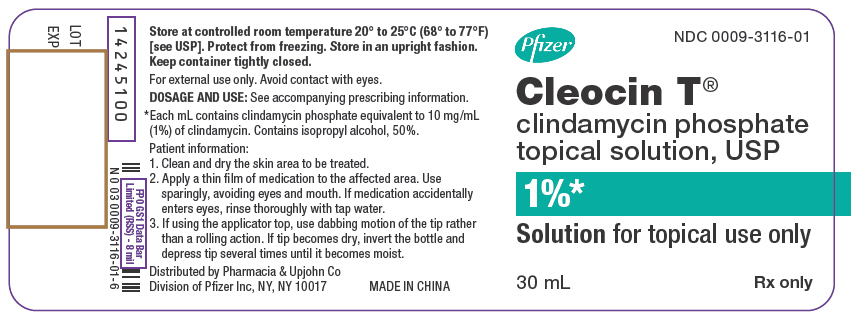
PRINCIPAL DISPLAY PANEL — 30 mL Bottle Label
Pfizer
NDC 0009-3116-01
Cleocin T®
clindamycin phosphate
topical solution, USP
1%*
Solution for topical use only
30 mL
Rx only
PRINCIPAL DISPLAY PANEL — 30 mL Bottle Carton
Pfizer
NDC 0009-3116-01
Cleocin T®
clindamycin
phosphate
topical solution,
USP
1%*
Solution for topical
use only
30 mL
Rx only

PRINCIPAL DISPLAY PANEL — Pledget Packet
Pfizer
NDC 0009-3116-14
Cleocin T®
clindamycin phosphate
topical solution, USP
1%*
Pledget for topical use only
1 Pledget
Distributed by
Pharmacia & Upjohn Co
Division of Pfizer Inc, NY, NY 10017
MADE IN CHINA
Rx only

PRINCIPAL DISPLAY PANEL — 60 Pledget Packet Carton
NDC 0009-3116-14
Pfizer
Cleocin T®
1%*
clindamycin phosphate
topical solution, USP
Pledget for topical use only
60 Pledgets
Rx only

PRINCIPAL DISPLAY PANEL — 60 mL Bottle Label
Pfizer
NDC 0009-3329-01
Cleocin T®
clindamycin
phosphate
topical lotion
1%*
For topical use only
60 mL
Rx only

PRINCIPAL DISPLAY PANEL — 60 mL Bottle Carton
Pfizer
NDC 0009-3329-01
Cleocin T®
clindamycin
phosphate
topical lotion
1%*
For topical use only
60 mL
Rx only

PRINCIPAL DISPLAY PANEL — 60 gram Tube Label
NDC 0009-3331-01
60 gram
Rx only
Cleocin T®
clindamycin phosphate topical gel
For topical use only
1%*
Store at controlled room temperature 20° to 25°C (68° to 77°F)
[see USP]. Protect from freezing.
For external use only. Avoid contact with eyes.
See crimp of tube for Expiration Date and Lot Number.
DOSAGE AND USE: See accompanying prescribing information.
* Each gram contains clindamycin phosphate equivalent to 10 mg
(1%) of clindamycin. Also contains allantoin, carbomer 934P,
methylparaben, polyethylene glycol 400, propylene glycol, sodium
hydroxide, and purified water.
Pfizer
Distributed by
Pharmacia & Upjohn Co
Division of Pfizer Inc, NY, NY 10017

PRINCIPAL DISPLAY PANEL — 60 gram Tube Carton
NDC 0009-3331-01
Pfizer
Cleocin T®
1%*
clindamycin phosphate topical gel
For topical use only
60 gram
Rx only

PRINCIPAL DISPLAY PANEL — 30 gram Tube Label
NDC 0009-3331-02
30 gram
Rx only
Cleocin T®
clindamycin phosphate topical gel
For topical use only
1%*
Store at controlled room temperature 20° to 25°C (68° to 77°F)
[see USP]. Protect from freezing.
For external use only. Avoid contact with eyes.
See crimp of tube for Expiration Date and Lot Number.
DOSAGE AND USE: See accompanying prescribing information.
* Each gram contains clindamycin phosphate equivalent to 10 mg
(1%) of clindamycin. Also contains allantoin, carbomer 934P,
methylparaben, polyethylene glycol 400, propylene glycol, sodium
hydroxide, and purified water.
Pfizer
Distributed by
Pharmacia & Upjohn Co
Division of Pfizer Inc, NY, NY 10017

PRINCIPAL DISPLAY PANEL — 30 gram Tube Carton
NDC 0009-3331-02
Pfizer
Cleocin T®
1%*
clindamycin phosphate topical gel
For topical use only
30 gram
Rx only

DESCRIPTION
CLEOCIN T Topical Solution and CLEOCIN T Topical Lotion contain clindamycin phosphate, USP, at a concentration equivalent to 10 mg clindamycin per milliliter. CLEOCIN T Topical Gel contains clindamycin phosphate, USP, at a concentration equivalent to 10 mg clindamycin per gram. Each CLEOCIN T Topical Solution pledget applicator contains approximately 1 mL of topical solution.
Clindamycin phosphate is a water soluble ester of the semi-synthetic antibiotic produced by a 7(S)-chloro-substitution of the 7(R)-hydroxyl group of the parent antibiotic lincomycin.
The solution contains isopropyl alcohol 50% v/v, propylene glycol, and water.
The gel contains allantoin, carbomer 934P, methylparaben, polyethylene glycol 400, propylene glycol, sodium hydroxide, and purified water.
The lotion contains cetostearyl alcohol (2.5%); glycerin; glyceryl stearate SE (with potassium monostearate); isostearyl alcohol (2.5%); methylparaben (0.3%); sodium lauroyl sarcosinate; stearic acid; and purified water.
The structural formula is represented below:
The chemical name for clindamycin phosphate is Methyl 7-chloro-6,7,8-trideoxy-6-(1-methyl-trans-4-propyl-L-2-pyrrolidinecarboxamido)-1-thio-L-threo-α-D-galacto-octopyranoside 2-(dihydrogen phosphate).
Местно. Раствор наносят на пораженную область предварительно очищенной и высушенной кожи 2 раза в сутки, утром и вечером.
Курс лечения. Для получения удовлетворительных результатов лечение следует продолжать в течение 6–8 нед, а при необходимости можно продолжить до 6 мес.
Если после лечения улучшения не наступает или появляются новые симптомы, необходимо проконсультироваться с врачом.
Следует применять препарат только согласно тому способу применения и в тех дозах, которые указаны в описании.
В случае необходимости следует проконсультироваться с врачом перед применением лекарственного препарата.
Классификация побочных реакций по органам и системам органов с указанием частоты их возникновения: очень часто (≥1/10); часто (≥1/100, <1/10); нечасто (≥1/1000, <1/100); редко (≥1/10000, <1/1000); очень редко (<1/10000), в т.ч. отдельные сообщения; частота неизвестна (частота не может быть оценена на основе имеющихся данных).
Со стороны кожи и подкожных тканей: очень часто — сухость кожи, раздражение кожи, крапивница; часто — себорея; частота неизвестна — контактный дерматит.
Cо стороны ЖКТ: нечасто — нарушение пищеварения; частота неизвестна — псевдомембранозный колит, боль в животе.
Инфекционные и паразитарные заболевания: частота неизвестна — фолликулит.
Cо стороны органа зрения: частота неизвестна — боль в глазах.
Если любые из указанных в описании побочных эффектов усугубляются или отмечаются другие побочные эффекты, не указанные в описании, следуют немедленно сообщить об этом врачу.
Капсулы; Крем вагинальный; Гель для наружного применения; Суппозитории вагинальные
Раствор для наружного применения
При интравагинальном применении Далацин® крема возможна абсорбция клиндамицина в количествах, достаточных для развития системных реакций.
Симптомы: случайное попадание препарата в ЖКТ может вызвать системные эффекты, сходные с теми, которые возникают после приема клиндамицина внутрь в терапевтических дозах. К возможным системным побочным эффектам можно отнести диарею, геморрагическую диарею, включая псевдомембранозный колит (см. «Побочные действия» и «Особые указания»).
Лечение: симптоматическое и поддерживающее.
При наружном применении клиндамицин может всасываться в количествах, вызывающих системные эффекты. К возможным системным побочным эффектам можно отнести диарею, геморрагическую диарею, включая псевдомембранозный колит.
Лечение: проведение симптоматической и поддерживающей терапии.
Капсулы; Крем вагинальный; Гель для наружного применения; Суппозитории вагинальные
Раствор для внутривенного и внутримышечного введения
Раствор для инъекций
Раствор для наружного применения
Бактериальный вагиноз.
Инфекции дыхательных путей, кожи, костей и мягких тканей, полости рта, костей, органов малого таза, перитонит.
Инфекции дыхательных путей, кожи, костей и мягких тканей, полости рта, костей, органов малого таза, перитонит.
Лечение угревой сыпи (acne vulgaris).
гиперчувствительность к клиндамицину или линкомицину в анамнезе;
антибиотикассоциированный колит в анамнезе;
возраст до 12 лет.
С осторожностью: предрасположенность к аллергическим реакциям.
Капсулы; Крем вагинальный; Гель для наружного применения; Суппозитории вагинальные
Раствор для наружного применения
Клиндамицина фосфат неактивен in vitro, но быстро гидролизуется in vivo с образованием клиндамицина, обладающего антибактериальной активностью. Клиндамицин ингибирует синтез белков в микробной клетке за счет взаимодействия с 50S субъединицей рибосом, оказывает бактериостатическое действие, а в более высоких концентрациях в отношении некоторых микроорганизмов — бактерицидное.
В условиях in vitro к клиндамицину чувствительны следующие микроорганизмы, вызывающие бактериальные вагинозы: Gardnerella vaginalis, Mobiluncus spp., Mycoplasma hominis, Bacteroides spp., Peptostreptococcus spp.
Клиндамицин — антибиотик группы линкозамидов, активен в отношении всех штаммов Propionibacterium acnes, МПК — 0,4 мкг/мл. Ингибирует синтез белков в микробной клетке за счет взаимодействия с 50S-субъединицей рибосом. После нанесения на кожу количество свободных жирных кислот на поверхности кожи уменьшается примерно с 14 до 2%.
Капсулы; Крем вагинальный; Гель для наружного применения; Суппозитории вагинальные
Раствор для наружного применения
После применения клиндамицина интравагинально в дозе 100 мг/сут однократно (в виде 2% крема клиндамицина фосфата) в течение 7 дней у здоровых женщин сывороточная концентрация достигает максимума примерно спустя 10 ч (4–24 ч) после введения и составляет в первый день в среднем 18 нг/мл (4–47 нг/мл), а на седьмой день — 25 нг/мл (6–61 нг/мл), при этом системная абсорбция составляет около 5% (0,6–11%) от введенной дозы.
У женщин с бактериальными вагинозами при аналогичном режиме дозирования всасывается около 5% клиндамицина (с меньшим разбросом — 2–8%), сывороточная концентрация достигает максимума примерно спустя 14 ч (4–24 ч) после введения и составляет в первый день в среднем 13 нг/мл (6–34 нг/мл), а на седьмой день — 16 нг/мл (7–26 нг/мл).
Системное действие клиндамицина при введении интравагинально слабее, чем при введении внутрь или в/в. После интравагинального введения повторных доз клиндамицин почти не кумулируется в крови. Системный T1/2 составляет 1,5–2,6 ч.
Применение у пожилых пациентов. В клинических исследованиях клиндамицина в виде 2% крема вагинального участвовало недостаточное количество пациентов в возрасте 65 лет и старше, чтобы можно было оценить разницу в клиническом ответе на терапию между указанной возрастной группой и более молодыми пациентами. В имеющихся сообщениях из клинического опыта не было отмечено разницы в ответе пожилых пациентов и более молодых.
Клиндамицин быстро накапливается в комедонах, где проявляет антибактериальную активность.
Средняя концентрация антибиотика в содержимом комедонов после нанесения раствора значительно превышает показатель МПК для всех штаммов Propionibacterium acnes — возбудителя угревой сыпи. После нанесения на кожу раствора клиндамицина гидрохлорида в плазме крови и моче определяются очень низкие концентрации клиндамицина.
- Антибиотик — линкозамид [Линкозамиды]
Не рекомендуется одновременное применение клиндамицина с другими препаратами для лечения угревой сыпи, содержащими отшелушивающие, смягчающие и абразивные вещества (в т.ч. бензоил пероксид, третиноин, резорцинол, салициловая кислота, сера), из-за возможного раздражающего действия на кожу.
Существует перекрестная устойчивость микроорганизмов к клиндамицину и линкомицину.
Был отмечен антагонизм между клиндамицином и эритромицином.
Установлено, что клиндамицин при системном применении нарушает нейромышечную передачу и, следовательно, может усиливать действие других миорелаксантов периферического действия, поэтому несмотря на то что после наружного применения препарата Cleocin-T® его уровень в крови значительно ниже, чем после приема клиндамицина внутрь, препарат следует применять с осторожностью у пациентов, получающих препараты данной группы.
Всегда обращайтесь к врачу или фармацевту, прежде чем использовать таблетки или лекарства.
С медицинской точки зрения, рецензировано
.
-
A
-
B
-
C
-
D
-
E
-
F
-
G
-
H
-
I
-
J
-
K
-
L
-
M
-
N
-
O
-
P
-
Q
-
R
-
S
-
T
-
U
-
V
-
W
-
X
-
Y
-
Z