
Где я могу найти номер VIN для моего Honda?
Положение номера VIN различается среди марок автомобилей и моделей. Он может быть отпечатан на кузове автомобиля или указан на табличке. Рекомендуется обратиться к руководству по эксплуатации Honda Fit (2012) для точной информации о месте нахождения номера VIN.
Как проверить давление в шинах моего Honda Fit (2012)?
Вы можете проверить давление в шинах вашего Honda Fit (2012) с помощью манометра для измерения давления в шинах. Рекомендуемое давление в шинах обычно указано на наклейке внутри двери водителя или в руководстве владельца.
Какое масло нужно моему Honda Fit?
Тип масла, необходимого вашему Honda Fit, зависит от типа двигателя. Обратитесь к руководству владельца для рекомендуемой вязкости и спецификации масла.
Что такое номер VIN?
Номер VIN, также известный как идентификационный номер автомобиля, служит уникальным идентификатором для каждого автомобиля. Для точного местоположения номера VIN рекомендуется обратиться к руководству по эксплуатации Honda Fit (2012).
Где я могу найти информацию о гарантийном покрытии моего Honda Fit?
Информацию о гарантийном покрытии вашего Honda Fit (2012) можно найти в гарантийном буклете, поставляемом с автомобилем. Обычно в нем содержится информация о сроке действия и охвате различных компонентов.
Когда мне следует запланировать техобслуживание для моего Honda Fit?
Регулярное техническое обслуживание необходимо для оптимальной производительности автомобиля. Подробности о частоте техобслуживания и конкретных задачах можно найти в инструкциях по техническому обслуживанию. Обычно крупное техобслуживание должно производиться каждые два года или после пробега 30 000 километров.
Как сбросить индикатор технического обслуживания на панели приборов моего Honda Fit?
Чтобы сбросить индикатор технического обслуживания на панели приборов вашего Honda Fit (2012), следуйте инструкциям, описанным в руководстве по эксплуатации. Обычно это требует нажатия определенной комбинации кнопок в определенном режиме работы автомобиля.
С каким интервалом мне следует рассмотреть замену тормозной жидкости для моего Honda Fit?
Рекомендуется заменять тормозную жидкость в вашем Honda Fit (2012) каждые два года.
Что делать, если загорается лампа контроля двигателя моего Honda Fit?
Если загорается лампа контроля двигателя вашего Honda Fit (2012), это указывает на потенциальную проблему с автомобилем. Рекомендуется обратиться к квалифицированному механику для диагностики причины проблемы.
Как часто мне следует переключать шины на моем Honda Fit?
Периодическая перестановка шин помогает обеспечить равномерный износ и продлить срок службы шин. Обычно рекомендуется переключать шины каждые 6 000-8 000 километров или по указаниям в руководстве владельца Honda Fit (2012).
Что делать, если разряжается аккумулятор моего Honda?
Если разряжается аккумулятор вашего Honda Fit, вы можете запустить автомобиль, используя провода для запуска двигателя и другой автомобиль с заряженным аккумулятором. В противном случае вы можете вызвать помощь на дороге.
Что делать, если одна или несколько дверей отказываются открываться изнутри?
Если у вас возникают проблемы с открыванием дверей изнутри, вероятно, включена детская защелка. Способ отключения детской защелки зависит от марки и модели автомобиля.
Как программировать новый ключ для моего Honda Fit?
Для программирования нового ключа для вашего Honda Fit обычно требуется следовать определенным инструкциям, описанным в руководстве пользователя, или обратиться за помощью в дилерский центр или к слесарю.
Какой рекомендуемый интервал для замены воздушного фильтра в моем Honda Fit?
Рекомендуемый интервал для замены воздушного фильтра в вашем Honda Fit (2012) зависит от условий езды. Обычно рекомендуется проверять воздушный фильтр каждые 12 000-15 000 километров и заменять его при необходимости.
Доступно ли руководство для Honda Fit (2012) на русском языке?
Нет, руководство для Honda Fit (2012) доступно на английском языке.
Contents
This owner’s manual should be considered a permanent part of the
vehicle and should remain with the vehicle when it is sold.
This owner’s manual covers all models of your vehicle. You may find
descriptions of equipment and features that are not on your
particular model.
Images throughout this owner’s manual (including the front cover)
represent features and equipment that are available on some, but
not all, models. Your particular model may not have some of these
features.
This owner’s manual is for vehicles sold in the United States and
Canada.
The information and specifications included in this publication were
in effect at the time of approval for printing. Honda Motor Co., Ltd.
reserves the right, however, to discontinue or change specifications
or design at any time without notice and without incurring any
obligation.
2 Safe Driving P. 21
For Safe Driving P. 22 Seat Belts P. 26 Airbags P. 34
2 Instrument Panel P. 63
Indicators P. 64 Gauges and Displays P. 72
2 Controls P. 75
Setting the Clock P. 76 Locking and Unlocking the Doors P. 77
Opening and Closing the Windows P. 92
Adjusting the Seats P. 103
2 Features P. 121
Audio System P. 122 Audio System Basic Operation P. 125
Bluetooth® HandsFreeLink®
*
P. 140
2 Driving P. 153
Before Driving P. 154 Towing a Trailer P. 159
Refueling P. 186 Fuel Economy P. 189
2 Maintenance P. 191
Before Performing Maintenance P. 192 Maintenance Minder
TM
P. 195
Checking and Maintaining Wiper Blades P. 218
Heating and Cooling
*
System Maintenance P. 233
2 Handling the Unexpected P. 237
Tools P. 238 If a Tire Goes Flat P. 239
Overheating P. 254 Indicator, Coming On/Blinking P. 256
2 Information P. 267
Specifications P. 268 Identification Numbers P. 270
Emissions Testing P. 273 Warranty Coverages P. 275
Main Menu
2012 Fit Online Reference Owner’s Manual
Online Reference Owner’s Manual
QRG
Index
Home
Contents
Contents
2012 Fit
This owner’s manual should be considered a permanent part of the
vehicle and should remain with the vehicle when it is sold.
This owner’s manual covers all models of your vehicle. You may find
descriptions of equipment and features that are not on your
particular model.
Images throughout this owner’s manual (including the front cover)
represent features and equipment that are available on some, but
not all, models. Your particular model may not have some of these
features.
This owner’s manual is for vehicles sold in the United States and
Canada.
The information and specifications included in this publication were
in effect at the time of approval for printing. Honda Motor Co., Ltd.
reserves the right, however, to discontinue or change specifications
or design at any time without notice and without incurring any
obligation.
Navigation Key
QRG
Quick Reference Guide
TOC
Chapter Table of Contents
Index
Index
Home
Book Table of Contents
2 Safe Driving P. 21
For Safe Driving P. 22 Seat Belts P. 26 Airbags P. 34
2 Instrument Panel P. 63
Indicators P. 64 Gauges and Displays P. 72
2 Controls P. 75
Setting the Clock P. 76 Locking and Unlocking the Doors P. 77
Opening and Closing the Windows P. 92
Adjusting the Seats P. 103
2 Features P. 121
Audio System P. 122 Audio System Basic Operation P. 125
Bluetooth® HandsFreeLink®
*
P. 140
2 Driving P. 153
Before Driving P. 154 Towing a Trailer P. 159
Refueling P. 186 Fuel Economy P. 189
2 Maintenance P. 191
Before Performing Maintenance P. 192 Maintenance MinderTM P. 195
Checking and Maintaining Wiper Blades P. 218
Heating and Cooling
*
System Maintenance P. 233
2 Handling the Unexpected P. 237
Tools P. 238 If a Tire Goes Flat P. 239
Overheating P. 254 Indicator, Coming On/Blinking P. 256
2 Information P. 267
Specifications P. 268 Identification Numbers P. 270
Emissions Testing P. 273 Warranty Coverages P. 275
Child Safety P. 49 Exhaust Gas Hazard P. 61 Safety Labels P. 62
Contents
2012 Fit
Quick Reference Guide
P. 2
Opening and Closing the Tailgate P. 88 Security System P. 90
Operating the Switches Around the Steering Wheel P. 94 Adjusting the Mirrors P. 102
Interior Lights/Interior Convenience Items P. 111 Heating and Cooling
Audio Error Messages P. 135 General Information on the Audio System P. 137
When Driving P. 161 Braking P. 181 Parking Your Vehicle P. 185
Accessories and Modifications P. 190
Maintenance Under the Hood P. 199 Replacing Light Bulbs P. 212
Checking and Maintaining Tires P. 222 Battery P. 231 Remote Transmitter Care
Cleaning P. 234
Engine Does Not Start P. 250 Jump Starting P. 251 Shift Lever Does Not Move P. 253
Fuses P. 260 Emergency Towing P. 264
*
P. 118
*
P. 232
Safe Driving
Instrument Panel
Controls
Features
Driving
Maintenance
Handling the Unexpected
Information
Index
P. 21
P. 63
P. 75
P. 121
P. 153
P. 191
P. 237
P. 267
P. 279
Devices that Emit Radio Waves P. 271 Reporting Safety Defects P. 272
Authorized Manuals P. 277 Customer Service Information P. 278
* Not available on all models

Quick Reference Guide
Quick Reference Guide
❙ Gauges (P72)
❙ Information Display (P73)
❙ System Indicators (P64)
❙ Navigation System
*
() See Navigation System Manual
❙ (Vehicle Stability Assist (VSA®)
System OFF) Button
(P176)
❙ Hazard Warning Button
❙ Audio System (P122)
❙ Steering Wheel Adjustments
(P101)
❙ Ignition Switch (P94)
❙ Heated Mirror Button
*
(P100)
❙ Rear Window Defogger (P100)
❙ Heating and Cooling
*
System
(P118)
❙ Door Mirror Controls (P102)
QRG
— 2012 Fit
Visual Index
Index
Home
2
* Not available on all models
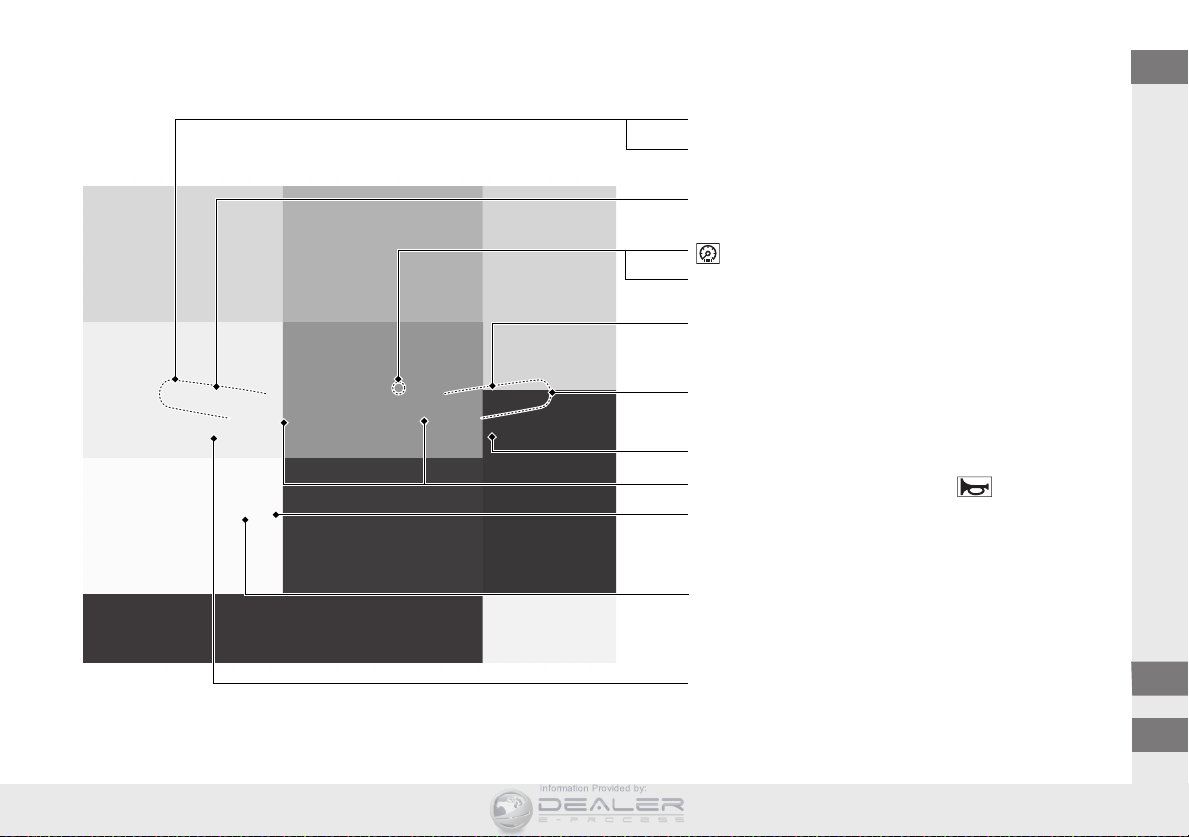
❙ Headlights/Turn Signals (P95)
❙ Fog Lights
*
(P96)
❙ Wipers/Washers (P97)
❙ Paddle Shifter (Shift Down)
*
(P 170)
❙ Paddle Shifter (Shift Up)
*
(P170)
❙ Cruise Control Buttons
*
(P173)
❙ Bluetooth® HandsFreeLink® System
*
(P140)
❙ Horn (Press an area around .)
❙ (Select/Reset) Knob (P73)
❙ Brightness Control (P99)
❙ Audio Remote Control Buttons
*
() See Navigation System Manual
❙ Navigation System Voice Control Buttons
*
() See Navigation System Manual
* Not available on all models
QRG
Quick
Reference
Guide
— 2012 Fit
Index
Home
3
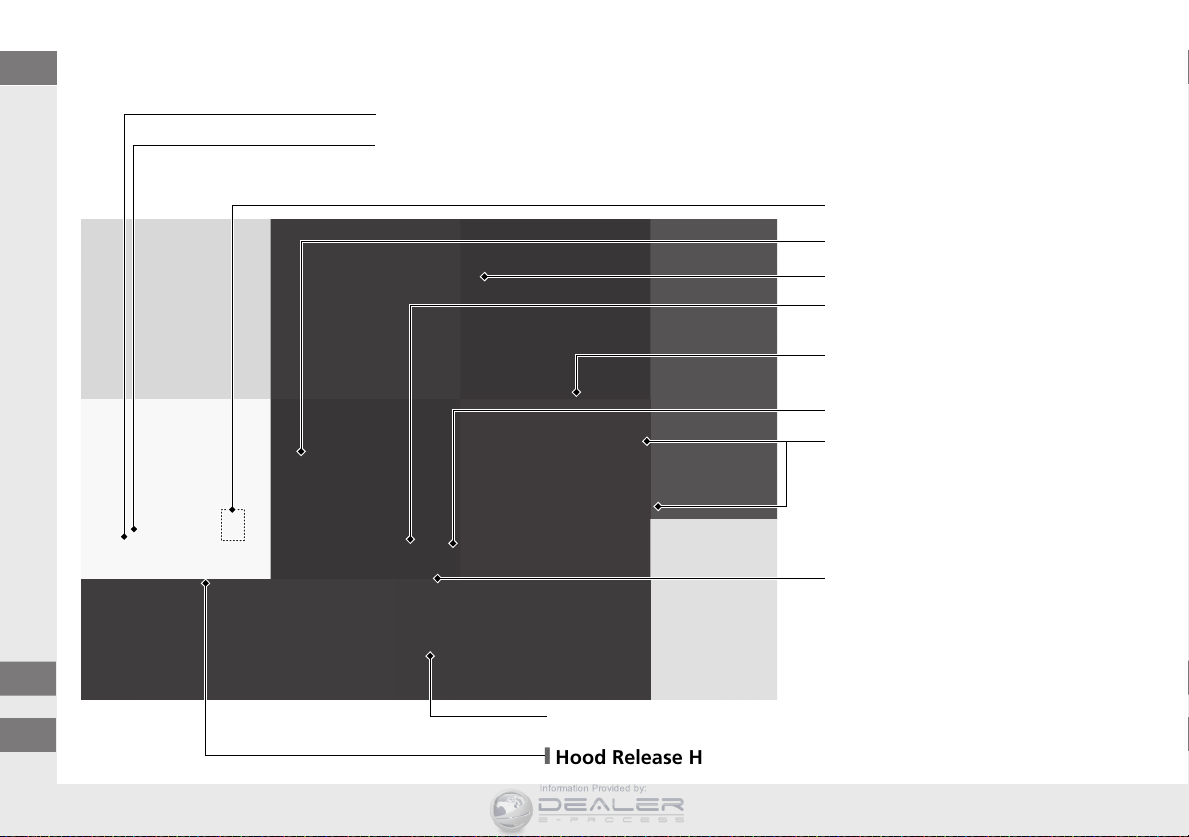
❙ Parking Brake (P181)
❙ Hood Release Handle (P200)
❙ Power Window Switches (P92)
❙ Passenger’s Front Airbag
(P37)
❙ Glove Box (P113)
❙ Rearview Mirror (P102)
❙ Shift Lever
Automatic Transmission
(P164)
Manual Transmission
(P171)
❙ Interior Fuse Box (P261)
❙ Driver’s Front Airbag (P37)
❙ Power Door Lock Master Switch
*
(P82)
❙ Accessory Power Socket
(P115)
❙ Auxiliary Input Jack (P123)
QRG
Quick
Reference
Guide
Visual Index
— 2012 Fit
Index
Home
4
* Not available on all models
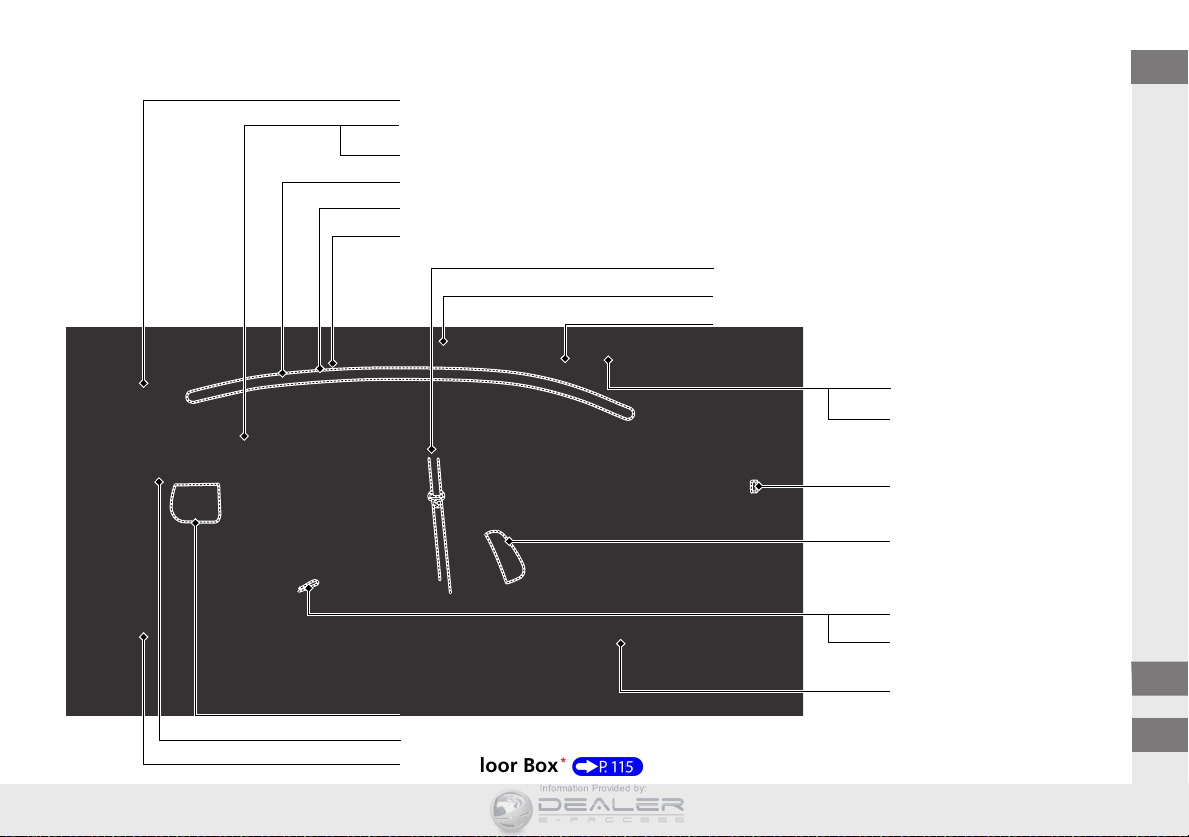
❙ Seat Belt to Secure a Child Seat (P57)
❙ Seat Belt (Installing a Child Seat) (P56)
❙ Sun Visors
❙ Vanity Mirrors
❙ Map Lights
*
(P111)
❙ USB Adapter Cable
*
(P123)
❙ Seat Belts (P26)
❙ Side Airbags (P41)
❙ Side Curtain Airbags (P44)
❙ Coat Hook (P116)
❙ Grab Handle
❙ Ceiling Light (P111)
❙ Seat Belt with Detachable Anchor (P31)
❙ Rear Seat (P108)
❙ LATCH to Secure a
Child Seat
(P54)
❙ Front Seat (P103)
❙ Rear Side Pocket (Right Side)
❙ Cargo Floor Box
*
(P115)
❙ Cargo Area Light (P112)
* Not available on all models
QRG
Quick
Reference
Guide
— 2012 Fit
Index
Home
5
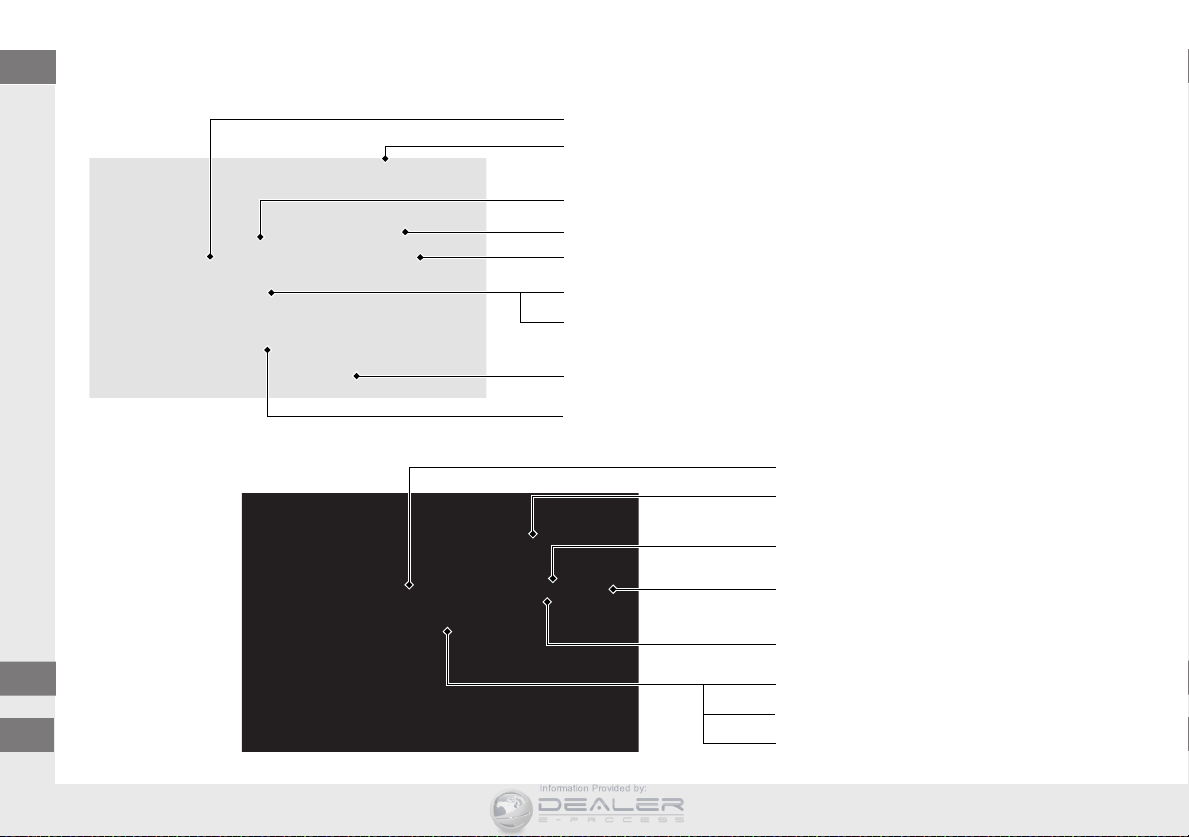
❙ How to Refuel (P187)
❙ High-Mount Brake Light (P217)
❙ Tailgate Open Handle (P89)
❙ Opening/Closing the Tailgate
(P88)
❙ Back-Up Lights (P216)
❙ Brake/Taillights (P216)
❙ Rear Wiper (P98)
❙ Maintenance Under the Hood (P199)
❙ Windshield Wipers (P97)
❙ Tires (P222)
❙ Fog Lights
*
(P214)
❙ Door Lock/Unlock Control (P79)
❙ Power Door Mirrors (P102)
❙ Audio Antenna (P124)
❙ Front Turn Signal/Parking/Side Marker Lights
(P95)
❙ Headlights (P95)
❙ Rear Turn Signal Lights (P216)
QRG
Quick
Reference
Guide
Visual Index
(P218)
— 2012 Fit
Index
Home
6
(P213)
(P212)
(P214)
(P239)
(P214)
(P220)
* Not available on all models
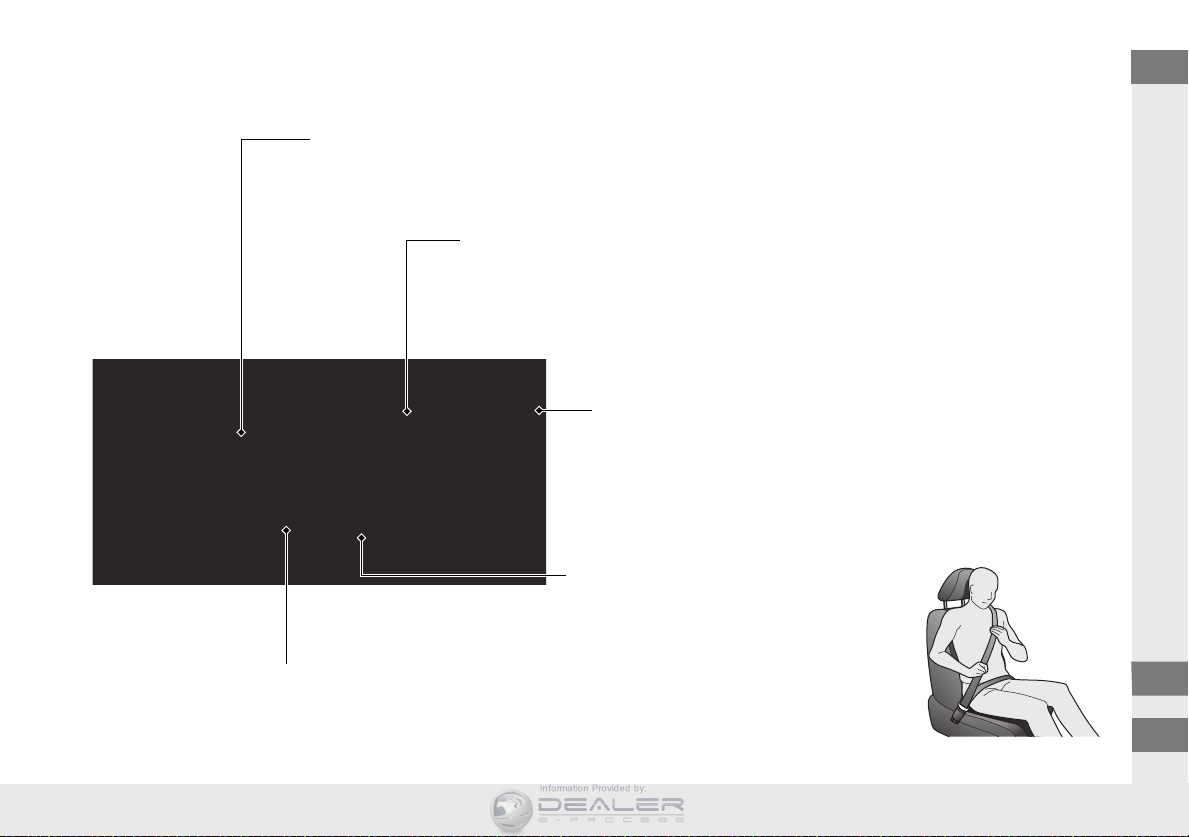
Safe Driving (P 21)
Airbags (P34)
● Your vehicle is fitted with airbags to help protect you and
your passengers during a moderate-to-severe collision.
Child Safety (P49)
● All children 12 and younger should be seated in the rear seat.
● Smaller children should be properly restrained in a forward-facing child seat.
● Infants must be properly restrained in a rear-facing child seat.
Exhaust Gas Hazard (P61)
● Your vehicle emits dangerous exhaust gases that contain
carbon monoxide. Do not run the engine in confined spaces
where carbon monoxide gas can accumulate.
Before Driving Checklist (P154)
● Before driving, check that the front seats, head restraints,
steering wheel, and mirrors have been properly adjusted.
Seat Belts (P26)
● Fasten your seat belt and sit upright well
back in the seat.
● Check that your passengers are wearing
their seat belts correctly.
Fasten your lap belt as
low as possible.
QRG
Quick
Reference
Guide
— 2012 Fit
Index
Home
7
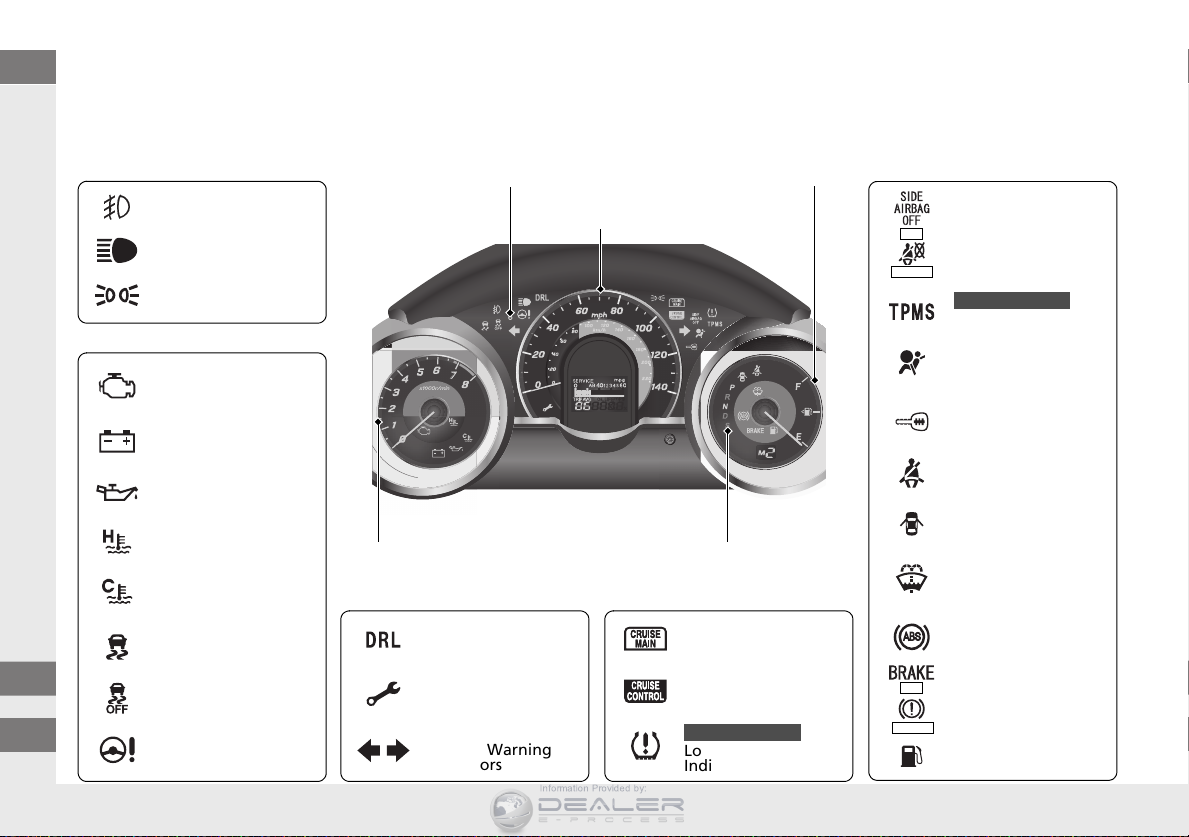
Lights Reminders
Malfunction
Indicator Lamp
Low Oil Pressure
Indicator
Anti-lock Brake
System (ABS)
Indicator
Vehicle Stability
Assist (VSA®) System
Indicator
VSA® OFF Indicator
Electric Power
Steering (EPS)
Indicator
Lights On Indicator
High Beam Indicator
Immobilizer System
Indicator
Seat Belt Reminder
Indicator
System Indicators
CRUISE MAIN
Indicator
*
Supplemental
Restraint System
Indicator
Side Airbag Off
Indicator
Door and Tailgate
Open Indicator
Tachometer
Speedometer
Fuel GaugeSecurity System Alarm Indicator
*
Shift Lever Position Indicator
*
Low Fuel Indicator
Gauges (P72)/Information Display (P73)/System Indicators (P64)
Turn Signal and
Hazard Warning
Indicators
High Temperature
Indicator
Low Temperature
Indicator
System Indicators System Indicators
Low Tire Pressure
Indicator
Parking Brake
and Brake System
Indicator
CRUISE CONTROL
Indicator
*
System Indicators
Charging System
Indicator
U.S.
U.S.
Canada
TPMS Indicator
Washer Level
Indicator
*
Daytime Running
Lights Indicator
*
Maintenance
Minder Indicator
Fog Light Indicator
*
Canada
QRG
Instrument Panel (P63)
Quick
Reference
Guide
— 2012 Fit
Index
Home
8
* Not available on all models
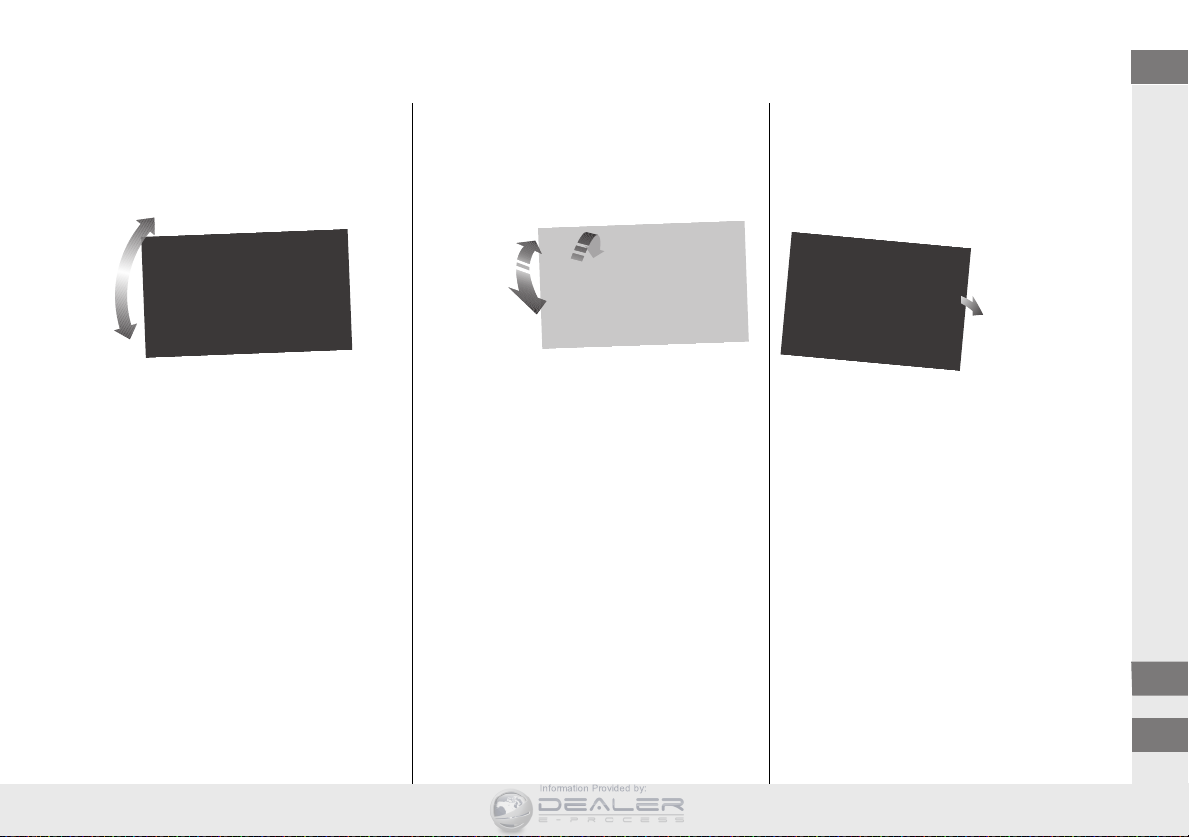
Controls (P75)
Turn Signal Control Lever
Right
Left
Light Control Switches
Low Beam
High Beam
Flashing
Wiper/Washer Control Lever
MIST
OFF
INT: Low speed with intermittent
LO: Low speed wipe
HI: High speed wipe
Pull toward
you to spray
washer fluid.
Turn Signals (P95)
Lights (P95)
Wipers and Washers
(P97)
QRG
Quick
Reference
Guide
— 2012 Fit
Index
Home
9
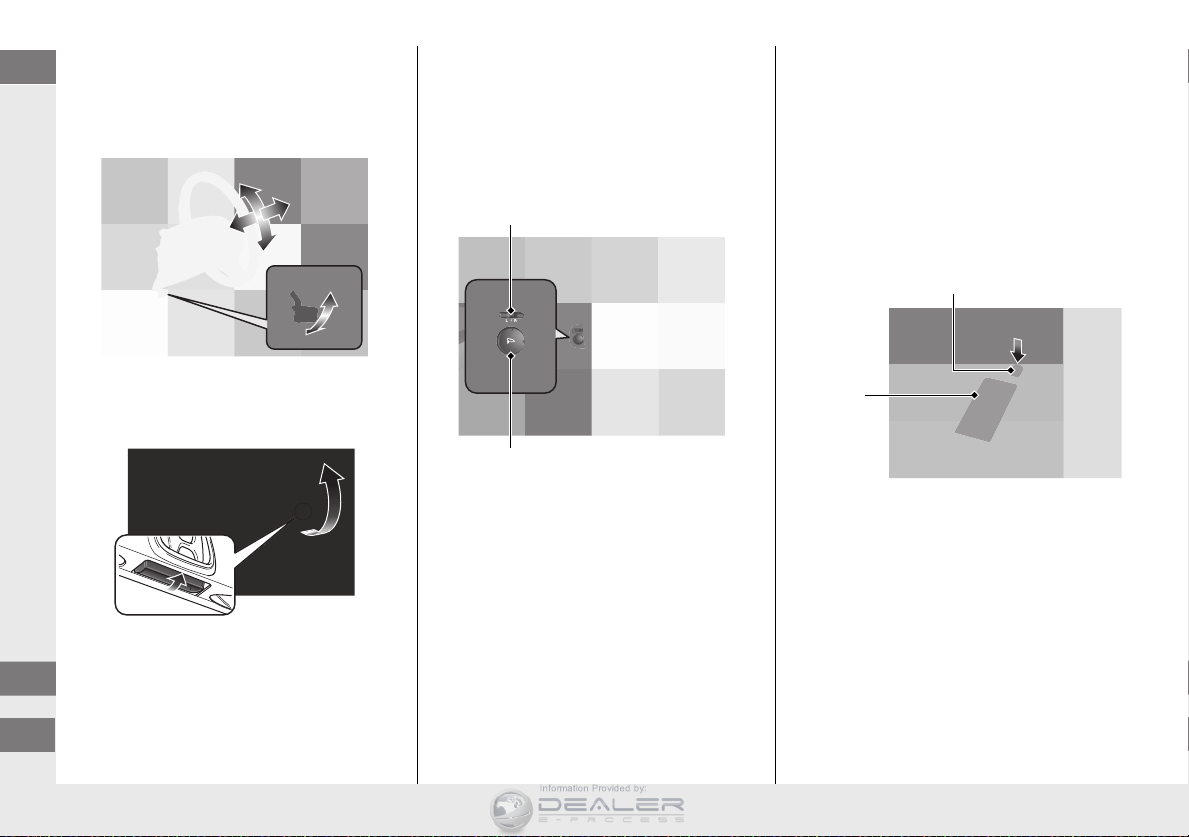
Selector Switch
Adjustment Switch
Power Window Lock Button
Window
Switch
QRG
Steering Wheel (P101)
Quick
● To adjust, pull the adjustment lever
towards you, adjust to the desired
Reference
Guide
— 2012 Fit
position, then lock the lever back in place.
Tailgate (P88)
● To open the tailgate, pull the tailgate
Index
open handle, and lift up.
Power Door Mirrors
(P102)
● With the ignition switch in ON
the selector switch to L or R.
● Push the appropriate edge of the
adjustment switch to adjust the mirror.
(w, move
Power Windows (P92)
● With the ignition switch in ON
and close the power windows.
● If the power window lock button is in the
off position, each passenger’s window
can be opened and closed with its own
switch.
● If the power window lock button is in the
on position, each passenger’s window
switch is disabled.
(w, open
Home
10
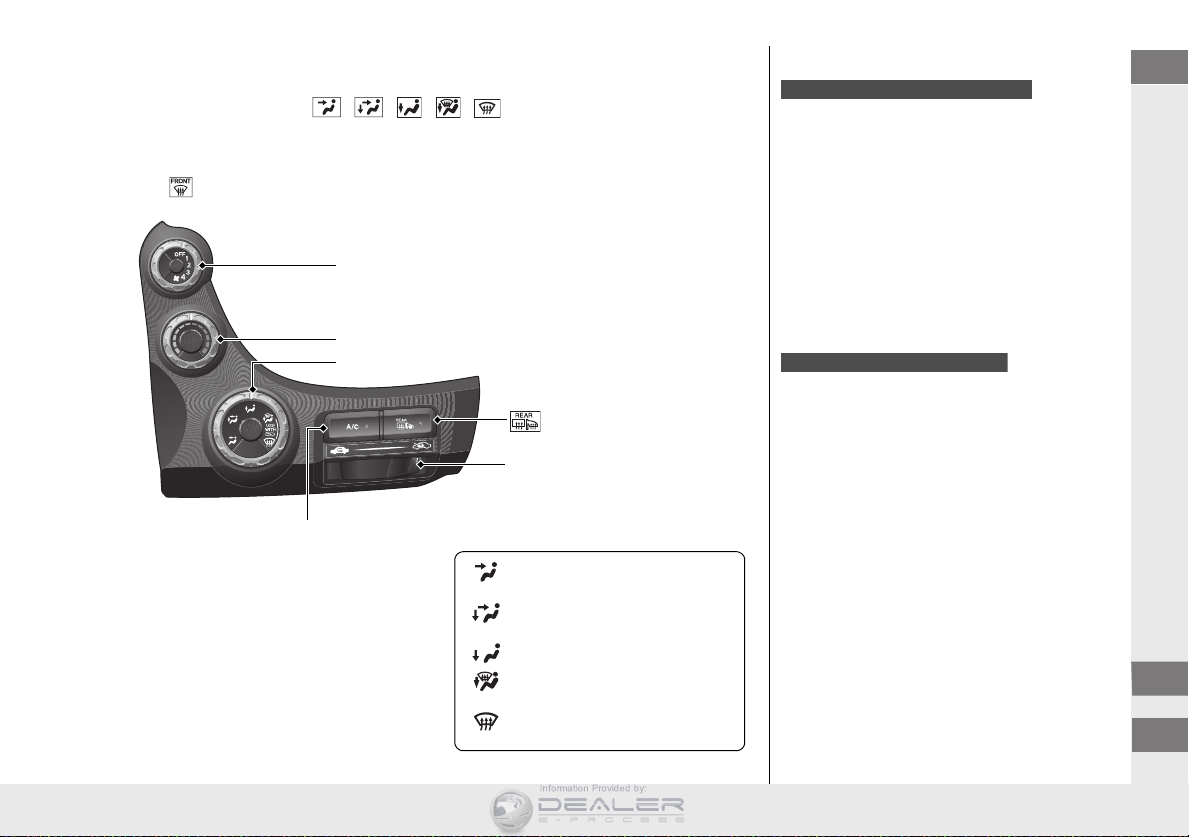
Heating and Cooling* System
Fan Control Dial
(Rear Window Defogger/
Heated Mirror
*
) Button
A/C (Air Conditioning) Button
*
Air flows from floor and
windshield defroster vents.
Air flows from floor vents.
Air flows from floor and
dashboard vents.
Air flows from dashboard
vents.
Temperature Control Dial
Air flows from windshield
defroster vents.
Mode Control Dial
Fresh Air/Recirculation Lever
Models without navigation system
Models with navigation system
* Not available on all models
● Rotate the fan control dial to adjust the fan speed.
● Rotate the Mode control dial ( / / / / ) to select the vents air flows
from.
● Rotate the temperature control dial to adjust the temperature.
● Rotate the fan control dial to OFF to turn the system off.
● Rotate the mode to defrost the windshield.
(P118)
Clock (P76)
a Press the CLOCK button until the
displayed time begins flashing.
b Press the (1 (Hour) or (2 (Minute)
button to set the time. Press the
(Reset) button to set the time to the
nearest hour.
c Press the CLOCK button again to set
the time.
The navigation system receives signals from
GPS satellites, updating the clock
automatically.
(3
QRG
Quick
Reference
Guide
— 2012 Fit
Index
Home
11
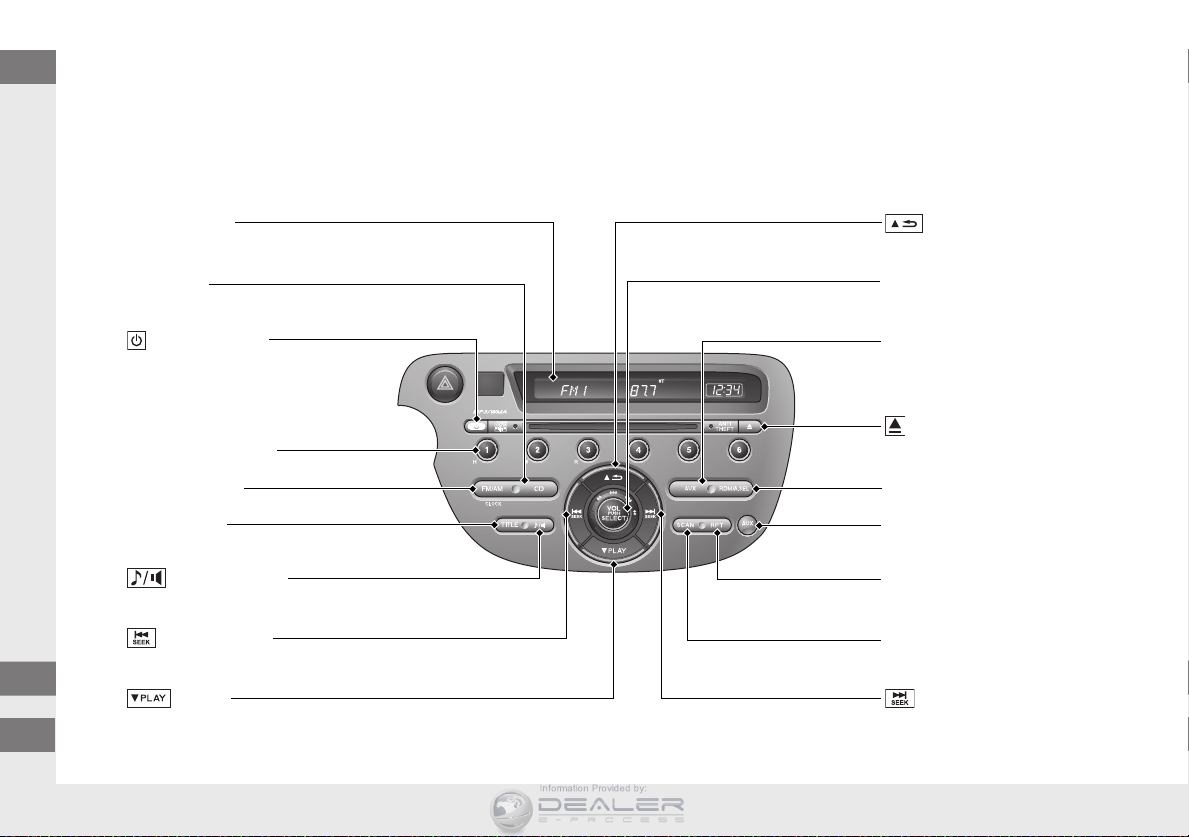
FM/AM Button
SCAN Button
(SEEK) Button
Selector Knob
Button
(Sound) Button
(Power) Button
CD Button
(CD Eject) Button
Preset Buttons (1-6)
Button
TITLE Button
RDM/A.SEL Button
Auxiliary Input Jack
RPT Button
(SEEK) Button
AUX Button
Audio Display
QRG
Quick
Reference
Guide
— 2012 Fit
Features (P121)
Audio System (P125) For navigation system operation () See Navigation System Manual
Index
Home
12
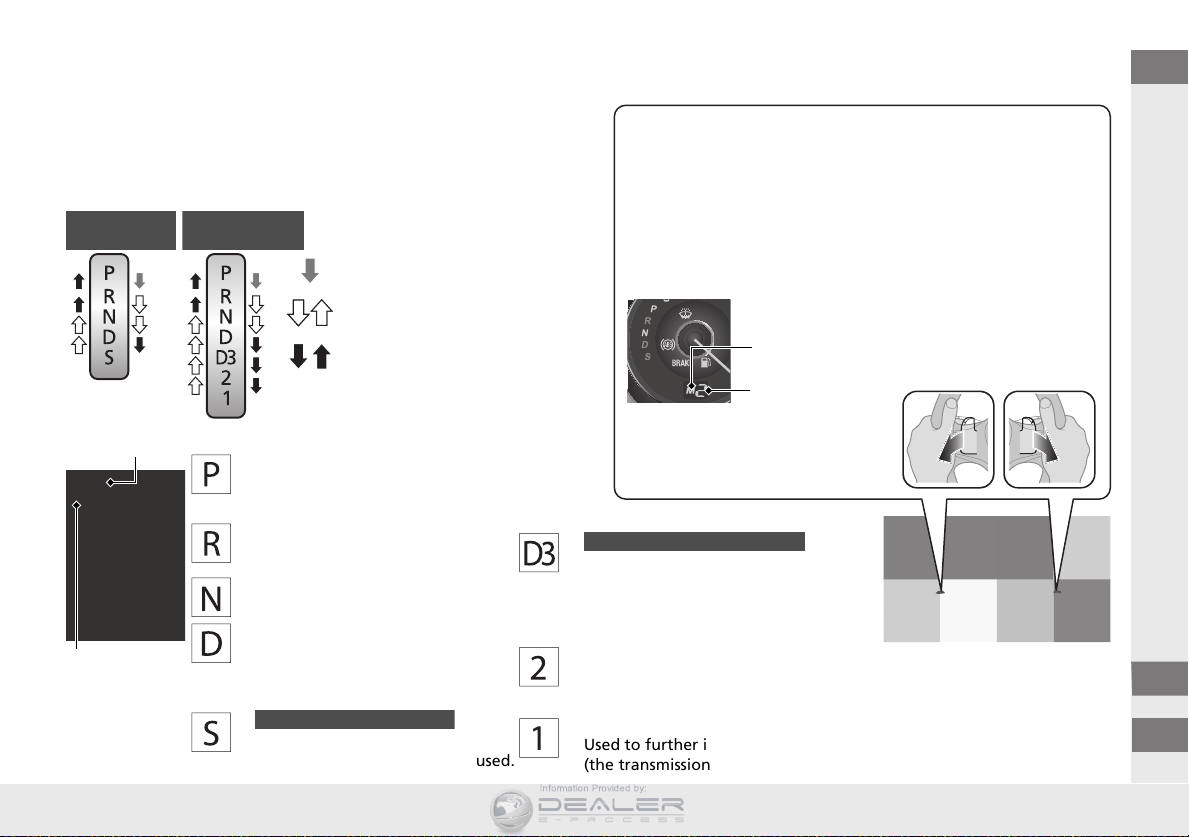
Driving (P153)
* Not available on all models
Automatic Transmission (P165)
● Shift to
Shifting
Models with
paddle shifter
Release
Button
(P and depress the brake pedal when starting the engine.
Models without
paddle shifter
Shift Lever
Park
Turn off or start the engine.
Transmission is locked.
Reverse
Used when reversing.
Neutral
Transmission is not locked.
Drive
Normal driving.
On models with paddle shifter,
D-paddle shift mode can be used.
Models with paddle shifter
S Position
Sequential shift mode can be used.
(P171)
Depress the brake pedal and press
the release button to move out of
Move the shift lever without
pressing the release button.
Press the release button to move
the shift lever.
Paddle Shifters* (P169)
● Paddle shifters allow you to shift gears much like a manual
transmission (1st through 5th). This is useful for engine
braking.
● D-paddle shift mode: The transmission will shift back to
automatic mode once the system detects that the vehicle
is cruising.
● Sequential shift mode: Holds the selected gear, and the M
(P.
Models without paddle shifter
Drive (D3)
Used when:
•Going up or down hills
Second
Used to increase engine braking
(the transmission is locked in 2nd gear)
First
Used to further increase engine braking
(the transmission is locked in 1st gear)
indicator comes on.
(M Indicator
Selected Gear
Number
● The selected gear
position is shown in the
instrument panel.
Paddle
Shifter
(—
Paddle
Shifter
(+
QRG
Quick
Reference
Guide
— 2012 Fit
Index
Home
13
QRG
Quick
Reference
Guide
— 2012 Fit
VSA® OFF Button (P177)
● The vehicle stability assist (VSA®) system
helps stabilize the vehicle during
cornering, and helps maintain traction
while accelerating on loose or slippery
road surfaces.
● VSA® comes on automatically every time
you start the engine.
● To turn VSA® on or off, press and hold
the button until you hear a beep.
Cruise Control* (P173)
● Cruise control allows you to maintain a
set speed without keeping your foot on
the accelerator pedal.
● To use cruise control, press the CRUISE
button, then press DECEL/SET once you
have received the desired speed (above
25 mph or 40 km/h).
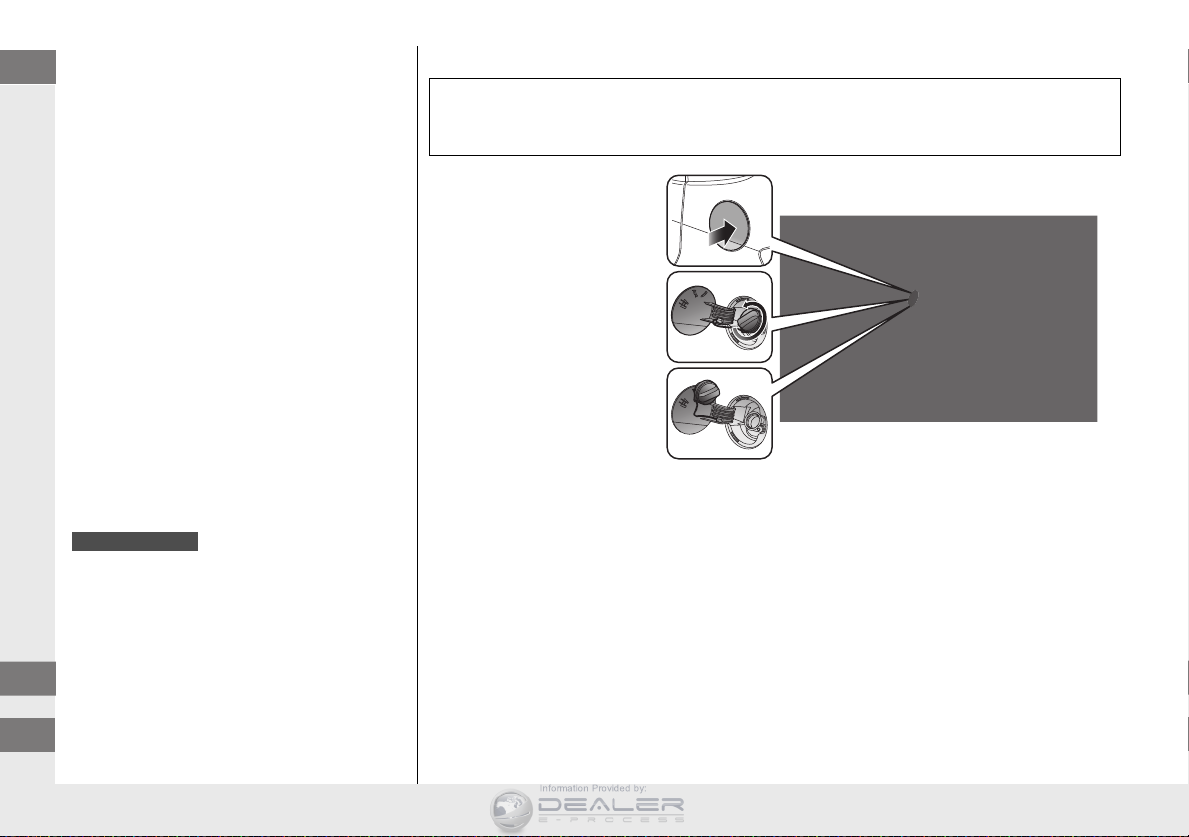
Refueling (P186)
Fuel recommendation: Unleaded gasoline with a pump octane number 87 or
higher required
Fuel tank capacity: 10.6 US gal (40 L)
a Press on the edge of the
fuel fill door to make it
pop up slightly.
b Turn the fuel fill cap
slowly to remove the
cap.
c Place the cap in the
holder on the fuel fill
door.
Tire Pressure Monitoring
System (TPMS)
● TPMS monitors tire pressure.
● TPMS is turned on automatically every
time you start the engine.
Index
Home
14
(P178)
d After refueling, screw
the cap back on until it
clicks at least once.
* Not available on all models
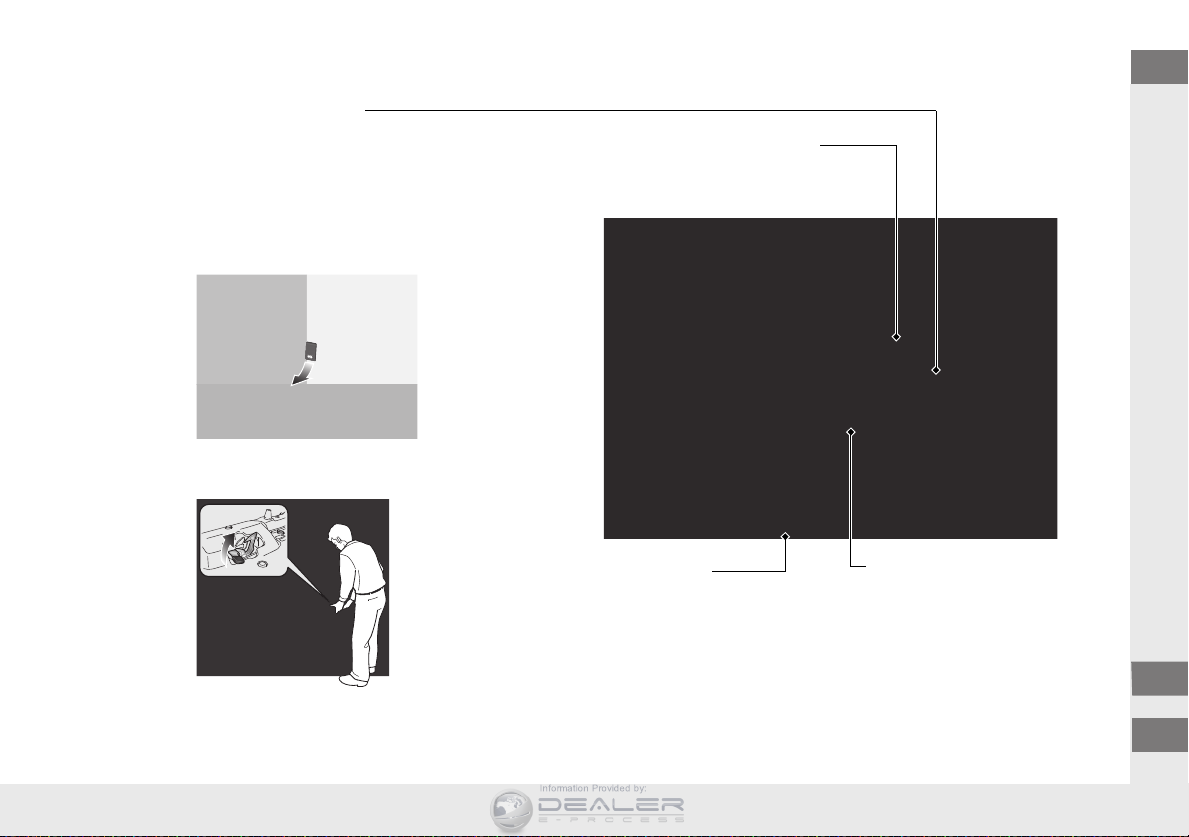
Maintenance (P191)
Under the Hood (P199)
● Check engine oil, engine coolant, and windshield washer
fluid. Add when necessary.
● Check brake fluid and clutch fluid.
● Check the battery regularly.
a Pull the hood release handle under the corner of the
dashboard.
b Locate the hood latch lever, pull the lever up, and lift up
the hood.
c When finished, close the hood and make sure it is firmly
locked in place.
Lights (P212)
● Inspect all lights regularly.
Wiper Blades (P218)
● Replace blades if they leave streaks
across the windshield.
Tires (P222)
● Inspect tires and wheels regularly.
● Check tire pressures regularly.
● Install snow tires for winter
driving.
QRG
Quick
Reference
Guide
— 2012 Fit
Index
Home
15
QRG
Quick
Reference
Guide
— 2012 Fit
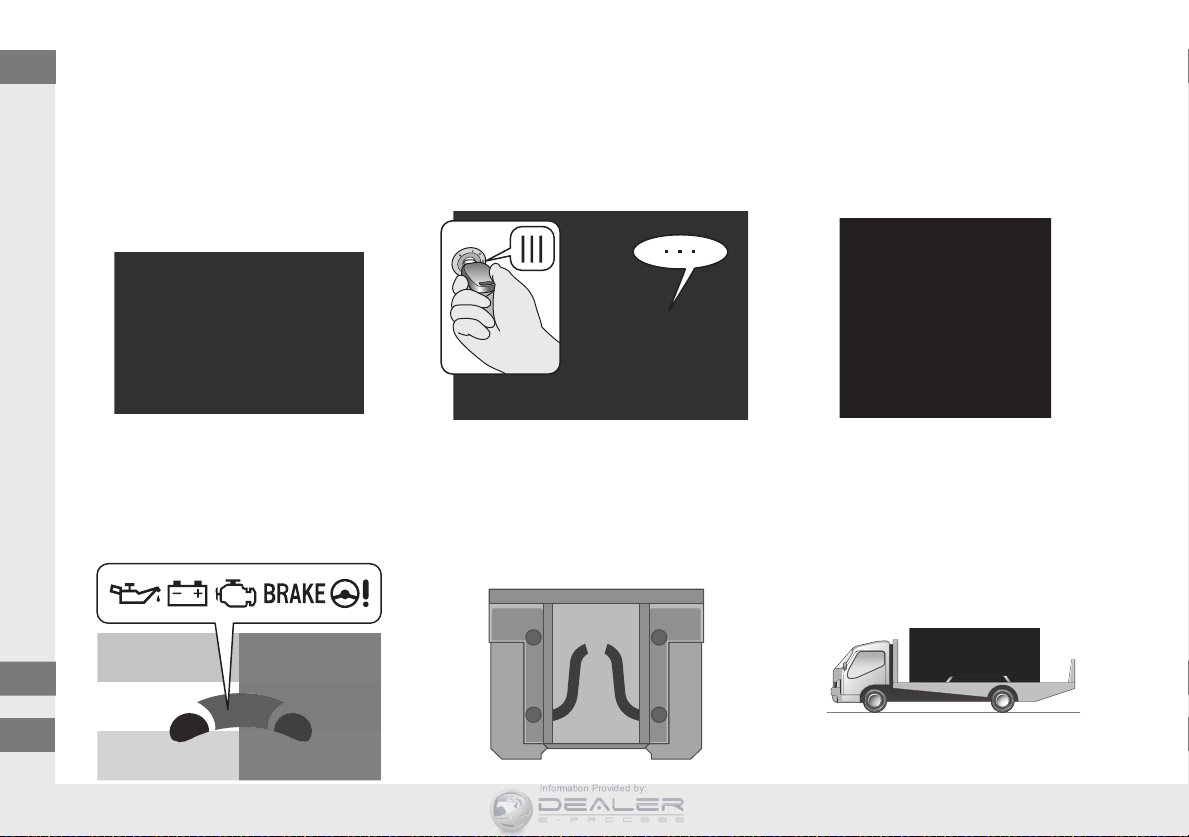
Handling the Unexpected (P237)
Flat Tire (P239)
● Park in a safe location and repair the flat
tire with the compact spare tire
the tire repair kit
*
in the cargo area.
*
, or using
Engine Won’t Start
(P250)
● If the battery is dead, jump start using a
booster battery.
Overheating (P254)
● Park in a safe location. If you do not see
steam under the hood, open the hood,
and let the engine cool down.
Index
Home
16
Indicators Come On
(P256)
● Identify the indicator and consult the
owner’s manual.
Blown Fuse (P260)
● Check for a blown fuse if an electrical
device does not operate.
Emergency Towing
(P264)
● Call a professional towing service if you
need to tow your vehicle.
What to Do If
QRG
Quick
The ignition switch does
not turn from
(0 to (q.
Why?
The ignition switch does
not turn from
(q to (0 and
I cannot remove the key.
Why?
Why does the brake pedal
pulsate slightly when
applying the brakes?
The rear door cannot be
opened from inside the
vehicle. Why?
●
The steering wheel may be locked.
●
Try to turn the steering wheel left and right
while turning the ignition key.
The shift lever should be moved to (P.
This can occur when the ABS activates, and does not indicate a
problem. Apply firm, steady pressure on the brake pedal. Never
pump the brake pedal.
Check if the childproof lock is in the
lock position. If so, open the rear door
with the outside door handle.
To cancel this function, push the lever
to the unlock position.
Reference
Guide
— 2012 Fit
Index
Home
17
Models with remote transmitter
QRG
Quick
Reference
Guide
Why do the doors lock
after I unlocked the doors
using a remote
transmitter?
If you do not open the doors within 30 seconds, the doors are
relocked automatically for security.
— 2012 Fit
Why does the beeper
sound when I open the
driver’s door?
Why does the beeper
sound when I start driving?
Why do I hear a screeching
sound when I apply the
brake pedal?
Index
Home
18
The beeper sounds when:
●
The key is left in the ignition switch.
●
The exterior lights are left on.
The beeper sounds when:
●
Driver and/or front passenger are not wearing their seat belts.
●
The parking brake lever is not fully released.
The brake pads may need to be replaced. Have your vehicle
inspected by a dealer.
California Proposition 65 Warning
WARNING: This product contains or emits
chemicals known to the state of California to cause
cancer and birth defects or other reproductive
harm.
To read data recorded by an EDR, special equipment is required,
and access to the vehicle or the EDR is needed. In addition to the
vehicle manufacturer, other parties, such as law enforcement, that
have the special equipment, can read the information if they have
access to the vehicle or the EDR.
QRG
Quick
Reference
Event Data Recorders
This vehicle is equipped with an event data recorder (EDR).
The main purpose of an EDR is to record, in certain crash or near
crash-like situations, such as an air bag deployment or hitting a
road obstacle, data that will assist in understanding how a vehicle’s
systems performed. The EDR is designed to record data related
to vehicle dynamics and safety systems for a short period of
time, typically 30 seconds or less. The EDR in this vehicle is
designed to record such data as:
• How various systems in your vehicle were operating;
• Whether or not the driver and passenger safety belts were
buckled/fastened;
• How far (if at all) the driver was depressing the accelerator
and/or brake pedal; and,
• How fast the vehicle was traveling.
These data can help provide a better understanding of the
circumstances in which crashes and injuries occur. NOTE: EDR data
are recorded by your vehicle only if a non-trivial crash situation
occurs; no data are recorded by the EDR under normal driving
conditions and no personal data (e.g., name, gender, age, and
crash location) are recorded. However, other parties, such as law
enforcement, could combine the EDR data with the type of
personally identifying data routinely acquired during a crash
investigation.
The data belongs to the vehicle owner and may not be accessed by
anyone else except as legally required or with the permission of the
vehicle owner.
Service Diagnostic Recorders
This vehicle is equipped with service-related devices that record
information about powertrain performance. The data can be used
to verify emissions law requirements and/or help technicians
diagnose and solve service problems. It may also be combined with
data from other sources for research purposes, but it remains
confidential.
California Perchlorate Contamination Prevention Act
The airbags, seat belt tensioners, and CR type batteries in this
vehicle may contain perchlorate materials — special handling may
apply. See www.dtsc.ca.gov/hazardouswaste/perchlorate/
As you read this manual, you will find information that is preceded
by a symbol. This information is intended to help you avoid
damage to your vehicle, other property, or the environment.
Guide
— 2012 Fit
Index
Home
19
QRG
Quick
Reference
Guide
— 2012 Fit
A Few Words About Safety
Your safety, and the safety of others, is very important. And
operating this vehicle safely is an important responsibility.
To help you make informed decisions about safety, we have
provided operating procedures and other information on labels and
in this manual. This information alerts you to potential hazards that
could hurt you or others.
You will find this important safety information in a variety of forms,
including:
● Safety Labels — on the vehicle.
● Safety Messages — preceded by a safety alert symbol
one of three signal words: DANGER, WARNING, or CAUTION.
These signal words mean:
You WILL be KILLED or SERIOUSLY HURT if
you don’t follow instructions.
3 and
Of course, it is not practical or possible to warn you about all the
hazards associated with operating or maintaining your vehicle. You
must use your own good judgement.
Index
Home
20
You CAN be KILLED or SERIOUSLY HURT if
you don’t follow instructions.
You CAN be HURT if you don’t follow
instructions.
● Safety Headings — such as Important Safety Precautions.
● Safety Section — such as Safe Driving.
● Instructions — how to use this vehicle correctly and safely.
This entire book is filled with important safety information — please
read it carefully.
QRG
Safe Driving
You can find many safety recommendations throughout this chapter, and throughout this manual.
Index
Home
For Safe Driving
Important Safety Precautions …………. 22
Your Vehicle’s Safety Features………… 24
Seat Belts
About Your Seat Belts…………………… 26
Fastening a Seat Belt…………………….. 29
Seat Belt Inspection………………………. 33
Airbags
Airbag System Components…………… 34
Types of Airbags ………………………….. 37
Front Airbags (SRS) ………………………. 37
Side Airbags………………………………… 41
Side Curtain Airbags …………………….. 44
Airbag System Indicators……………….. 45
Airbag Care ………………………………… 48
Child Safety
Protecting Child Passengers …………… 49
Safety of Infants and Small Children .. 51
Safety of Larger Children ………………. 59
Exhaust Gas Hazard
Carbon Monoxide Gas………………….. 61
Safety Labels
Label Locations ……………………………. 62
21
For Safe Driving
1Important Safety Precautions
Some states, provinces and territories prohibit the use
of cell phones other than hands-free devices by the
driver while driving.
QRG
The following pages explain your vehicle’s safety features and how to use them
TOC
Index
Home
properly. The safety precautions below are ones that we consider to be among the
most important.
Important Safety Precautions
■ Always wear your seat belt
A seat belt is your best protection in all types of collisions. Airbags are designed to
supplement seat belts, not replace them. So even though your vehicle is equipped
with airbags, make sure you and your passengers always wear your seat belts, and
wear them properly.
■ Restrain all children
Children age 12 and under should ride properly restrained in a back seat, not the
front seat. Infants and small children should be restrained in a child seat. Larger
children should use a booster seat and a lap/shoulder seat belt until they can use the
belt properly without a booster seat.
■ Be aware of airbag hazards
While airbags can save lives, they can cause serious or fatal injuries to occupants
who sit too close to them, or are not properly restrained. Infants, young children,
and short adults are at the greatest risk. Be sure to follow all instructions and
warnings in this manual.
■ Don’t drink and drive
Alcohol and driving don’t mix. Even one drink can reduce your ability to respond to
changing conditions, and your reaction time gets worse with every additional drink.
So don’t drink and drive, and don’t let your friends drink and drive, either.
22
■ Pay appropriate attention to the task of driving safely
Engaging in cell phone conversation or other activities that keep you from paying
close attention to the road, other vehicles, and pedestrians could lead to a crash.
Remember, situations can change quickly, and only you can decide when it is safe to
divert some attention away from driving.
■ Control your speed
Excessive speed is a major factor in crash injuries and deaths. Generally, the higher
the speed, the greater the risk, but serious injuries can also occur at lower speeds.
Never drive faster than is safe for current conditions, regardless of the maximum
speed posted.
■ Keep your vehicle in safe condition
Having a tire blowout or a mechanical failure can be extremely hazardous.
To reduce the possibility of such problems, check your tire pressures and condition
frequently, and perform all regularly scheduled maintenance.
uuFor Safe DrivinguImportant Safety Precautions
QRG
TOC
Index
Home
23
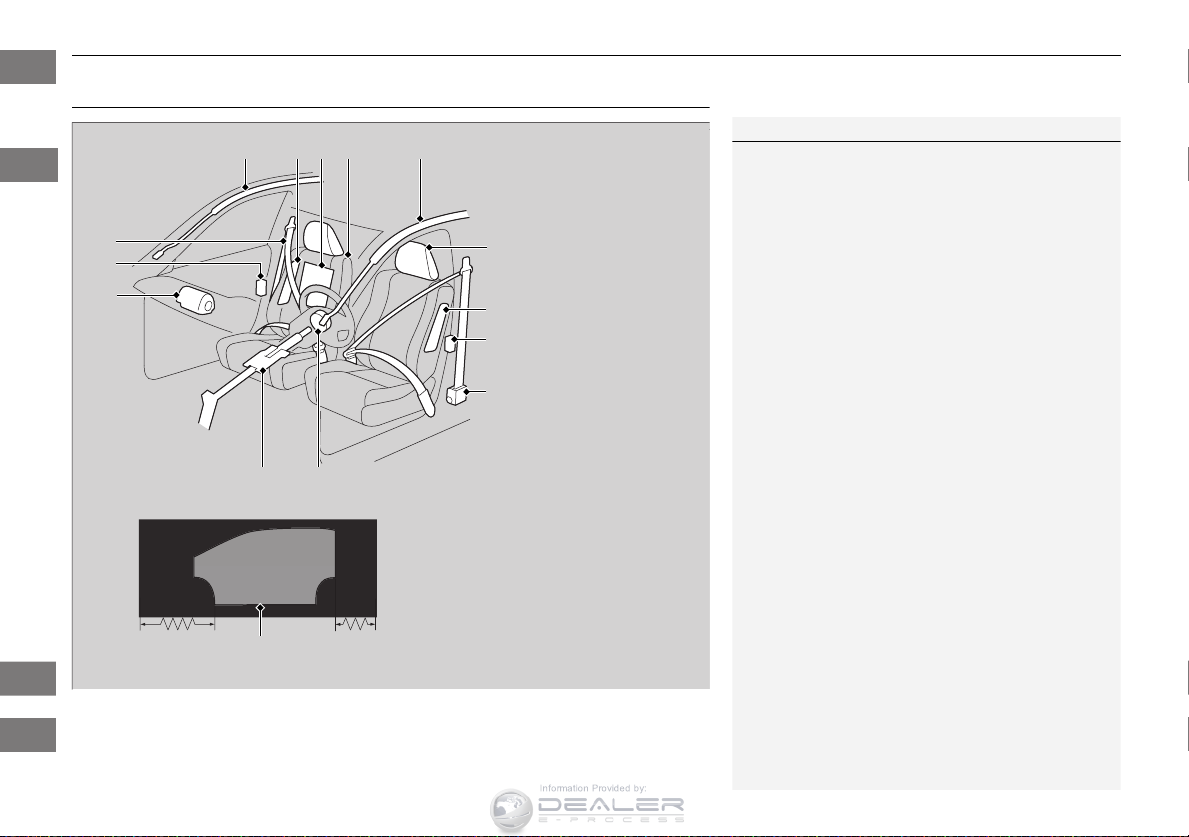
uuFor Safe Driving u Your Vehicle’s Safety Features
1Your Vehicle’s Safety Features
Your vehicle is equipped with many features that
work together to help protect you and your
passengers during a crash.
Some features do not require any action on your part.
These include a strong steel framework that forms a
safety cage around the passenger compartment,
front and rear crush zones, a collapsible steering
column, and tensioners that tighten the front seat
belts in a sufficient crash.
However, you and your passengers cannot take full
advantage of these features unless you remain seated
in the correct position and always wear your seat
belts. In fact, some safety features can contribute to
injuries if they are not used properly.
a Safety Cage
b Crush Zones
c Seats and Seat-Backs
d Head Restraints
e Collapsible Steering Column
f Seat Belts
g Front Airbags
h Side Airbags
i Side Curtain Airbags
j Door Locks
k Seat Belt Tensioners
l Occupant Position Detection
System (OPDS) Sensor
a
bb
e
f
il
j
k
g
hdc
g
j
h
i
QRG
Your Vehicle’s Safety Features
TOC
Index
The following checklist will help you take an active role in protecting yourself and
your passengers.
Home
24
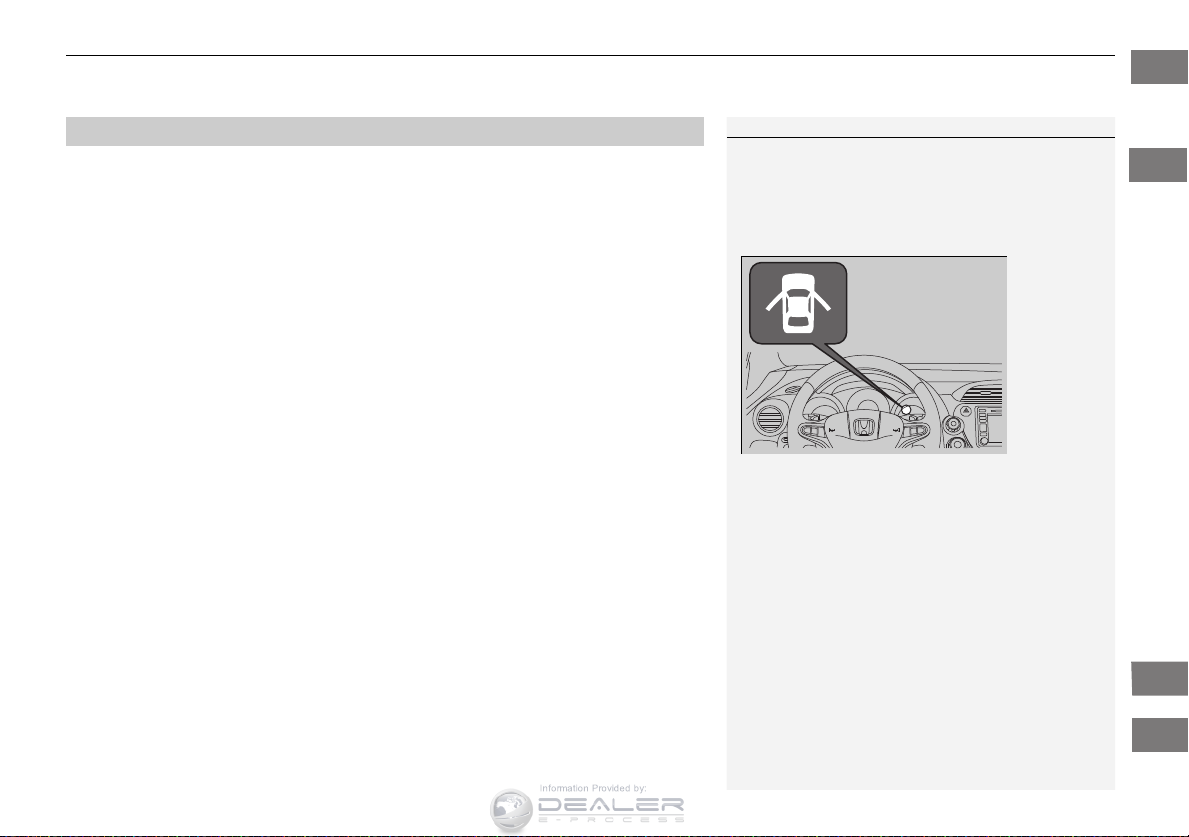
Safety Checklist
1Safety Checklist
If the door and tailgate open indicator is on, a door
and/or the tailgate is not completely closed. Close all
doors and the tailgate tightly until the indicator goes
off.
2 Door and Tailgate Open Indicator P. 68
■
For the safety of you and your passengers, make a habit of checking these items
each time before you drive.
• After everyone has entered the vehicle, be sure all doors and the tailgate are
closed and locked. Locking the doors and the tailgate helps prevent an occupant
from being ejected and an outsider from unexpectedly opening a door or the
tailgate.
2 Locking/Unlocking the Doors from the Inside P. 82
• Adjust your seat to a position suitable for driving. Be sure the front seats are
adjusted as far to the rear as possible while allowing the driver to control the
vehicle. Sitting too close to a front airbag can result in serious or fatal injury in a
crash.
2 Adjusting the Seats P. 103
• Adjust head restraints to the proper position. Head restraints are most effective
when the center of the head restraint aligns with the center of your head. Taller
persons should adjust their head restraint to the highest position.
2 Adjusting the Head Restraints P. 105
• Always wear your seat belt, and make sure you wear it properly. Confirm that any
passengers are properly belted as well.
2 Fastening a Seat Belt P. 29
uuFor Safe DrivinguYour Vehicle’s Safety Features
QRG
TOC
• Protect children by using seat belts or child seats according to a child’s age, height
and weight.
2 Child Safety P. 49
Index
Home
25
Seat Belts
1About Your Seat Belts
Seat belts cannot completely protect you in every
crash. But in most cases, seat belts can reduce your
risk of serious injury.
Most states and all Canadian provinces and territories
require you to wear seat belts.
Not wearing a seat belt properly increases
the chance of serious injury or death in a
crash, even though your vehicle has
airbags.
Be sure you and your passengers always
wear seat belts and wear them properly.
QRG
About Your Seat Belts
Seat belts are the single most effective safety device because they keep you
TOC
connected to the vehicle so that you can take advantage of many built-in safety
features. They also help keep you from being thrown against the inside of the
vehicle, against other passengers, or out of the vehicle. When worn properly, seat
belts also keep your body properly positioned in a crash so that you can take full
advantage of the additional protection provided by the airbags.
In addition, seat belts help protect you in almost every type of crash, including:
— frontal impacts
— side impacts
— rear impacts
— rollovers
■ Lap/shoulder seat belts
All five seating positions are equipped with lap/shoulder seat belts with emergency
locking retractors. In normal driving the retractor lets you move freely while keeping
some tension on the belt. During a collision or sudden stop the retractor locks to
restrain your body. The rear seat belts also have a lockable retractor for use with
child seats.
2 Installing a Child Seat with a Lap/Shoulder Seat Belt P. 56
Index
Home
26
■ Proper use of seat belts
1About Your Seat Belts
If a rear seat passenger moves around and extends
the seat belt, the lockable retractor may activate. If
this happens, release the retractor by unfastening the
seat belt and allow the belt to retract completely.
Then refasten the belt.
1Seat Belt Reminder
The indicator will also come on if a front passenger
does not fasten their seat belt within 6 seconds after
the ignition switch is turned to ON
(w.
When no one is sitting in the front passenger’s seat,
or a child or small adult is riding there, the indicator
will not come on.
This is because the weight sensors in the seat cannot
detect their presence.
Follow these guidelines for proper use:
• All occupants should sit upright, well back in the seat, and remain in that position
for the duration of the trip. Slouching and leaning reduces the effectiveness of
the belt and can increase the chance of serious injury in a crash.
• Never place the shoulder part of a lap/shoulder seat belt under your arm or
behind your back. This could cause very serious injuries in a crash.
• Two people should never use the same seat belt. If they do, they could be very
seriously injured in a crash.
• Do not put any accessories on the seat belts. Devices intended to improve comfort
or reposition the shoulder part of a seat belt can reduce the protective capability
and increase the chance of serious injury in a crash.
Seat Belt Reminder
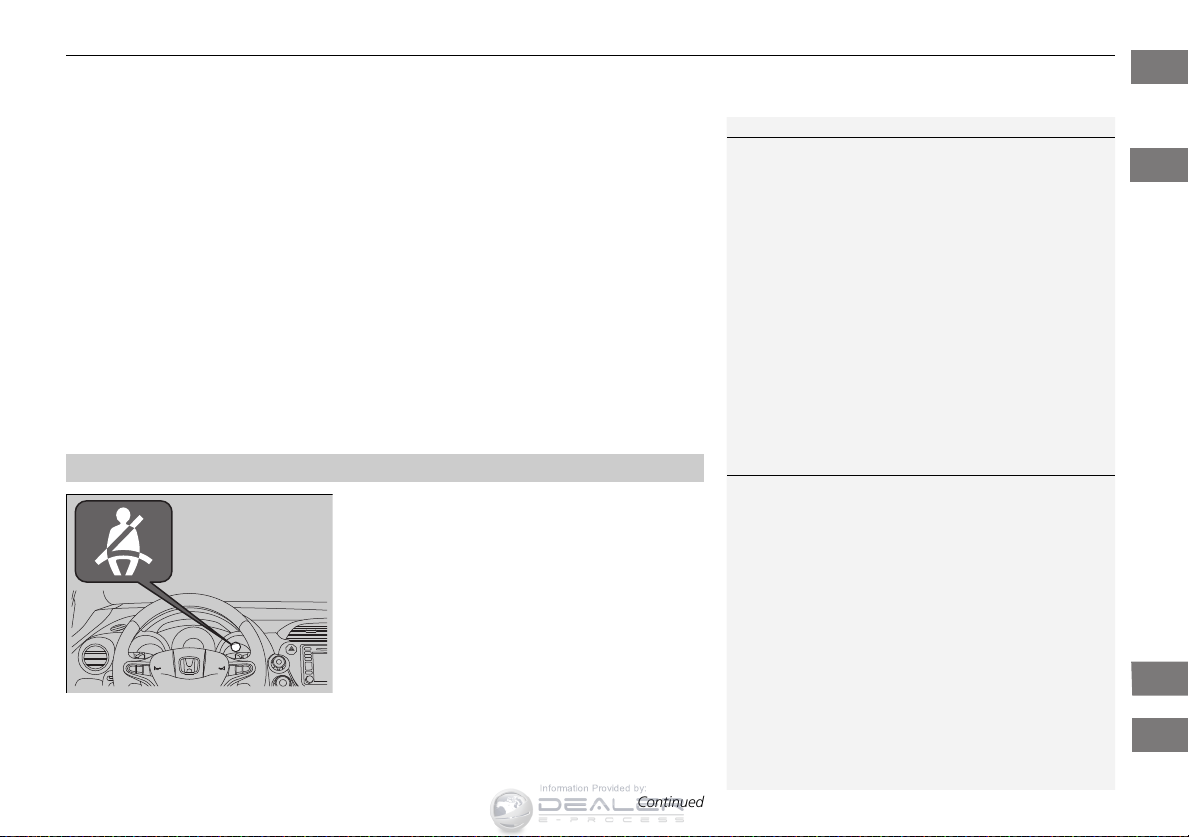
■
Your vehicle monitors front seat belt use. If
the ignition switch is turned to ON
(w before
the driver’s seat belt is fastened, a beeper will
sound and the indicator will blink. If the driver
does not fasten the belt before the beeper
stops, the indicator will remain on.
The beeper will also periodically sound and
the indicator will blink while driving until the
driver’s and front passenger’s seat belts are
fastened.
uuSeat BeltsuAbout Your Seat Belts
QRG
TOC
Index
Home
Continued
27
uuSeat BeltsuAbout Your Seat Belts
1Automatic Seat Belt Tensioners
The seat belt tensioners can only operate once.
If a tensioner is activated, the SRS indicator will come
on. Have a dealer replace the tensioner and
thoroughly inspect the seat belt system as it may not
offer protection in a subsequent crash.
QRG
Automatic Seat Belt Tensioners
■
TOC
The front seats are equipped with automatic seat belt tensioners to enhance safety.
The tensioners automatically tighten the front seat belts during a moderate-tosevere frontal collision, sometimes even if the collision is not severe enough to
inflate the front airbags.
Index
Home
28
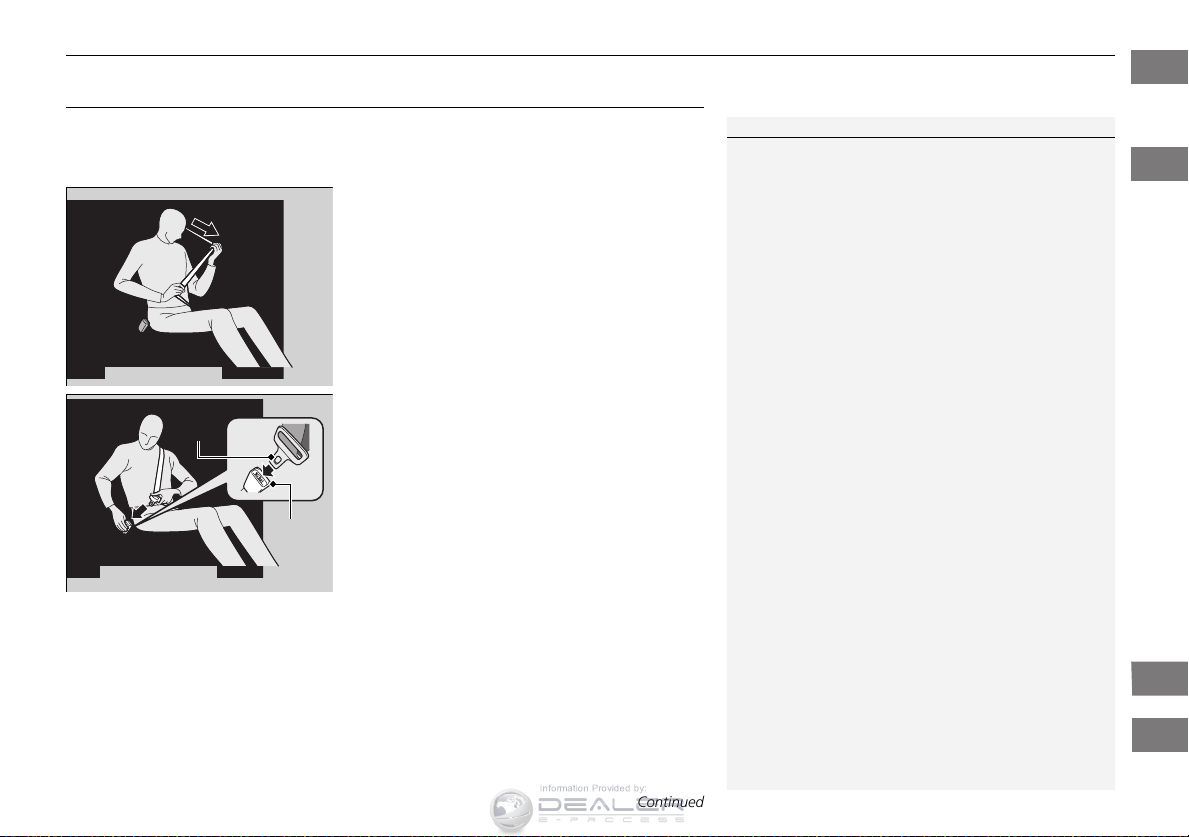
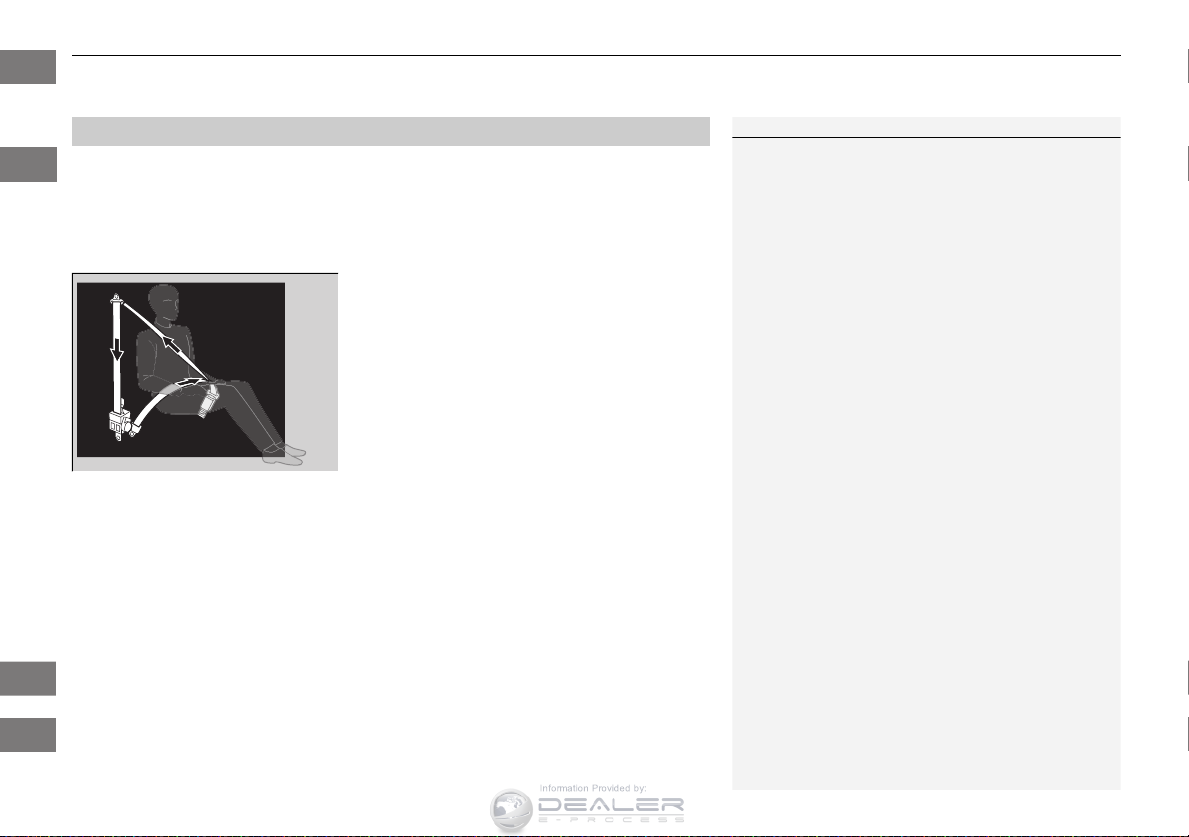
Fastening a Seat Belt
1Fastening a Seat Belt
No one should sit in a seat with an inoperative seat
belt or one that does not appear to be working
correctly. Using a seat belt that is not working
properly may not protect the occupant in a crash.
Have a dealer check the belt as soon as possible.
Never insert any foreign objects into the buckle or
retractor mechanism.
Pull out slowly.
Correct
Seated
Posture.
After adjusting a front seat to the proper position, and while sitting upright and well
back in the seat:
2 Adjusting the Seats P. 103
1. Pull the seat belt out slowly.
2. Insert the latch plate into the buckle, then
tug on the belt to make sure the buckle is
secure.
u Make sure that the belt is not twisted or
caught on anything.
Continued
uuSeat BeltsuFastening a Seat Belt
QRG
TOC
Index
Home
29
Loading…
31 июля 2023
Помню когда-то очень долго его искал, так как его пробуют продавать за деньги, потом танцами с бубном еще разблокировал pdf-файл.
Буду рад если кому окажется полезен, ссылка постоянная на моем гуглдиске:
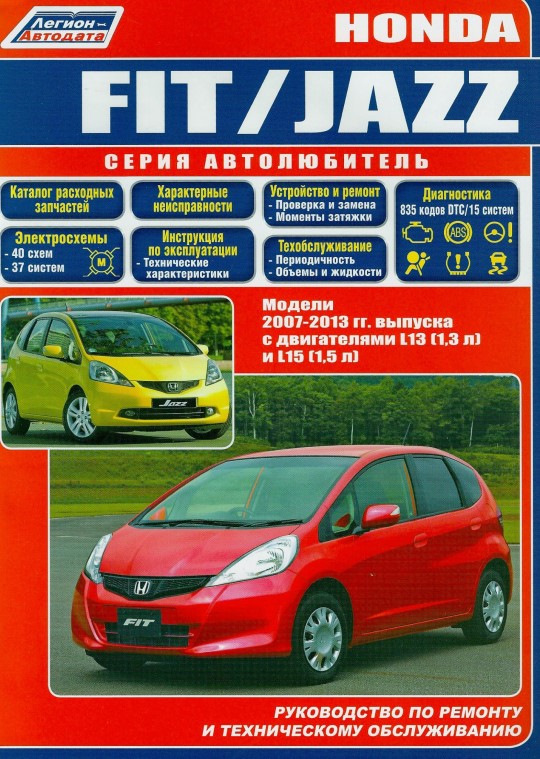
HONDA FIT JAZZ 2007-2013 RU (unlock)
Цена вопроса: 0 Br
Пробег: 122 000 миль
Войдите или зарегистрируйтесь, чтобы писать комментарии, задавать вопросы и участвовать в обсуждении.
На этой странице вы можете совершенно бесплатно скачать Руководство по эксплуатации Honda 2012 Fit.
У документа PDF Руководство по эксплуатации 3 страниц, а его размер составляет 34.33 Mb.
Читать онлайн Автомобили Honda 2012 Fit Руководство по эксплуатации
Скачать файл PDF «Honda 2012 Fit Руководство по эксплуатации» (34.33 Mb)
Популярность:
3888 просмотры
Подсчет страниц:
3 страницы
Тип файла:
Размер файла:
34.33 Mb